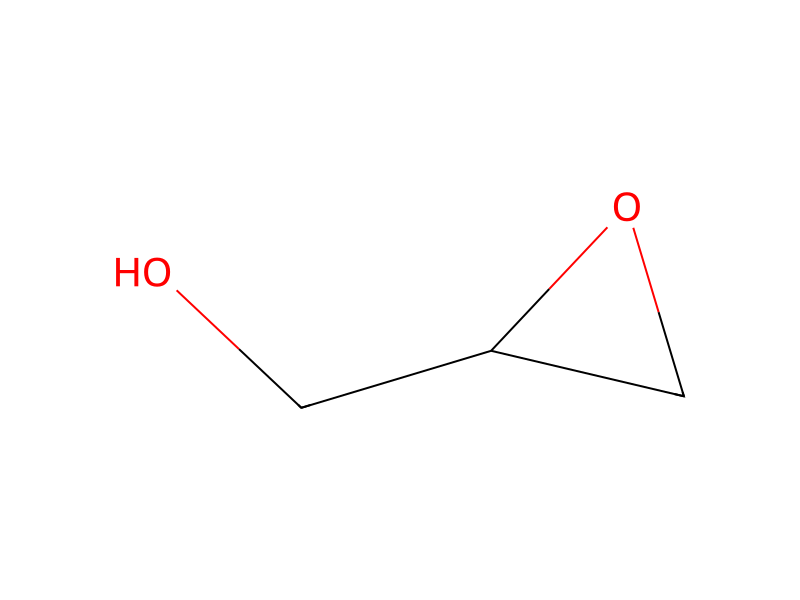
Glycidol → HCID 43185732, compound
Reaction equation

[N+:1]([C:4]1[CH:5]=[N:6][NH:7][CH:8]=1)([O-:3])=[O:2].[CH2:9]1[O:11][CH:10]1[CH2:12]O.C1(P(C2C=CC=CC=2)C2C=CC=CC=2)C=CC=CC=1.CC(OC(/N=N/C(OC(C)C)=O)=O)C>C1COCC1.C(OCC)(=O)C.O>[N+:1]([C:4]1[CH:5]=[N:6][N:7]([CH2:12][CH:10]2[CH2:9][O:11]2)[CH:8]=1)([O-:3])=[O:2]Participants
8






Procedure
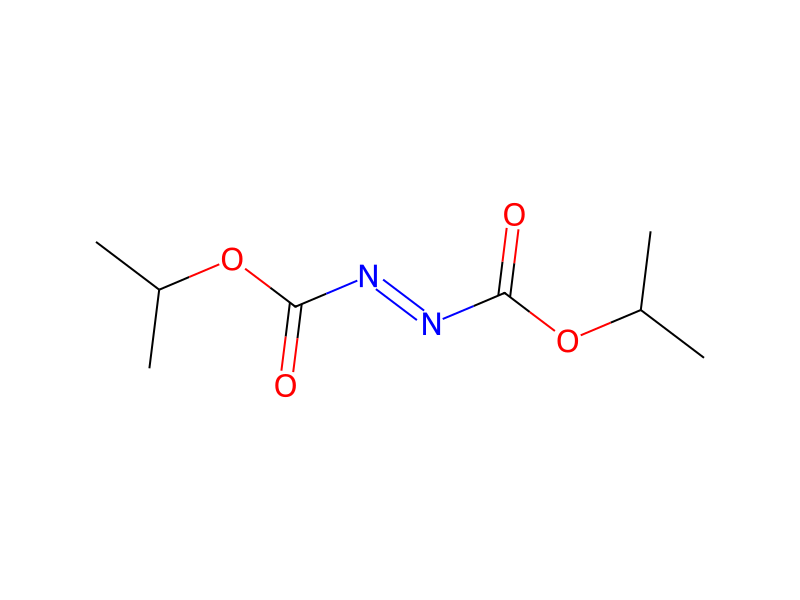
To a stirred, cooled (0° C.) solution of 4-nitro-1H-pyrazole (1.0 g, 8.8 mmol), glycidol (0.58 mL, 8.8 mmol) and triphenylphosphine (2.14 g, 10.6 mmol) in THF (40 mL) was added DIAD (2.25 mL, 11.4 mmol). After 24 h the reaction mixture was diluted with ethyl acetate and water. The aqueous layer was extracted with ethyl acetate and the combined organic layers were washed (brine), dried (anhydrous MgSO4) and concentrated. Flash chromatography (Isolera, silica, 50 g, 0-90% ethyl acetate in petroleum ether) afforded 4-nitro-1-(oxiran-2-ylmethyl)-1H-pyrazole as an off-white solid (0.71 g, 48% yield). LCMS (UPLC, low pH), RT=0.74 min.
Workup
- extractionThe aqueous layer was extracted with ethyl acetate
- washthe combined organic layers were washed (brine)
- dry with materialdried (anhydrous MgSO4)
- concentrationconcentrated
Sources & evidence
- ORD record
- ord-164786ff434140e9a947975515c40ddd
- Source dataset
- uspto-grants-2016_01
- Patent number
- US09242987B2
Reaction notes
Loading…