Acetonitrile → Diisopropylethylamine
Reaction equation

Cl.CNOC.F[P-](F)(F)(F)(F)F.N1(OC(N(C)C)=[N+](C)C)[C:17]2C=CC=[CH:21][C:16]=2N=N1.F[B-](F)(F)F.N1(OC(N(C)C)=[N+](C)C)[C:39]2C=CC=C[C:38]=2N=N1.Cl.[CH3:53]N(C)CCCN=C=NCC.[C:64](#[N:66])[CH3:65]>CN(C=O)C.C(N(CC)CC)C>[CH:64]([N:66]([CH:16]([CH3:21])[CH3:17])[CH2:38][CH3:39])([CH3:53])[CH3:65]Participants
8
Reactant 5
 HCID 6342Acetonitrile
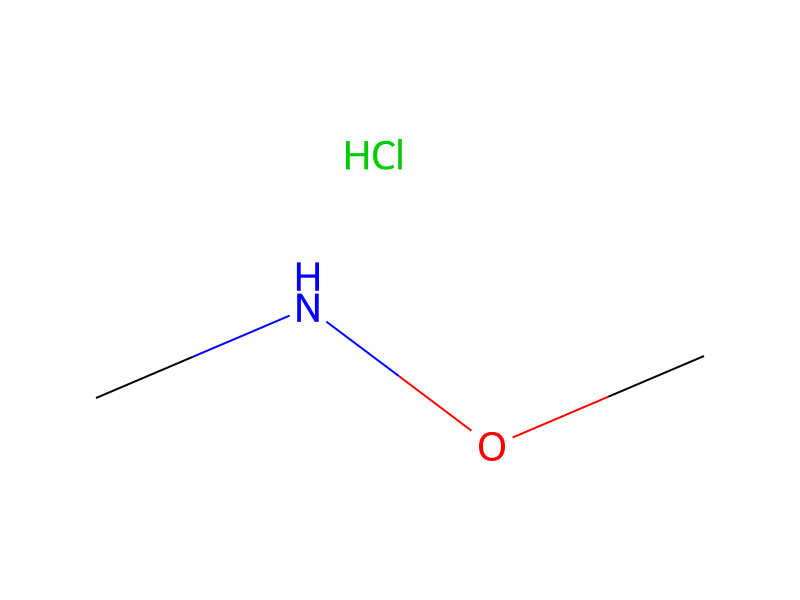 HCID 81138Methanamine, N-methoxy-, hydrochloride (1:1)
 HCID 27239391,3-Propanediamine, N'-(ethylcarbonimidoyl)-N,N-dimethyl-, monohydrochloride
 HCID 2733084Methanaminium, N-((1H-benzotriazol-1-yloxy)(dimethylamino)methylene)-N-methyl-, hexafluorophosphate(1-) (1:1)
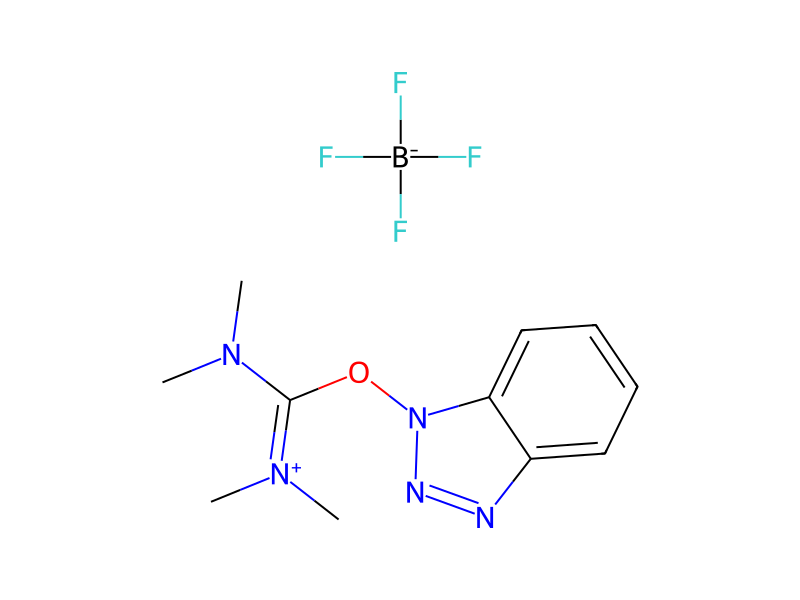 HCID 2733207O-(Benzotriazol-1-yl)-N,N,N',N'-tetramethyluronium tetrafluoroborate
Product 1

Reagents, catalysts & solvents 2


Procedure
The acid compound of formula (XXIII) is reacted with N,O-dimethylhydroxylamine hydrochloride in the presence of an amidation reagent such as 2-benzotriazol-1-yl-N,N,N′,N′-tetramethyluronium hexafluorphosphate (HBTU), 2-benzotriazol-1-yl-N,N,N′,N′-tetramethyluronium tetrafluoroborate (TBTU) or 1-(3-dimethylaminopropyI)-3-ethylcarbodiimide hydrochloride (EDC) and an organic base such as diisopropylethylamine or triethylamine in an aprotic organic solvent such as DMF or acetonitrile at room temperature to yield the compound of formula (XXII).
Sources & evidence
- ORD record
- ord-444d88c508c24c9c87c4c2d208843a2d
- Source dataset
- uspto-grants-2011_03
- Patent number
- US07906530B2
Reaction notes
Loading…