Triethylamine → N-(pentafluorobenzene-sulfonyl)methacrylamide
Reaction equation

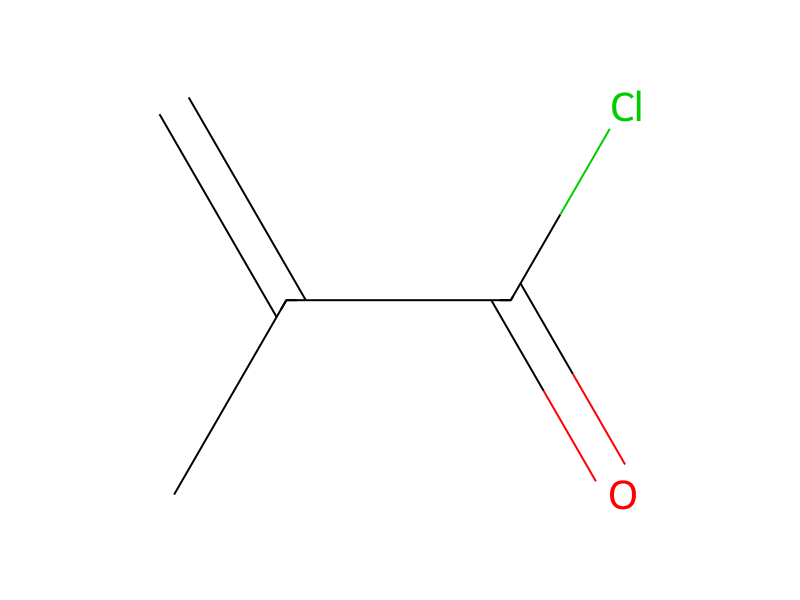
[F:1][C:2]1[C:7]([S:8]([NH2:11])(=[O:10])=[O:9])=[C:6]([F:12])[C:5]([F:13])=[C:4]([F:14])[C:3]=1[F:15].C(N(CC)CC)C.[C:23](Cl)(=[O:27])[C:24]([CH3:26])=[CH2:25]>CN(C1C=CN=CC=1)C.CN(C)C=O>[F:1][C:2]1[C:7]([S:8]([NH:11][C:23](=[O:27])[C:24]([CH3:26])=[CH2:25])(=[O:10])=[O:9])=[C:6]([F:12])[C:5]([F:13])=[C:4]([F:14])[C:3]=1[F:15]Participants
6





Procedure
Using 24.7 g (0.1 mol) of pentafluorobenzene-sulfonamide, 1.2 g (0.01 mol) of 4-(N,N-dimethylamino)pyridine, 22.3 g (0.22 mol) of triethylamine, 13.5 g (0.12 mol) of methacryloyl chloride, and 100 ml of dimethylformamide, reaction was conducted in the same manner as in Synthesis Example 1. As a result, 19.5 g of N-(pentafluorobenzene-sulfonyl)methacrylamide was obtained (yield, 61.9%; light-yellow crystals; m.p., 133-133.5° C.).
Workup
- customwas conducted in the same manner as in Synthesis Example 1
Sources & evidence
- ORD record
- ord-f69ec77881bd410f9c5ce7ef5f0594a3
- Source dataset
- uspto-grants-1999_09
- Patent number
- US05958646
Reaction notes
Loading…