2,3-Dichloro-5,6-dicyano-1,4-benzoquinone → 2,4-Dichloro-6-(2-chloro-6-fluorophenyl)pyrimidine
Reaction equation

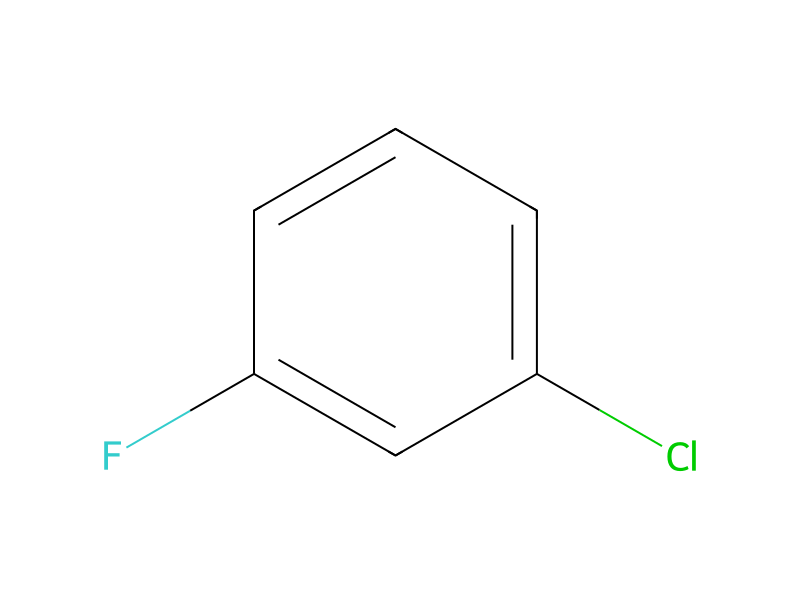
[Cl:1][C:2]1[CH:7]=[CH:6][CH:5]=[C:4]([F:8])[CH:3]=1.[Li]CCCC.[Cl:14][C:15]1[N:20]=[C:19]([Cl:21])[CH:18]=[CH:17][N:16]=1.C(C1C(=O)C(Cl)=C(Cl)C(=O)C=1C#N)#N>C1COCC1.O.C(OCC)(=O)C.C(O)(=O)C>[Cl:14][C:15]1[N:20]=[C:19]([Cl:21])[CH:18]=[C:17]([C:3]2[C:4]([F:8])=[CH:5][CH:6]=[CH:7][C:2]=2[Cl:1])[N:16]=1Participants
Reactant 4



Product 1

Reagents, catalysts & solvents 4




Procedure
To a −78° C. solution of 5 mmol of 1-chloro-3-fluorobenzene in 10 mL of dry THF was added 5 mmol (2 mL, 2.5M) nBuLi. After 15 min added 2 mL dry THF solution of 5 mmol of 2,4-dichloropyrimidine. The solution was allowed to come to room temperature. The starting material had disappeared by TLC analysis. The reaction mixture was poured into a biphasic mixture of 0.1% acetic acid in water and ethyl acetate. The organic layer was separated and cooled in an ice bath. To the cooled ethyl acetate solution was added 5 mmol of DDQ and stirred for 15 min. A new product emerged was visible by TLC analysis (5% ethyl acetate/hexanes). The reaction was diluted with an equal portion of hexanes and filtered through silica gel. The resultant eluent was concentrated under reduced pressure and subjected to chromatography on silica gel with 5% ethyl acetate/hexanes to afford 280 mg of 2,4-dichloro-6-(2-chloro-6-fluorophenyl)pyrimidine (X) as a white solid. ESI/MS 276.9901 (M+H).
Workup
- customto come to room temperature
- customThe organic layer was separated
- temperaturecooled in an ice bath
- filtrationfiltered through silica gel
- concentrationThe resultant eluent was concentrated under reduced pressure
Sources & evidence
- ORD record
- ord-35f04dbb95544558953a5a50ab88ea72
- Source dataset
- uspto-grants-2016_04
- Patent number
- US09321735B2
Reaction notes
Loading…