Hydrochloric Acid → N-(3-bromophenyl)-2-phenylacetamide
Reaction equation

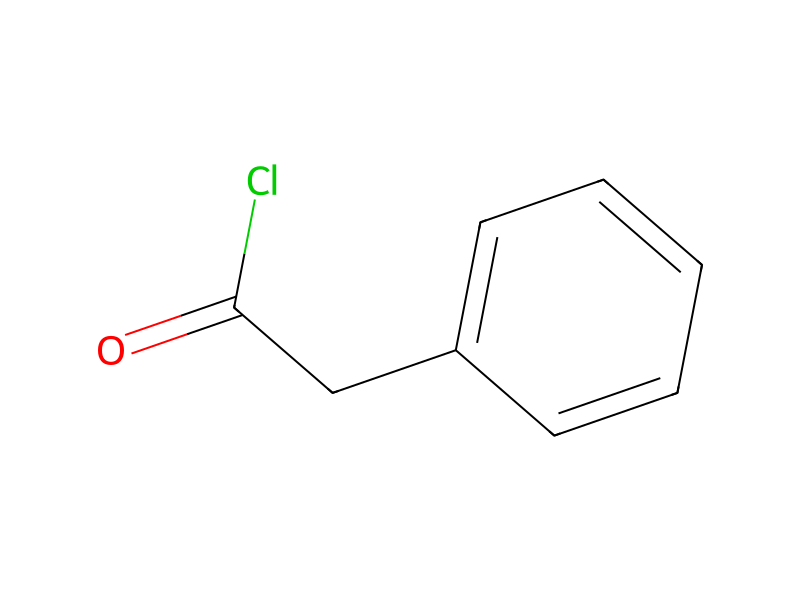
[Br:1][C:2]1[CH:3]=[C:4]([CH:6]=[CH:7][CH:8]=1)[NH2:5].C(N(CC)CC)C.[C:16]1([CH2:22][C:23](Cl)=[O:24])[CH:21]=[CH:20][CH:19]=[CH:18][CH:17]=1.Cl>O1CCCC1.C(OCC)(=O)C>[Br:1][C:2]1[CH:3]=[C:4]([NH:5][C:23](=[O:24])[CH2:22][C:16]2[CH:21]=[CH:20][CH:19]=[CH:18][CH:17]=2)[CH:6]=[CH:7][CH:8]=1Participants
7






Procedure
To a solution of 3-bromoaniline (3.21 g, 18.60 mmol) in dry tetrahydrofuran (45 mL) were added triethylamine (2.82 g, 27.91 mmol) and phenylacetyl chloride 93.45 g, 22.30 mmol) at 0° C. The reaction warmed to room temperature and stirred for 4 h. The reaction mixture was treated with 2.0 N aqueous hydrochloric acid (20 mL) at 0° C. and diluted with ethyl acetate (300 mL). The organic layer was washed with water (20 mL), saturated aqueous sodium bicarbonate (50 mL) and saturated aqueous sodium chloride (50 mL), dried over magnesium sulfate, filtered, and concentrated to afford crude N-(3-bromophenyl)-2-phenylacetamide (4.84 g, 86% yield) which was used in the next step without any further purification.
Workup
- washThe organic layer was washed with water (20 mL), saturated aqueous sodium bicarbonate (50 mL) and saturated aqueous sodium chloride (50 mL)
- dry with materialdried over magnesium sulfate
- filtrationfiltered
- concentrationconcentrated
Sources & evidence
- ORD record
- ord-e94d7cba80654bad807437637dd9cee7
- Source dataset
- uspto-grants-2010_04
- Patent number
- US07704995B2
Reaction notes
Loading…