4-Aminopyridine → HCID 6456587, compound
Reaction equation

Cl[C:2]1[C:11]2[C:6](=[CH:7][CH:8]=[CH:9][CH:10]=2)[N:5]=[C:4]([C:12]2[CH:17]=[CH:16][CH:15]=[CH:14][CH:13]=2)[N:3]=1.[NH2:18][C:19]1[CH:24]=[CH:23][N:22]=[CH:21][CH:20]=1.C(=O)([O-])[O-].[K+].[K+]>CN(C)C=O>[N:22]1[CH:23]=[CH:24][C:19]([NH:18][C:2]2[C:11]3[C:6](=[CH:7][CH:8]=[CH:9][CH:10]=3)[N:5]=[C:4]([C:12]3[CH:17]=[CH:16][CH:15]=[CH:14][CH:13]=3)[N:3]=2)=[CH:20][CH:21]=1Participants
5
Reactant 3
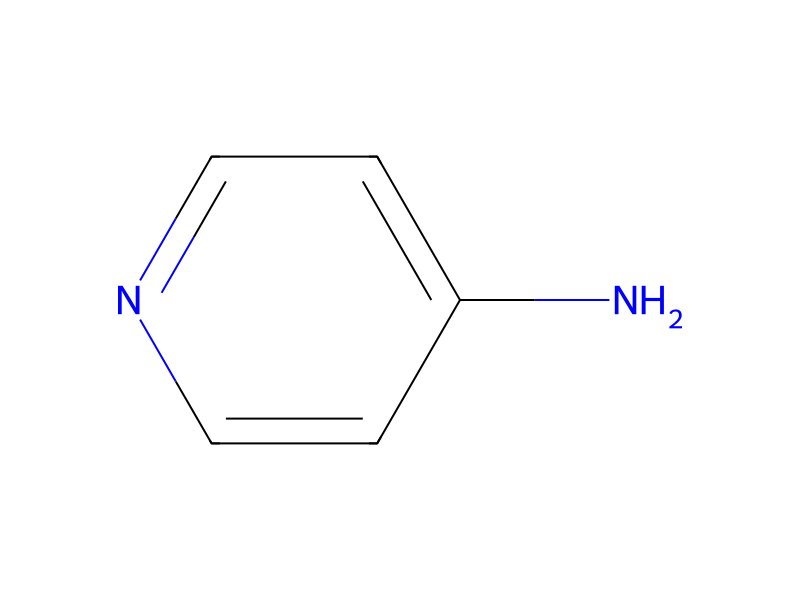


Product 1

Reagents, catalysts & solvents 1

Procedure
4-Chloro-2-phenyl quinazoline, 1 equivalent, was treated with 1 equivalent 4-aminopyridine and 1 equivalent potassium carbonate in dimethylformamide (DMF), under reflux for 4 hours. The reaction mixture was cooled to room temperature and concentrated under vacuum to an oil. This crude material was dissolved in ethyl acetate and chromatographed using hexane:ethyl acetate:methanol 8:2:0.5 to obtain solid product. Electron impact mass spectroscopy (EIMS) gave a molecular ion corresponding to the calculated molecular weight of the title compound.
Workup
- temperatureunder reflux for 4 hours
- concentrationconcentrated under vacuum to an oil
- dissolutionThis crude material was dissolved in ethyl acetate
- customchromatographed
- customto obtain solid product
Sources & evidence
- ORD record
- ord-c458cb8685c14671adbba3460a47105e
- Source dataset
- uspto-grants-2001_08
- Patent number
- US06277989B1
Reaction notes
Loading…