Sodium Hydroxide → (R)-2-(1-(biphenyl-4-yl)-3-carboxypropan-2-ylcarbamoyl)isonicotinic acid
Reaction equation

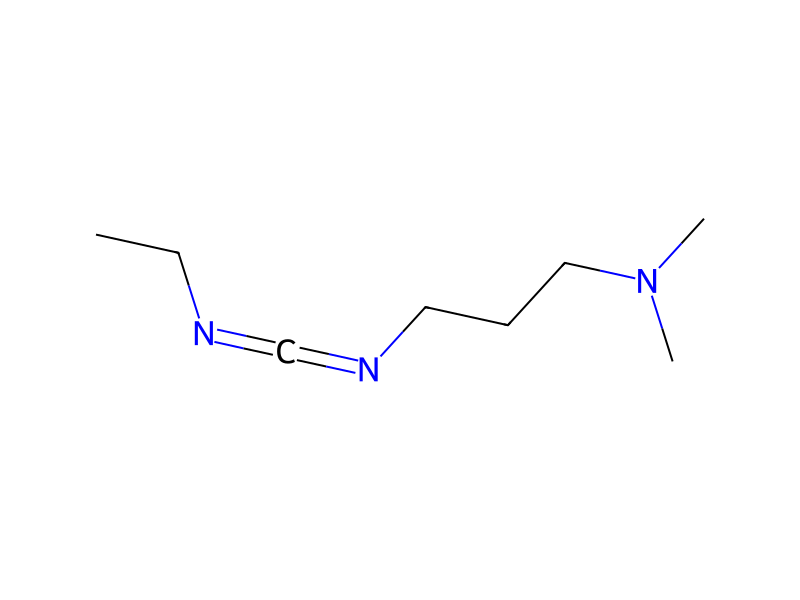
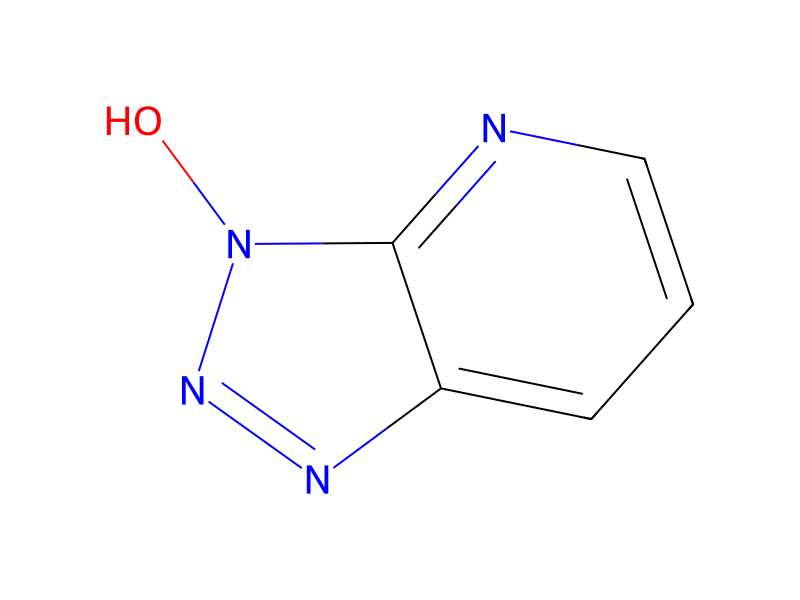
Cl.[NH2:2][C@H:3]([CH2:10][C:11]1[CH:16]=[CH:15][C:14]([C:17]2[CH:22]=[CH:21][CH:20]=[CH:19][CH:18]=2)=[CH:13][CH:12]=1)[CH2:4][C:5]([O:7]CC)=[O:6].O.[N:24]1[CH:29]=[CH:28][C:27]([C:30]([OH:32])=[O:31])=[CH:26][C:25]=1[C:33]([OH:35])=[O:34].CCN=C=NCCCN(C)C.ON1C2N=CC=CC=2N=N1.CCN(C(C)C)C(C)C.[OH-].[Na+]>CN(C=O)C.O.C1COCC1.CO>[C:14]1([C:17]2[CH:18]=[CH:19][CH:20]=[CH:21][CH:22]=2)[CH:13]=[CH:12][C:11]([CH2:10][C@@H:3]([NH:2][C:30]([C:27]2[CH:28]=[CH:29][N:24]=[C:25]([C:33]([OH:35])=[O:34])[CH:26]=2)=[O:31])[CH2:4][C:5]([OH:7])=[O:6])=[CH:16][CH:15]=1.[C:14]1([C:17]2[CH:18]=[CH:19][CH:20]=[CH:21][CH:22]=2)[CH:13]=[CH:12][C:11]([CH2:10][C@@H:3]([NH:2][C:33]([C:25]2[CH:26]=[C:27]([CH:28]=[CH:29][N:24]=2)[C:30]([OH:32])=[O:31])=[O:34])[CH2:4][C:5]([OH:7])=[O:6])=[CH:16][CH:15]=1Participants
Reactant 6




Product 2


Reagents, catalysts & solvents 4




Procedure
To a solution of (R)-ethyl 3-amino-4-(biphenyl-4-yl)butanoate hydrochloride (200 mg, 0.625 mmol), 2,4-pyridinedicarboxylic acid hydrate (151 mg, 0.813 mmol), EDCI (132 mg, 0.688 mmol) and 1-hydroxy-7-azabenzotriazole (94 mg, 0.688 mmol) in DMF (6 ml), DIPEA (0.164 ml, 0.938 mmol) is added. The reaction mixture is allowed to stir for 3 hours. Then, the reaction mixture is diluted with H2O. The precipitated solid is collected on a funnel and dried under reduced pressure. To a solution of the crude in THF (8 ml) and MeOH (1 ml), 1 M aqueous NaOH (2.5 ml, 2.5 mmol) is added. After stirring for 1 hour, the reaction is quenched with 5% citric acid and brine, and the products are extracted with EtOAc. The organic layer is washed with brine, dried over Na2SO4, filtered, and concentrated. The resulting residue is purified by preparative HPLC using a gradient of 20% MeCN/water (0.1% TFA) to 100% MeCN to give (R)-4-(1-(biphenyl-4-yl)-3-carboxypropan-2-ylcarbamoyl)picolinic acid and (R)-2-(1-(biphenyl-4-yl)-3-carboxypropan-2-ylcarbamoyl)isonicotinic acid as white solids, respectively (Example 13-1: 33 mg; Example 13-2: 36 mg). Example 13-1, HPLC retention time=1.50 minutes (condition D); MS (m+1)=405.1; 1H NMR (400 MHz, DMSO-d6) δ ppm 2.53-2.62 (m, 2 H) 2.88-2.97 (m, 2 H) 4.50-4.59 (m, 1 H) 7.31-7.35 (m, 3 H) 7.42-7.45 (m, 2 H) 7.57-7.64 (m, 4 H) 7.89 (dd, J=5, 1.6 Hz, 1 H) 8.83 (dd, J=5, 0.8 Hz, 1 H) 8.37 (dd, J=1.6, 0.8 Hz) 8.89 (d, J=8.3 Hz, 1 H). Example 13-2, HPLC retention time=1.24 minutes (condition A); MS (m+1)=405.1; 1H NMR (400 MHz, DMSO-d6) δ ppm 2.52-2.68 (m, 2 H) 2.91 (A of ABX, Jab=13.6 Hz, Jax=6.1 Hz, 1 H) 3.01 (B of ABX, Jab=13.6 Hz, Jbx=8.1 Hz, 1 H) 4.56-4.65 (m, 1 H) 7.29-7.34 (m, 3 H) 7.41-7.45 (m, 2 H) 7.55-7.64 (m, 4 H) 7.99 (dd, J=5, 1.6 Hz, 1 H) 8.34 (dd, J=1.6, 0.8 Hz, 1 H) 8.84 (dd, J=5, 0.8 Hz, 1 H) 8.90 (d, J=9.1 Hz, 1 H) 12.26 (br s, 1 H) 13.87 (br s, 1 H).
Workup
- customThe precipitated solid is collected on a funnel
- customdried under reduced pressure
- stirringAfter stirring for 1 hour
- customthe reaction is quenched with 5% citric acid and brine
- extractionthe products are extracted with EtOAc
- washThe organic layer is washed with brine
- dry with materialdried over Na2SO4
- filtrationfiltered
- concentrationconcentrated
- customThe resulting residue is purified by preparative HPLC
Sources & evidence
- ORD record
- ord-bfed4498c3a848f4a6e642cbd3a21727
- Source dataset
- uspto-grants-2014_09
- Patent number
- US08822534B2
Reaction notes
Loading…