Propylamine → Ethyl 1-(propylcarbamoyl)cyclopropanecarboxylate
Reaction equation

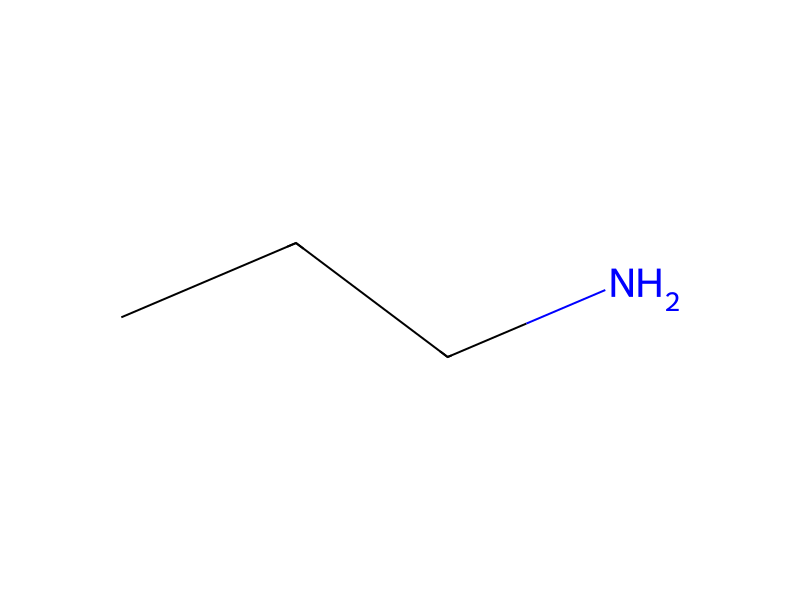
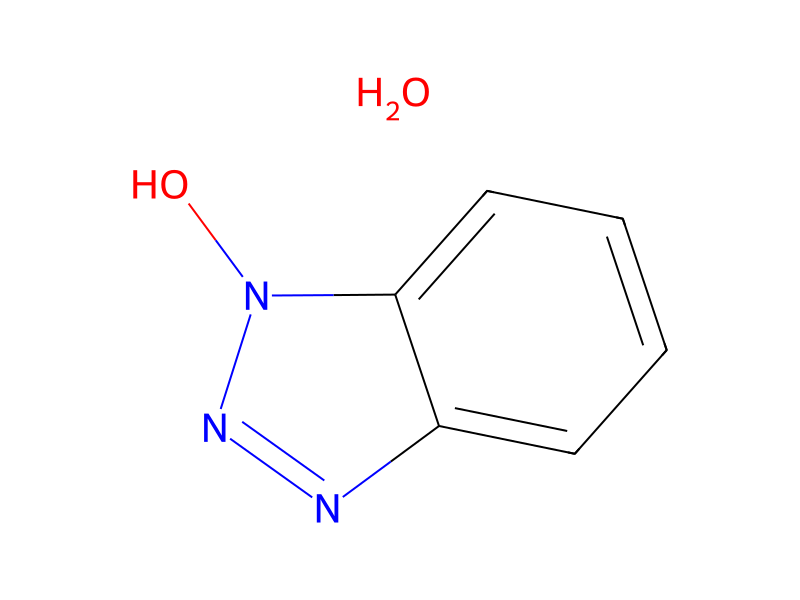
[CH2:1]([O:3][C:4]([C:6]1([C:9]([OH:11])=O)[CH2:8][CH2:7]1)=[O:5])[CH3:2].[CH2:12]([NH2:15])[CH2:13][CH3:14].C([O-])(O)=O.[Na+].Cl.CN(C)CCCN=C=NCC.O.ON1C2C=CC=CC=2N=N1>CN(C=O)C>[CH2:12]([NH:15][C:9]([C:6]1([C:4]([O:3][CH2:1][CH3:2])=[O:5])[CH2:7][CH2:8]1)=[O:11])[CH2:13][CH3:14]Participants
Reactant 5



Product 1

Reagents, catalysts & solvents 1

Procedure
To a solution of 1-(ethoxycarbonyl)cyclopropanecarboxylic acid (Wheeler, T. N.; Ray, J. A. Synthetic Communications 1988, 18(2), 141) (1.52 g, 9.62 mmol) and n-propylamine (0.63 g, 10.58 mmol) in anhydrous DMF (65 mL) at rt, were added NaHCO3 (4.04 g, 48.11 mmol), N-(3-dimethylaminopropyl)-N′-ethylcarbodiimide hydrochloride (2.21 g, 11.54 mmol) and 1-hydroxybenzotriazole hydrate (1.77 g, 11.54 mmol) under a nitrogen atmosphere. After being stirred at rt overnight, the mixture was partitioned between water (100 mL) and EtOAc (300 mL). The organic phase was separated, washed with water and brine, and was dried over anhydrous MgSO4. The filtrate was evaporated to give 1.65 g (86%) of the crude product which was used in the next step without purification. 1H-NMR (400 MHz, DMSO-d6) δ 8.33 (broad s, 1H), 4.08 (q, J=6.8 Hz, 2H), 3.07 (q, J=6.4 Hz, 2H), 1.43 (hex, J=6.4 Hz, 2H), 1.31 (s, 4H), 1.17 (t, J=6.4 Hz, 3H), 0.85 (t, J=7.2 Hz, 3H).
Workup
- customthe mixture was partitioned between water (100 mL) and EtOAc (300 mL)
- customThe organic phase was separated
- washwashed with water and brine
- dry with materialwas dried over anhydrous MgSO4
- customThe filtrate was evaporated
Sources & evidence
- ORD record
- ord-be9e44e73f644541a1fbbb66de813392
- Source dataset
- uspto-grants-2015_11
- Patent number
- US09181276B2
Reaction notes
Loading…