1,3-Dibromobenzene → 3-Bromo-N,N-diphenylaniline
Reaction equation

[C:1]1([NH:7][C:8]2[CH:13]=[CH:12][CH:11]=[CH:10][CH:9]=2)[CH:6]=[CH:5][CH:4]=[CH:3][CH:2]=1.Br[C:15]1[CH:20]=[CH:19][CH:18]=[C:17]([Br:21])[CH:16]=1.CC([O-])(C)C.[Na+]>C1(C)C=CC=CC=1.CC([O-])=O.CC([O-])=O.[Pd+2].C1(P(C2C=CC=CC=2)C2C=CC=CC=2)C=CC=CC=1>[Br:21][C:17]1[CH:16]=[C:15]([CH:20]=[CH:19][CH:18]=1)[N:7]([C:8]1[CH:9]=[CH:10][CH:11]=[CH:12][CH:13]=1)[C:1]1[CH:6]=[CH:5][CH:4]=[CH:3][CH:2]=1Participants
7






Procedure
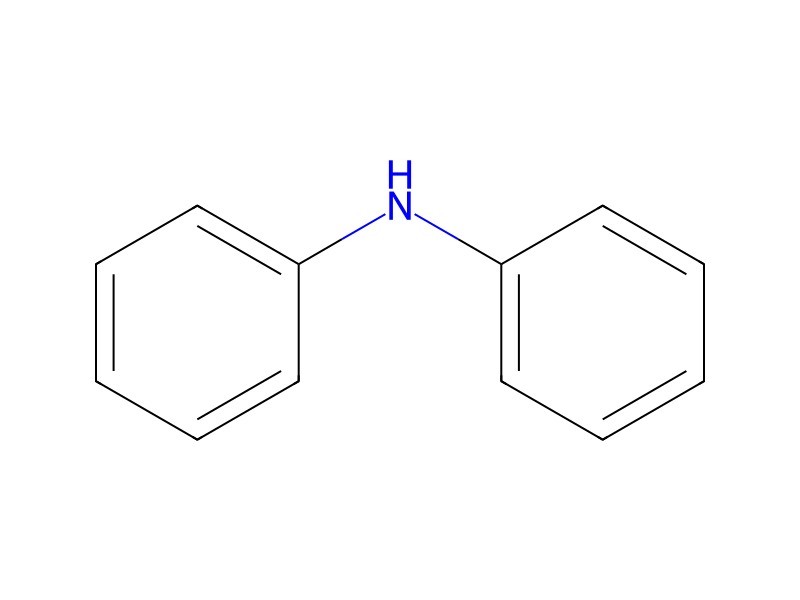
Diphenylamine (9 g, 53.3 mmol), and 1,3-dibromobenzene (25 g, 106.8 mmol) were mixed in toluene (500 mL). The solution was bubbled nitrogen while stirring for 15 min. Pd(OAc)2 (0.18 g, 0.8 mmol), triphenylphosphine (0.84 g, 3.2 mmol) and tBuONa (7.7 g, 80.2 mmol) were added in sequence. The mixture was heated to reflux overnight under nitrogen. After cooling, the reaction mixture was filtered through Celite®/silica pad and the solvent was then evaporated. The residue was purified by column using hexane as eluent to obtain 13.5 g (60%) of 3-bromo-N,N-diphenylaniline.
Workup
- customThe solution was bubbled nitrogen
- temperatureThe mixture was heated
- temperatureto reflux overnight under nitrogen
- temperatureAfter cooling
- filtrationthe reaction mixture was filtered through Celite®/silica pad
- customthe solvent was then evaporated
- customThe residue was purified by column
Sources & evidence
- ORD record
- ord-708c4296c60045d7afdf6423e8e4a2a8
- Source dataset
- uspto-grants-2015_11
- Patent number
- US09190623B2
Reaction notes
Loading…