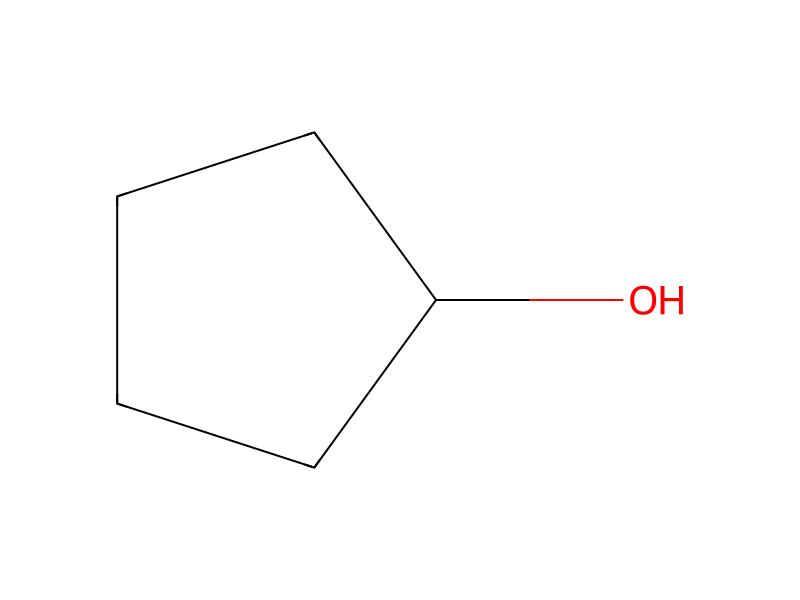
Cyclopentanol → HCID 21876832, compound
Reaction equation

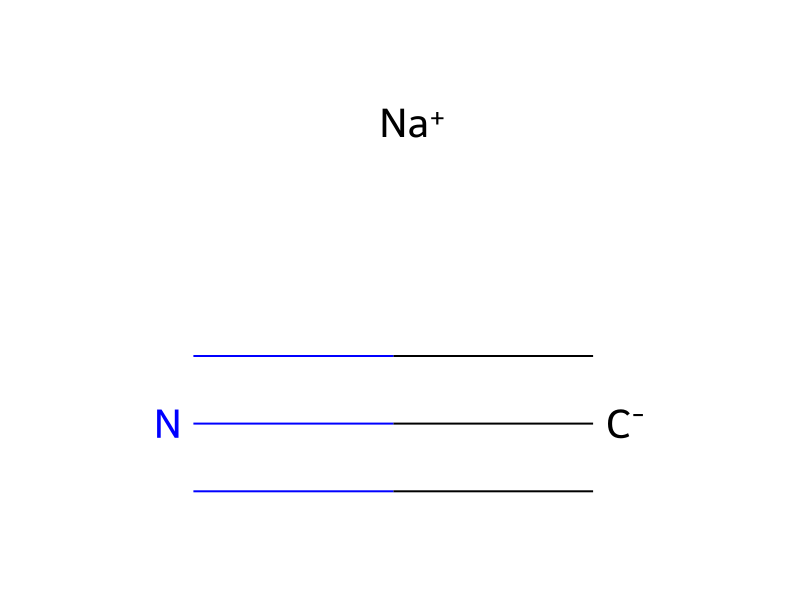
[CH:1]1([OH:6])[CH2:5][CH2:4][CH2:3][CH2:2]1.[H-].[Na+].Br[C:10]1[CH:14]=[CH:13][S:12][CH:11]=1.[C-]#N.[Na+]>CN(C)C=O.O>[CH:1]1([O:6][C:10]2[CH:14]=[CH:13][S:12][CH:11]=2)[CH2:5][CH2:4][CH2:3][CH2:2]1Participants
Reactant 4


Product 1

Reagents, catalysts & solvents 2


Conditions
- Temperature
- 120 °C
Procedure
To a solution of cyclopentanol (8.75 ml, 95.8 mmol) in N,N-dimethylformamide (250 mL) was added sodium hydride (60% dispersion in mineral oil, 3.84 g, 95.8 mmol) at 0–5° C. under nitrogen. After 10 minutes, the mixture was allowed to reach room temperature and stirred for 40 minutes. 3-Bromothiophene (3.59 mL, 38.3 mmol) was added followed by cuprous iodide (14.63 g, 76.8 mmol). The mixture was heated at 120° C. for 22 hours. After cooling to about 10° C., a solution of sodium cyanide (12.1 g, 0.25 mol) in water (200 mL) was added under vigorous stirring. The mixture was stirred for additional 10 minutes then filtered. The filtrate was extracted with hexane. The extract was washed with water, dried (Na2SO4) and concentrated to dryness. Distillation (100° C., 8 mm Hg) gave 3-cyclopentyloxythiopene (4.52 g, 70%) as a slightly pale yellow oil; 1H NMR (300 Mz, CDCl3) δ 7.15 (dd, J=5.2, 3.1 Hz, 1H), 6.72 (dd, J=5.2, 15 Hz, 1H) 6.19 (dd, J=3.1, 1.5 Hz, 1H), 4.65 (quintet, J=4.2 Hz, 1H), 1.55–1.95 (m, 8H). MS m/e (%): 168 (M+; 17).
Workup
- customto reach room temperature
- temperatureAfter cooling to about 10° C.
- stirringThe mixture was stirred for additional 10 minutes
- filtrationthen filtered
- extractionThe filtrate was extracted with hexane
- washThe extract was washed with water
- dry with materialdried (Na2SO4)
- concentrationconcentrated to dryness
- distillationDistillation (100° C., 8 mm Hg)
Sources & evidence
- ORD record
- ord-e78d51adfcce4846aa94c0bcc4a10b05
- Source dataset
- uspto-grants-2006_11
- Patent number
- US07141584B2
Reaction notes
Loading…