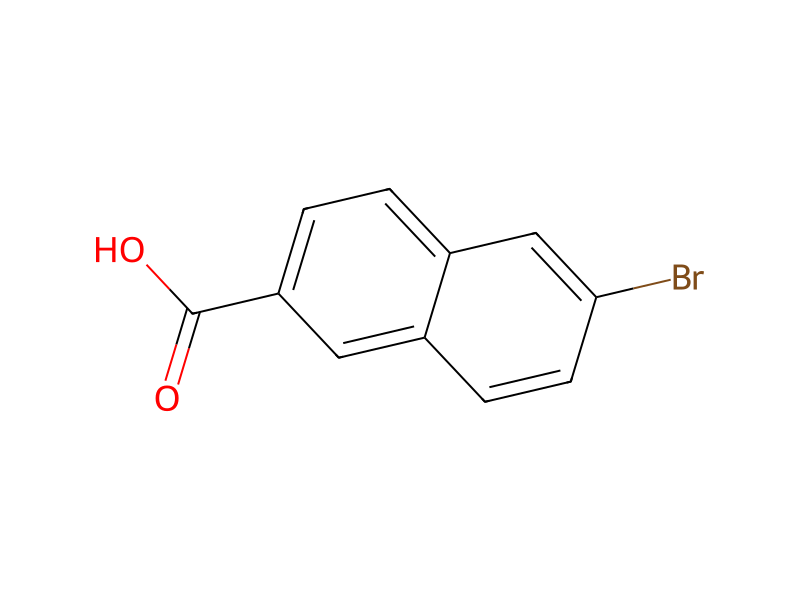
Cyclopropylamine → 6-Bromo-N-cyclopropyl-2-naphthalenecarboxamide
Reaction equation

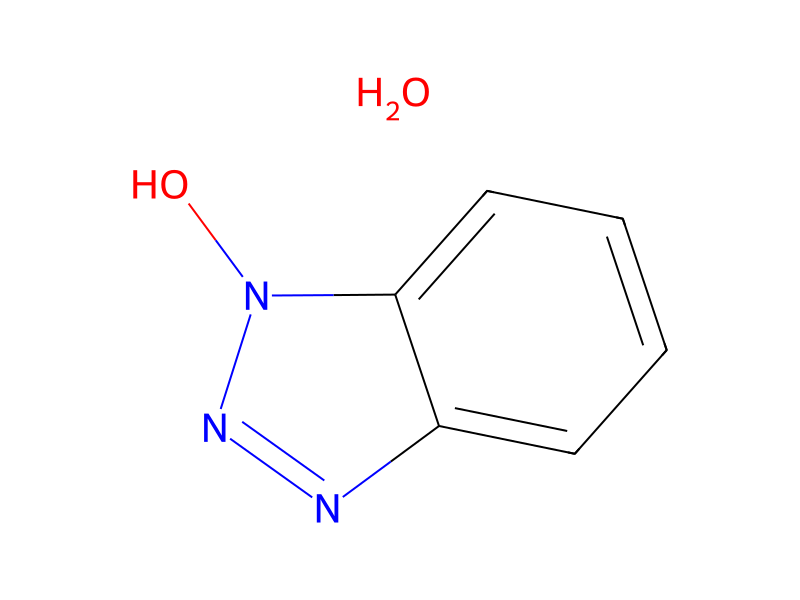
[Br:1][C:2]1[CH:3]=[C:4]2[C:9](=[CH:10][CH:11]=1)[CH:8]=[C:7]([C:12]([OH:14])=O)[CH:6]=[CH:5]2.Cl.C(N=C=N[CH2:21][CH2:22][CH2:23][N:24](C)C)C.O.ON1C2C=CC=CC=2N=N1.C(N(C(C)C)C(C)C)C.C1(N)CC1>CN(C)C=O.C(OCC)(=O)C>[Br:1][C:2]1[CH:3]=[C:4]2[C:9](=[CH:10][CH:11]=1)[CH:8]=[C:7]([C:12]([NH:24][CH:23]1[CH2:21][CH2:22]1)=[O:14])[CH:6]=[CH:5]2Participants
Reactant 5



Product 1

Reagents, catalysts & solvents 2


Procedure
6-Bromo-2-naphthoic acid (1.01 g), 1-ethyl-3-(3-dimethylaminopropyl)carbodiimide hydrochloride (0.92 g) and 1-hydroxy-1H-benzotriazole monohydrate (0.735 g; HOBt) were dissolved in dimethylformamide (16 ml) under an argon atmosphere. N-Ethyldiisopropylamine (0.62 g) was added with stirring under ice-cooling. Cyclopropylamine (0.37 g) was added and the mixture was stood with stirring at room temperature for 18 h. The reaction mixture was poured into ethyl acetate (0.15 L) and the mixture was washed successively with water and saturated brine. The mixture was dried over anhydrous sodium sulfate and the solvent was concentrated. The precipitated crystals were collected by filtration and dried to give the title compound (0.817 g) as colorless needle crystals.
Workup
- temperaturecooling
- stirringwith stirring at room temperature for 18 h
- washthe mixture was washed successively with water and saturated brine
- dry with materialThe mixture was dried over anhydrous sodium sulfate
- concentrationthe solvent was concentrated
- filtrationThe precipitated crystals were collected by filtration
- customdried
Sources & evidence
- ORD record
- ord-51a367fb97a947cc92917363d1a065c2
- Source dataset
- uspto-grants-2006_11
- Patent number
- US07141598B2
Reaction notes
Loading…