Sorbitol → L-Leucine
Reaction equation

[Cl-].[Cl-].[Ca+2].[CH2:4](O)C(N)(CO)CO.Cl.OC[C@@H]([C@H]([C@@H]([C@@H](CO)O)O)O)O.O=C[C@@H]([C@H]([C@@H]([C@@H](CO)O)O)O)O.[NH2:37][C@H:38]([C:45]([OH:47])=[O:46])[CH2:39][C:40]1N=CN[CH:41]=1>>[NH2:37][C@H:38]([C:45]([OH:47])=[O:46])[CH2:39][CH:40]([CH3:4])[CH3:41]Participants
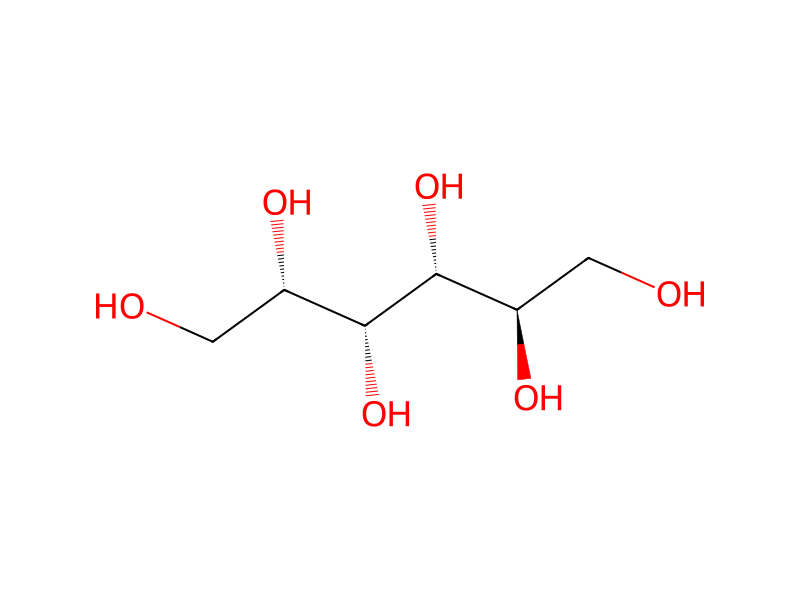




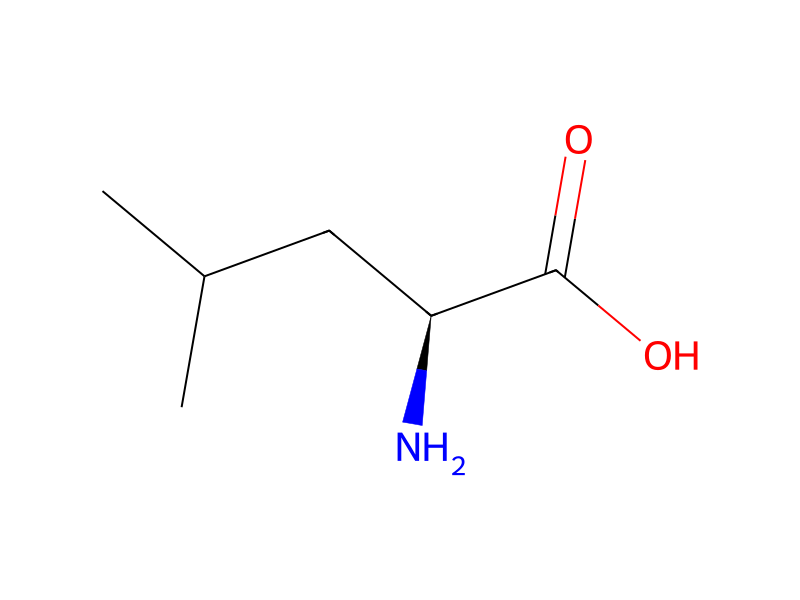
Procedure
The starting yeast is Saccharomyces cerevisiae AH22 [a, leu2, his4, can1 (Cir+)], which has been deposited at Fermentation Research Institute, Agency of Industrial Science and Technology, Japan under Budapest Treaty as "FERM BP-312". The starting yeast is inoculated in YPD medium (100 ml) consisting of 2% polypeptone, 1% yeast extract and 2% glucose, and the mixture is incubated at 30° C. overnight, and thereafter, the cells are collected by centrifugation. The cells thus collected are washed with sterilized water (20 ml), suspended in a solution (5 ml) of 1.2M sorbitol and 100 μg/ml zymolyase-60,000 (manufactured by Seikagaku Kogyo K.K., Japan), and the suspension is allowed to stand at 30° C. for 30 minutes to give spheroplast. The spheroplast thus prepared is washed with 1.2M sorbitol solution three times, and then suspended in a solution (0.6 ml) of 2M sorbitol, 10 mM CaCl2 and 10 mM Tris-HCl (pH 7.5). The suspension thus prepared is divided into a small test tube in a volume of 60 μl. To the suspension is added the solution of the recombinant plasmid pAH 203 (30 μl) prepared in the above (3). After mixing well, 0.1M CaCl2 (3 μl) is added thereto in a final concentration of 10 mM CaCl2, and the mixture is allowed to stand at room temperature for 5 to 10 minutes. To the resulting mixture is added each 1 ml of a solution of 20% polyethylene glycol 4,000, 10 mM CaCl2 and 10 mM Tris-HCl (pH 7.5), and the mixture is allowed to stand at room temperature for about 20 minutes. The resulting mixture (each 0.2 ml) is added to a medium (10 ml) consisting of 22% sorbitol, 2% glucose, 0.7% yeast nitrogen base amino acid, 2% YPD, 20 μg/ml histidine and 3% agar, which is kept at a constant temperature of 45° C. After gentle mixing, the mixture is added in a layer onto a plate of minimal medium containing 1.2M sorbitol which is previously prepared and consists of 0.7% yeast nitrogen base amino acid, 2% glucose, 20 μg/ml histidine and 2% agar and is set thereon. The plate is incubated at 30° C. to give a colony of a leucine-non-requiring yeast. The colony is incubated in a BurkHolder minimal medium supplemented with histidine (20 μg/ml) [cf. Tohe, A, et al; J. Bachterol., 113, 727-738, 1973] to give the desired transformed yeast: Saccharomyces cerevisiae pAH 203.
Workup
- extractionextract
- customthe cells are collected by centrifugation
- customThe cells thus collected
- washare washed with sterilized water (20 ml)
- waitto stand at 30° C. for 30 minutes
- customto give spheroplast
- customThe spheroplast thus prepared
- washis washed with 1.2M sorbitol solution three times
- customThe suspension thus prepared
- customis divided into a small test tube in a volume of 60 μl
- additionAfter mixing well
- waitto stand at room temperature for 5 to 10 minutes
- waitto stand at room temperature for about 20 minutes
- additionThe resulting mixture (each 0.2 ml) is added to a medium (10 ml)
- customis kept at a constant temperature of 45° C
- additionAfter gentle mixing, the mixture is added in a layer onto a plate of minimal medium
- customis previously prepared
- customis incubated at 30° C.
Sources & evidence
- ORD record
- ord-673e31efeaa54caa82581971277fb875
- Source dataset
- uspto-grants-1998_01
- Patent number
- US05707862
Reaction notes
Loading…