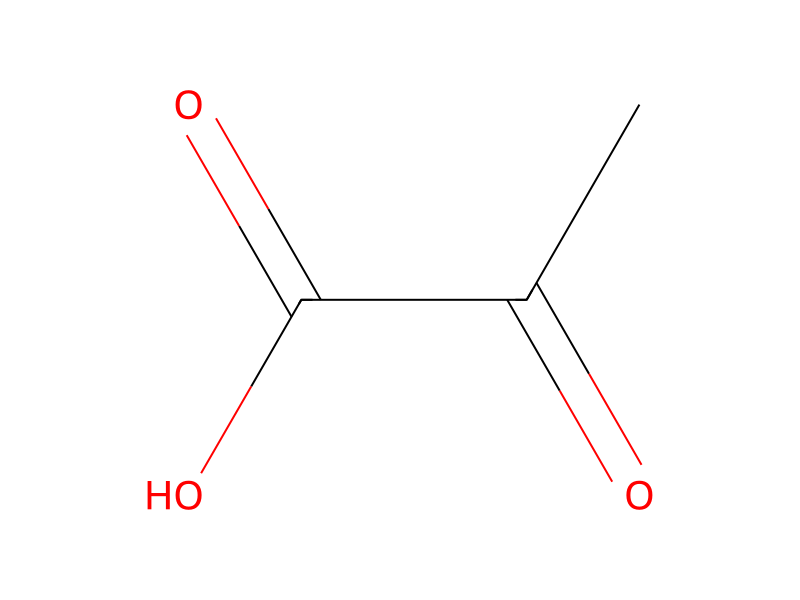
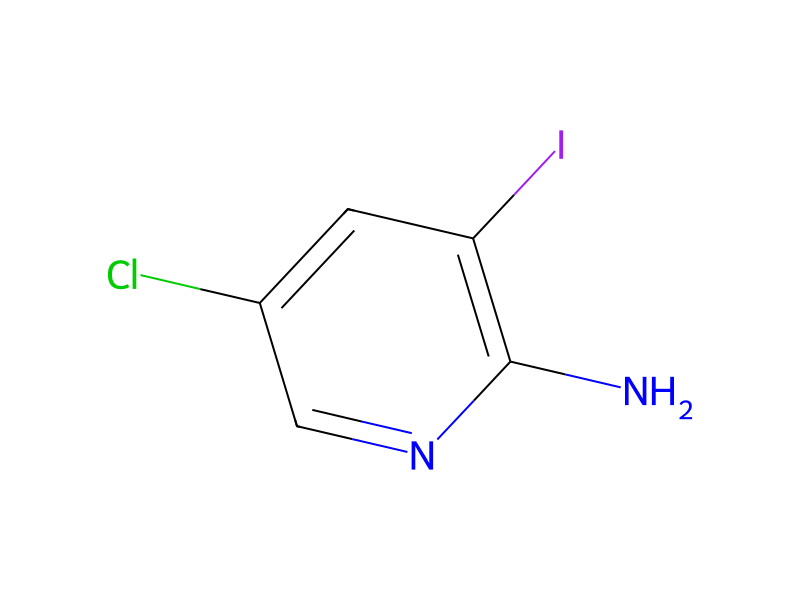
Pyruvic Acid → 5-chloro-1H-pyrrolo[2,3-b]pyridine-2-carboxylic acid
Reaction equation

[C:1]([OH:6])(=[O:5])[C:2]([CH3:4])=O.[Cl:7][C:8]1[CH:9]=[C:10](I)[C:11]([NH2:14])=[N:12][CH:13]=1.C1N2CCN(CC2)C1>CN(C=O)C.C([O-])(=O)C.[Pd+2].C([O-])(=O)C>[Cl:7][C:8]1[CH:9]=[C:10]2[CH:4]=[C:2]([C:1]([OH:6])=[O:5])[NH:14][C:11]2=[N:12][CH:13]=1Participants




Conditions
- Temperature
- 110 °C
Procedure
Pyruvic acid (0.43 ml, 6.24 mmol) was added to a solution of 5-chloro-3-iodopyridin-2-ylamine (Preparation 56, 500 mg, 2.08 mmol), palladium acetate (23 mg, 0.10 mmol) and DABCO (700 mg, 6.24 mmol) in anhydrous DMF (20 ml). The reaction mixture was degassed with argon for 20 min, then heated to 110° C. for 16 h. The solvent was removed in vacuo and the residue suspended in water (10 ml) and acetic acid (5 ml) and then filtered. The solid was dissolved in EtOAc (50 ml), extracted into 2N NaOH solution (50 ml) and the organic layer discarded. The aqueous solution was acidified with concentrated HCl and extracted into EtOAc (2×40 ml). The combined organics were dried (MgSO4) and concentrated in vacuo to give the title compound as a beige solid. δH (CD3OD): 7.14 (1H, s), 8.14 (1H, d), 8.35 (1H, d).
Workup
- customThe reaction mixture was degassed with argon for 20 min
- customThe solvent was removed in vacuo
- filtrationacetic acid (5 ml) and then filtered
- dissolutionThe solid was dissolved in EtOAc (50 ml)
- extractionextracted into 2N NaOH solution (50 ml)
- extractionextracted into EtOAc (2×40 ml)
- dry with materialThe combined organics were dried (MgSO4)
- concentrationconcentrated in vacuo
Sources & evidence
- ORD record
- ord-8d78a663551244498906c537eab88b65
- Source dataset
- uspto-grants-2008_07
- Patent number
- US07405210B2
Reaction notes
Loading…