Dibromomethane → 2-(Bromomethyl)-4,4,5,5-tetramethyl-1,3,2-dioxaborolane
Reaction equation

[B:1]([O:10][CH:11]([CH3:13])[CH3:12])([O:6][CH:7]([CH3:9])[CH3:8])OC(C)C.[Br:14][CH2:15]Br.C([Li])CCC.CS(O)(=O)=O.OC(C(O)(C)C)(C)C>O1CCCC1>[Br:14][CH2:15][B:1]1[O:6][C:7]([CH3:8])([CH3:9])[C:11]([CH3:12])([CH3:13])[O:10]1Participants

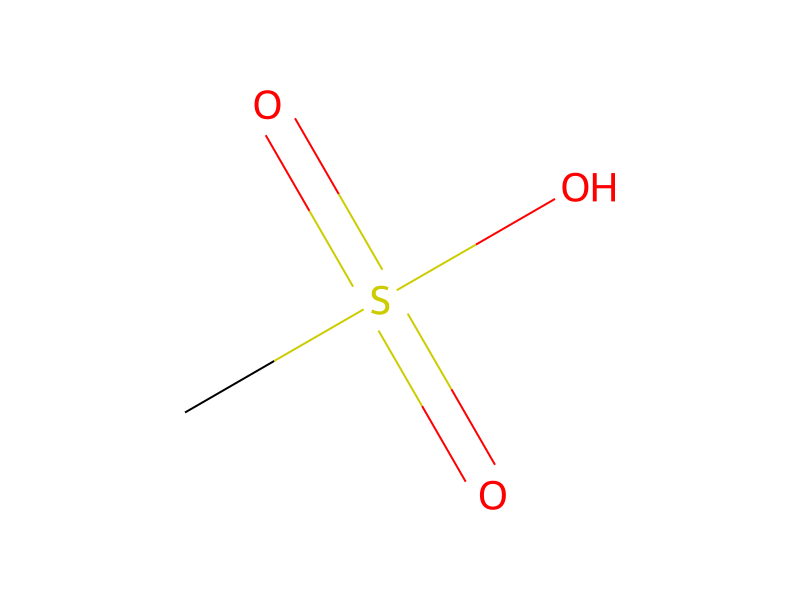





Conditions
- Temperature
- 0 °C
Procedure
To a mixture of triisopropyl borate (20 g, 110 mmol), dibromomethane (8.6 mL, 120 mmol), and tetrahydrofuran (150 mL) was added dropwise n-butyl lithium (2.6 M n-hexane solution, 39 mL, 100 mmol) over a period of 1.5 hours at −78° C., and then the reaction mixture was stirred for 1.5 hours at the same temperature. This mixture was then stirred for 2 hours at room temperature, after which it was cooled to 0° C., methanesulfonic acid (6.5 mL, 100 mmol) was added to the reaction mixture, and then the reaction mixture was stirred for 1 hour at room temperature. The mixture was cooled to 0° C., pinacol (12 g, 100 mmol) was added to the reaction mixture, and the reaction mixture was then stirred for 1 hour at room temperature. The reaction mixture was concentrated under a reduced pressure, after which the residue thus obtained was distilled under a reduced pressure (74-76° C., 8 mmHg) to obtain the title compound (16 g, 68%).
Workup
- stirringThis mixture was then stirred for 2 hours at room temperature
- stirringthe reaction mixture was stirred for 1 hour at room temperature
- temperatureThe mixture was cooled to 0° C.
- stirringthe reaction mixture was then stirred for 1 hour at room temperature
- concentrationThe reaction mixture was concentrated under a reduced pressure
- customafter which the residue thus obtained
- distillationwas distilled under a reduced pressure (74-76° C., 8 mmHg)
Sources & evidence
- ORD record
- ord-66777c18e9f14f7ba638ae3747947439
- Source dataset
- uspto-grants-2014_09
- Patent number
- US08841327B2
Reaction notes
Loading…