Water → 2-CYCLOPROPYLBENZALDEHYDE
Reaction equation

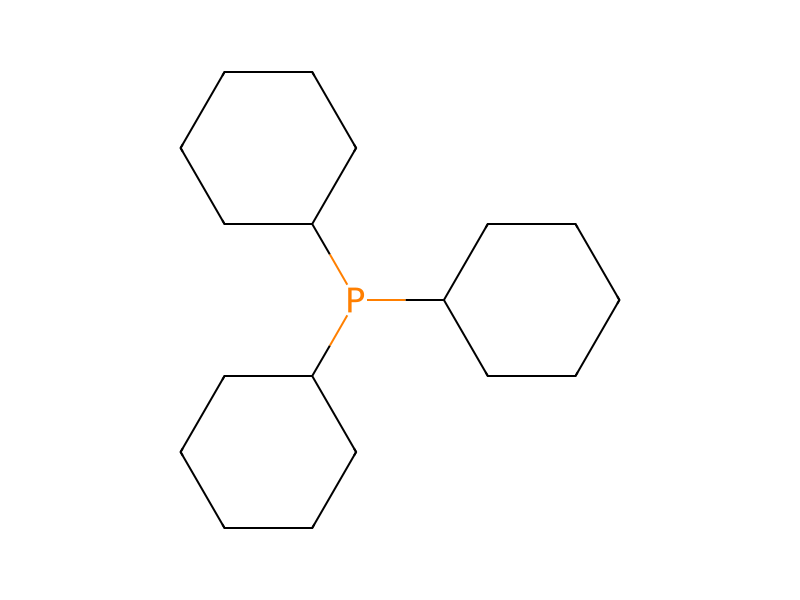
Br[C:2]1[CH:9]=[CH:8][CH:7]=[CH:6][C:3]=1[CH:4]=[O:5].[CH:10]1(B(O)O)[CH2:12][CH2:11]1.C1(P(C2CCCCC2)C2CCCCC2)CCCCC1.C1(C)C=CC=CC=1.O>C(OCC)(=O)C.[Cl-].[Na+].O.CC([O-])=O.CC([O-])=O.[Pd+2]>[CH:10]1([C:2]2[CH:9]=[CH:8][CH:7]=[CH:6][C:3]=2[CH:4]=[O:5])[CH2:12][CH2:11]1Participants
Reactant 5



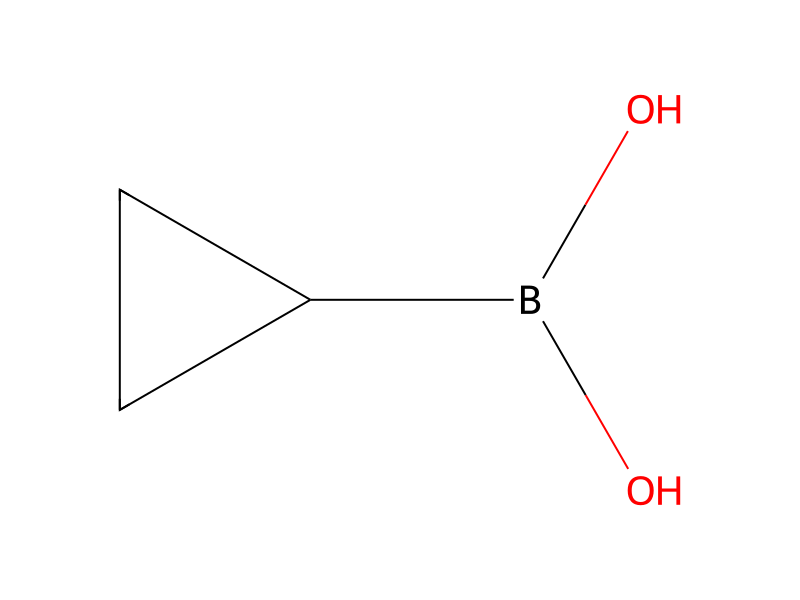
Product 1

Reagents, catalysts & solvents 3



Conditions
- Temperature
- 100 °C
Procedure
A 60 mL reaction vial is charged with 2-bromo-benzaldehyde (10.810 mmoles, 1.264 mL), cyclopropylboronic acid (14.053 mmoles, 1.207 g), potassium phosphate tribasic N-hydrate (37.834 mmoles, 8.031 g), tricyclohexylphosphine (1.081 mmoles, 303.139 mg), toluene (283.654 mmoles, 30.000 mL), and water (83.263 mmoles, 1.500 mL). The mixture is then thoroughly degassed. Next, Pd(OAc)2 (540.482 μmoles, 121.343 mg) is added and the mixture is placed under nitrogen and heated to 100° C. After 2 hours, cool to room temperature and dilute with ethyl acetate (50 mL) and brine (50 mL). Dry the organic layer over anhydrous sodium sulfate, filter, and concentrate under reduced pressure. Purify by silica gel chromatography eluting with hexanes: dichloromethane 20-50% to afford the title compound. 1H NMR (400.31 MHz, cdcl3): 10.57 (s, 1H), 7.78 (dd, J=1.3, 7.9 Hz, 1H), 7.45 (td, J=7.5, 1.3 Hz, 1H), 7.28 (t, J=7.5 Hz, 1H), 7.09 (d, J=7.9 Hz, 1H), 2.63-2.56 (m, 1H), 1.07-1.02 (m, 2H), 0.77-0.73 (m, 2H).
Workup
- customA 60 mL reaction
- customThe mixture is then thoroughly degassed
- temperaturecool to room temperature
- dry with materialDry the organic layer over anhydrous sodium sulfate
- filtrationfilter
- concentrationconcentrate under reduced pressure
- customPurify by silica gel chromatography
- washeluting with hexanes
Sources & evidence
- ORD record
- ord-3ec5bf50aeb2406e9def40d61dcf7655
- Source dataset
- uspto-grants-2012_08
- Patent number
- US08252798B2
Reaction notes
Loading…