Water → 4-[1,1-Dimethyl-3-(2-pyridyl)-2-propynyloxy]benzonitrile
Reaction equation

[CH3:1][C:2]([CH3:14])([O:5][C:6]1[CH:13]=[CH:12][C:9]([C:10]#[N:11])=[CH:8][CH:7]=1)[C:3]#[CH:4].I[C:16]1[CH:21]=[CH:20][CH:19]=[CH:18][N:17]=1.O.C(OCC)(=O)C>C(NCC)C.[Cu]I.[Pd](Cl)Cl.C1(P(C2C=CC=CC=2)C2C=CC=CC=2)C=CC=CC=1>[CH3:1][C:2]([CH3:14])([O:5][C:6]1[CH:7]=[CH:8][C:9]([C:10]#[N:11])=[CH:12][CH:13]=1)[C:3]#[C:4][C:16]1[CH:21]=[CH:20][CH:19]=[CH:18][N:17]=1Participants
9
Reactant 4




Product 1

Reagents, catalysts & solvents 4



Procedure
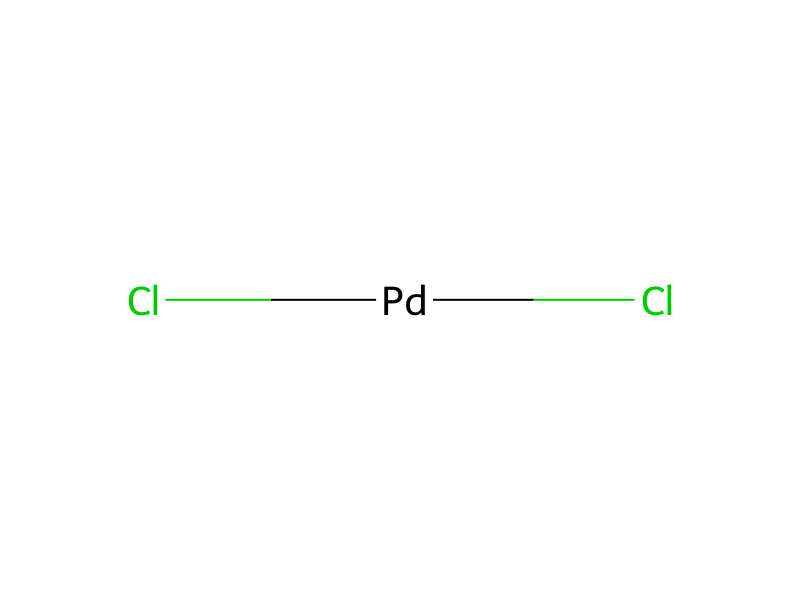
53 mg of copper(I) iodide, 293 mg of triphenylphosphine and 99 mg of palladium(II) chloride were dissolved in 320 ml of diethylamine. 10.4 g of 4-(1,1-dimethyl-2-propynyloxy)benzonitrile and 11.5 g of 2-iodopyridine were added and the mixture was stirred at room temperature under a nitrogen atmosphere for 3 days. Water and ethyl acetate were added and the organic phase was separated, dried over sodium sulphate and evaporated. The residue was chromatographed on silica gel using ethyl acetate/petroleum ether (1:3) and then ethyl acetate/petroleum ether (1:2) for the elution to give 12.98 g of 4-[1,1-dimethyl 3-(2-pyridyl)-2-propynyloxy] benzonitrile in the form of an oil.
Workup
- customthe organic phase was separated
- dry with materialdried over sodium sulphate
- customevaporated
- customThe residue was chromatographed on silica gel
- washethyl acetate/petroleum ether (1:2) for the elution
Sources & evidence
- ORD record
- ord-5079b574a60741b4af90bbfcbb4d42a0
- Source dataset
- uspto-grants-1992_06
- Patent number
- US05118694
Reaction notes
Loading…