Hydrochloric Acid → HCID 135433484, compound
Reaction equation

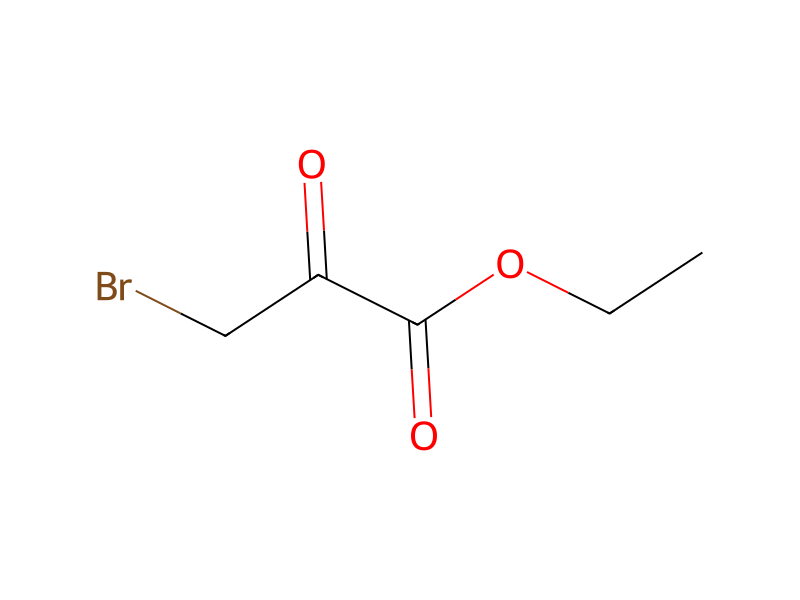
[SH:1][C:2]1[NH:11][C:10](=[O:12])[C:9]2[C:4](=[CH:5][CH:6]=[CH:7][CH:8]=2)[N:3]=1.Br[CH2:14][C:15](=[O:21])[C:16]([O:18][CH2:19][CH3:20])=[O:17].C(N(CC)CC)C.Cl>CN(C=O)C.CCOC(C)=O>[CH2:19]([O:18][C:16](=[O:17])[C:15](=[O:21])[CH2:14][S:1][C:2]1[NH:11][C:10](=[O:12])[C:9]2[C:4](=[CH:5][CH:6]=[CH:7][CH:8]=2)[N:3]=1)[CH3:20]Participants






Procedure
An homogeneous solution of 2-mercapto-3H-quinazolin-4-one (1.30 g, 7.17 mmol) and ethyl bromopyruvate (1 mL, 7.17 mmol, 90% purity) in DMF (30 mL) was stirred at room temperature for 6 h. Triethylamine (5 mL) was added to the solution and the mixture was stirred at room temperature for 36 h. The mixture was acidified to pH 1-2 with concentrated hydrochloric acid and then rotary evaporated to dryness. The residue was separated by column chromatography eluted with EtOAc giving the title compound as yellow solid (0.231 g, yield 11.0%). 1H NMR (DMSO-d6, 300.16 MHz) δ (ppm): 8.05 (dd, J=7.9 & 1.4 Hz, 1H), 8.01 (s, 1H), 7.81 (td, J=8.3 & 1.5 Hz, 1H), 7.53 (d, J=8.2 Hz, 1H), 7.46 (td, J=7.5 & 1.4 Hz, 1H), 4.21 (q, J=7.1 Hz, 2H), 3.82 (d, J=12.2 Hz, 1H), 3.46 (d, J=12.2 Hz, 1H) and 1.18 (t, J=7.1 Hz, 3H). 13C NMR (DMSO-d6, 75.48 MHz) δ (ppm): 168.06, 159.54, 159.26, 149.07, 135.98, 126.85, 126.74, 126.36, 119.09, 91.33, 62.79, 37.92 and 14.31. MS (ESI) m/z: 293 (M++H, 100).
Workup
- customrotary evaporated to dryness
- customThe residue was separated by column chromatography
Sources & evidence
- ORD record
- ord-fb25ec8e66e04c2e949c28fde7febac7
- Source dataset
- uspto-grants-2005_07
- Patent number
- US06916850B2
Reaction notes
Loading…