Benzyl Bromide → 1-Benzyl-3-bromo-5-chloro-2-pyridone
Reaction equation

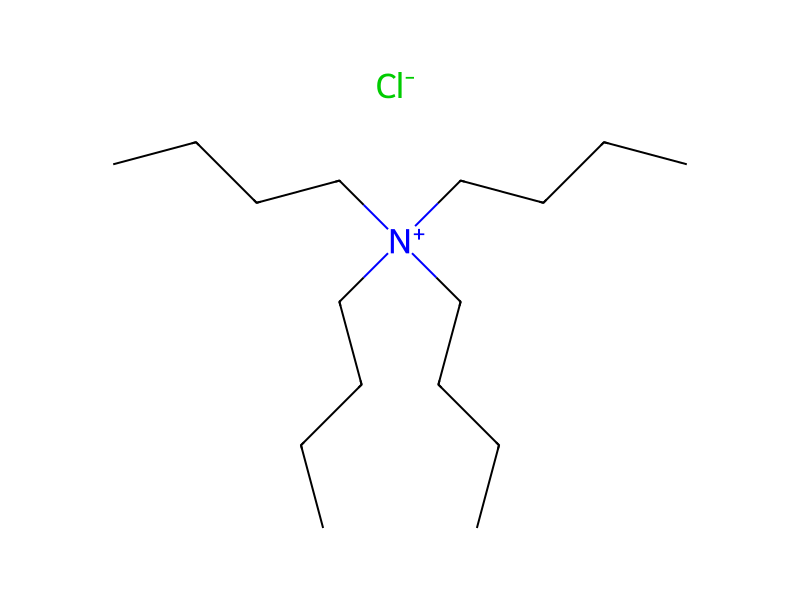
[Br:1][C:2]1[C:3](=[O:9])[NH:4][CH:5]=[C:6]([Cl:8])[CH:7]=1.C(=O)([O-])[O-].[K+].[K+].[CH2:16](Br)[C:17]1[CH:22]=[CH:21][CH:20]=[CH:19][CH:18]=1>[Cl-].C([N+](CCCC)(CCCC)CCCC)CCC.C(OCC)(=O)C>[CH2:16]([N:4]1[CH:5]=[C:6]([Cl:8])[CH:7]=[C:2]([Br:1])[C:3]1=[O:9])[C:17]1[CH:22]=[CH:21][CH:20]=[CH:19][CH:18]=1Participants





Procedure
A mixture of 3-bromo-5-chloro-1H-2-pyridone (950 mg, 4.56 mmol), freshly ground potassium carbonate (1.26 g, 9.1 mmol) and tetrabutyl ammonium chloride (100 mg) in was stirred mechanically without solvent for 30 min and benzyl bromide (0.56 mL, 4.7 mmol) was added. The mixture was stirred at room temperature for 72 hr. The mixture was diluted with ethyl acetate and filtered, washing the solids with ethyl acetate. The filtrate was evaporated to dryness and the residue was triturated with several portions of hexane. The residue was chromatographed over 90 g of silica gel eluting with 3:1 hexane:ethyl acetate followed by 100% ethyl acetate to give 1-benzyl-3-bromo-5-chloro-2-pyridone (423 mg, 31%), mp 108-110° C. LR(+)LSIMS: m/z 595 (2M+H, 2 Cl, 2 Br), 298 (M+H, 1 Cl, 1 Br).
Workup
- stirringThe mixture was stirred at room temperature for 72 hr
- filtrationfiltered
- washwashing the solids with ethyl acetate
- customThe filtrate was evaporated to dryness
- customthe residue was triturated with several portions of hexane
- customThe residue was chromatographed over 90 g of silica gel eluting with 3:1 hexane
Sources & evidence
- ORD record
- ord-18ca42917f424cbcbece01bd7afc719b
- Source dataset
- uspto-grants-2005_07
- Patent number
- US06916933B2
Reaction notes
Loading…