Chloride → 5-(6-Bromo-2-pyridyl)-4-pentynoic acid methyl ester
Reaction equation

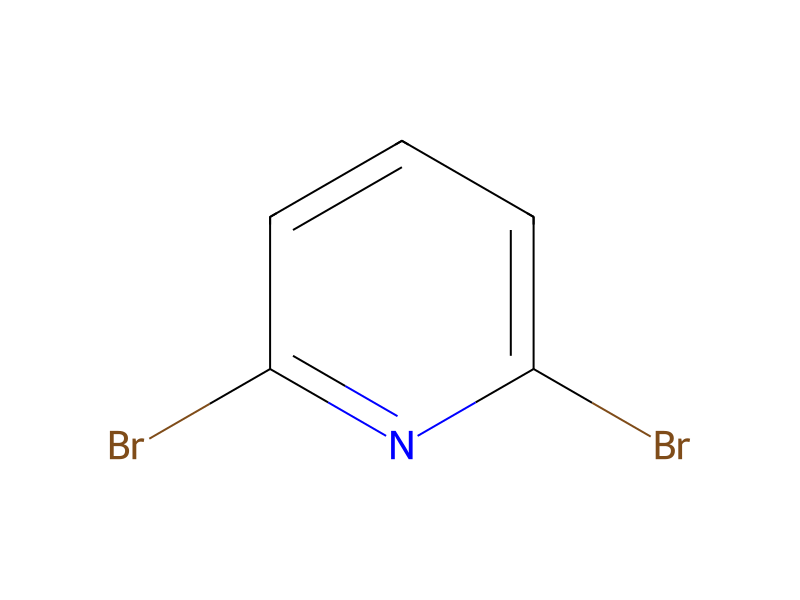
Br[C:2]1[CH:7]=[CH:6][CH:5]=[C:4]([Br:8])[N:3]=1.[CH3:9][O:10][C:11](=[O:16])[C:12]#[C:13][CH2:14][CH3:15].[Cl-]>C(N(CC)CC)C.[Cu]I>[CH3:9][O:10][C:11](=[O:16])[CH2:12][CH2:13][C:14]#[C:15][C:2]1[CH:7]=[CH:6][CH:5]=[C:4]([Br:8])[N:3]=1Participants
6
Reactant 3


Product 1

Reagents, catalysts & solvents 2


Procedure
A solution of 4.73 g of 2,6-dibromopyridine in 150 ml of triethylamine is mixed under ice cooling with 2.69 g of pentynoic acid methyl ester, 350 mg of bis-triphenylphosphinepalladium(II) chloride and 48 mg of copper(I) iodide and the mixture is stirred for 1 hour. Then, the ice bath is removed and it is stirred for 3 hours at room temperature. The precipitate--consisting of 2,6-bis-(4-methoxycarbonyl-1-butinyl)-pyridine and triethylammonium bromide--is suctioned off and the filtrate is evaporated to dryness. The residue is chromatographed on silica gel with hexane/ethyl acetate=95/5 to 75/25. 2.32 g of 5-(6-bromo-2-pyridyl)-4-pentynoic acid methyl ester of melting point 59°-61° C. is obtained.
Workup
- customThen, the ice bath is removed
- stirringit is stirred for 3 hours at room temperature
- customthe filtrate is evaporated to dryness
- customThe residue is chromatographed on silica gel with hexane/ethyl acetate=95/5 to 75/25
Sources & evidence
- ORD record
- ord-f26ab3145d8d4fd990174786fecc2399
- Source dataset
- uspto-grants-1997_03
- Patent number
- US05614634
Reaction notes
Loading…