Ethanol → Benzenamine, 4-chloro-N-(4-nitrophenyl)-
Reaction equation

[CH2:1](O)[CH3:2].[C:4](OCC)(=O)C.[N+:10]([C:13]1[CH:18]=[CH:17][C:16]([NH:19][C:20]2[CH:25]=[CH:24][C:23]([Cl:26])=[CH:22][CH:21]=2)=[CH:15][CH:14]=1)([O-:12])=[O:11].[OH-].[K+]>C(I)CC.CN(C)C=O.C1C([N+]([O-])=O)=CC=C(O)C=1.[N+](C1C=CC=CC=1)([O-])=O>[N+:10]([C:13]1[CH:14]=[CH:15][C:16]([N:19]([C:20]2[CH:25]=[CH:24][C:23]([Cl:26])=[CH:22][CH:21]=2)[CH2:4][CH2:1][CH3:2])=[CH:17][CH:18]=1)([O-:12])=[O:11].[N+:10]([C:13]1[CH:14]=[CH:15][C:16]([NH:19][C:20]2[CH:25]=[CH:24][C:23]([Cl:26])=[CH:22][CH:21]=2)=[CH:17][CH:18]=1)([O-:12])=[O:11]Participants
10
Reactant 4




Product 2

Reagents, catalysts & solvents 4



Procedure
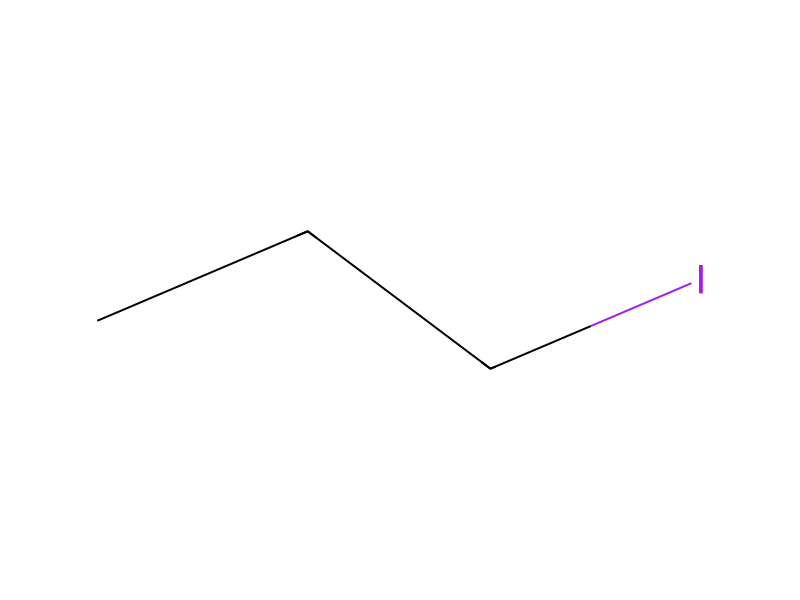
The starting aniline was obtained from the corresponding nitro compound by reduction with hydrogen under the influence of Raney nickel as a catalyst; a mixture of equal parts by volume of ethanol and ethyl acetate was used as a solvent. 1-Nitro-4-[N-(4-chlorophenyl)-N-propylamino]benzene was prepared by an alkylation of 1-nitro-4-(4-chloroanilino)benzene with propyliodide in dimethylformamide as a solvent under the influence of KOH. 1-Nitro-4-(4-chloroanilino)benzene was formed by a coupling at high temperature of p-chlorobenzeneisocyanate and p-nitrophenol in nitrobenzene as a solvent.
Sources & evidence
- ORD record
- ord-05f37c1ee26043ddaa68e9b960df0bc7
- Source dataset
- uspto-grants-1987_05
- Patent number
- US04665235
Reaction notes
Loading…