Tetrahydrofuran → HCID 22888181, compound
Reaction equation

[C:1]([O:6][CH2:7][CH3:8])(=[O:5])[C:2]([CH3:4])=[O:3].[Cl:9][C:10]1[CH:15]=[CH:14][C:13](I)=[CH:12][CH:11]=1.[Mg].O1CCCC1>C(OCC)C>[CH2:7]([O:6][C:1](=[O:5])[C:2]([C:13]1[CH:14]=[CH:15][C:10]([Cl:9])=[CH:11][CH:12]=1)([OH:3])[CH3:4])[CH3:8]Participants
6
Reactant 4

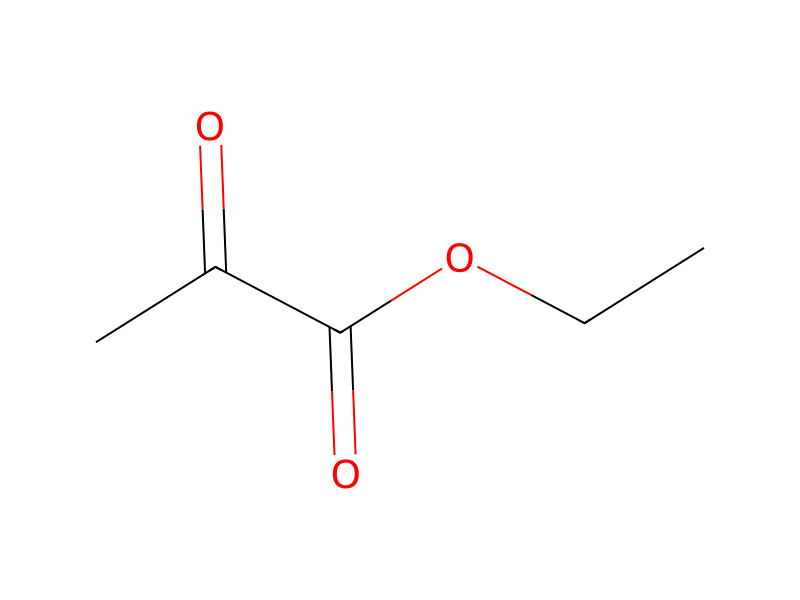


Product 1

Reagents, catalysts & solvents 1

Conditions
- Temperature
- 0 °C
Procedure
To a stirred solution of 11.5 g ethyl pyruvate in 20 ml diethylether is slowly added under cooling (0° C.), a freshly prepared Grignard solution (from 23.9 g 4-chloro-iodobenzene and 3 g magnesium turnings). Some tetrahydrofurane is added to prevent the formation of viscous suspension. After stirring for 2 hours at room temperature the reaction is quenched by pouring it onto a mixture of ice and 2N sulfuric acid. Extraction of the suspension with diethyl ether followed by washing with brine, drying over sodium sulfate and evaporation leads to a residue which is purified on silicagel (hexane-ethyl acetate) to obtain 2-(4-chlorophenyl)-2-hydroxy propionic acid ethyl ester as yellowish oil.
Workup
- customis quenched
- additionby pouring it
- additiononto a mixture of ice and 2N sulfuric acid
- extractionExtraction of the suspension with diethyl ether
- washby washing with brine
- dry with materialdrying over sodium sulfate and evaporation
- customis purified on silicagel (hexane-ethyl acetate)
Sources & evidence
- ORD record
- ord-4ffac6cf121549109aa9216d2c46159b
- Source dataset
- uspto-grants-2002_10
- Patent number
- US06469005B1
Reaction notes
Loading…