HomeMCPWorkbenchSkills
HomeWorkbenchNotificationsMe
llms.txt · MCP GuidePrivacy Policy · Terms of Service · Supportv1.8.3
  1. Home
  2. /Reaction

Phosphate → 1-Benzyl-4-bromomethyl-2-oxo-1,2-dihydro-pyridine-3-carboxylic acid ethyl ester

HRID 1410755
Print

Reaction equation

HRID 1410755 reaction equation
[CH2:1]([O:3][C:4]([C:6]1[C:7](=[O:22])[N:8]([CH2:15][C:16]2[CH:21]=[CH:20][CH:19]=[CH:18][CH:17]=2)[CH:9]=[CH:10][C:11]=1[C:12](O)=O)=[O:5])[CH3:2].C(Cl)(=O)C(Cl)=O.[BH3-]C#N.[Na+].P([O-])([O-])([O-])=O.C1(P(C2C=CC=CC=2)C2C=CC=CC=2)C=CC=CC=1.C(Br)(Br)(Br)[Br:58]>C(Cl)Cl.CN(C=O)C.C1COCC1>[CH2:1]([O:3][C:4]([C:6]1[C:7](=[O:22])[N:8]([CH2:15][C:16]2[CH:21]=[CH:20][CH:19]=[CH:18][CH:17]=2)[CH:9]=[CH:10][C:11]=1[CH2:12][Br:58])=[O:5])[CH3:2]
ParticipantsProcedureWorkupSources & evidenceReaction notes

Participants

10

Reactant 6

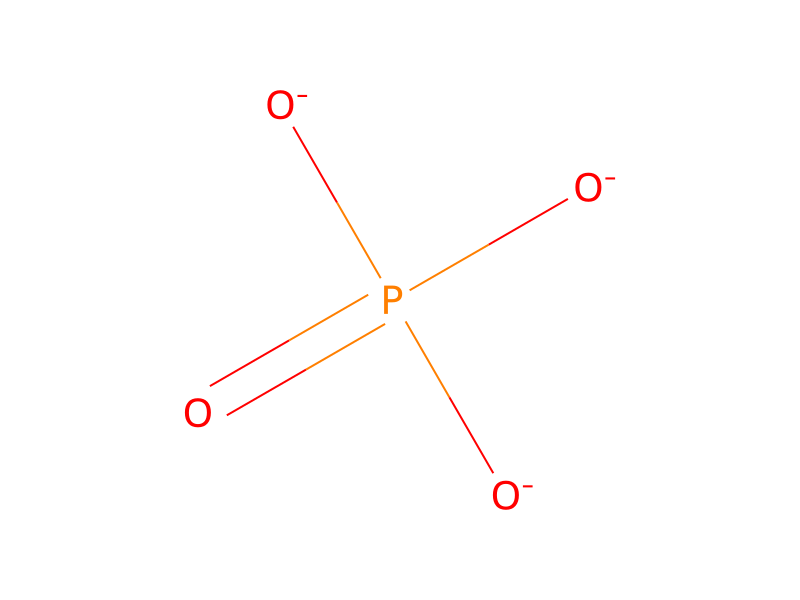
HCID 1061PhosphateHCID 11205Carbon tetrabromideHCID 11776TriphenylphosphineHCID 65578Oxalyl chlorideHCID 5003444Sodium cyanoborohydrideHCID 682973793-(Ethoxycarbonyl)-1-benzyl-1,2-dihydro-2-oxopyridine-4-carboxylic acid

Product 1

HCID 68297352
1-Benzyl-4-bromomethyl-2-oxo-1,2-dihydro-pyridine-3-carboxylic acid ethyl ester
Yield 41.1%

Reagents, catalysts & solvents 3

HCID 6228DimethylformamideCatalystHCID 6344DichloromethaneSolvent2×HCID 8028TetrahydrofuranSolvent

Procedure

1-Benzyl-2-oxo-1,2-dihydro-pyridine-3,4-dicarboxylic acid 3-ethyl ester (1.8 g, 5.98 mmol) was dissolved in 50 mL of CH2Cl2. Oxalyl chloride (5.2 mL, 59.8 mmol) and DMF (2 drops) were added, and the mixture was stirred for 3 h. Solvent and excess oxalyl chloride were removed by evaporation in vacuo, and to the residue was added a solution of NaCNBH3 (750 mg, 12 mmol) in THF (40 mL). The resulting suspension was stirred at r.t. for 16 h. The reaction mixture was cooled in an ice bath, and then poured into a pre-cooled, vigorously stirring pH 4.9 phosphate buffer (300 mL). The resulting mixture was extracted several times with benzene, and the combined organic layer was washed with ice-cold water and dried over MgSO4. Evaporation of the solvent at reduced pressure gave a yellow oil, which was dissolved in 30 mL of CH2Cl2. The solution was cooled in at ice bath, and triphenylphosphine (1.64 g, 6.27 mmol) and carbon tetrabromide (2.08 g, 6.27 mmol) were added. The mixture was then stirred at r.t. for 16 h. Solvent was evaporated in vacuo, and the residue was purified by silica gel chromatography (0-60% EtOAc/hexanes) to give 860 mg of the title compound as an orange oil. 1H NMR (CDCl3, 200 MHz): δ=7.20-7.45 (m, 6H), 6.20 (d, 1H, J=7.0 Hz), 5.12 (s, 2H), 4.43 (q, 2H, J=7.0 Hz), 4.28 (s, 2H), 1.42 (t, 3H, J=7.0 Hz).

Workup

  1. customSolvent and excess oxalyl chloride were removed by evaporation in vacuo
  2. stirringThe resulting suspension was stirred at r.t. for 16 h
  3. temperatureThe reaction mixture was cooled in an ice bath
  4. additionpoured into a pre-cooled
  5. extractionThe resulting mixture was extracted several times with benzene
  6. washthe combined organic layer was washed with ice-cold water
  7. dry with materialdried over MgSO4
  8. customEvaporation of the solvent at reduced pressure
  9. customgave a yellow oil, which
  10. temperatureThe solution was cooled in at ice bath
  11. stirringThe mixture was then stirred at r.t. for 16 h
  12. customSolvent was evaporated in vacuo
  13. customthe residue was purified by silica gel chromatography (0-60% EtOAc/hexanes)

Sources & evidence

ORD record
ord-4f4376bd1a2c4a4db7001700d0cf1ffa
Source dataset
uspto-grants-2014_12
DOI
10.6084/m9.figshare.5104873.v1
Patent number
US08921389B2

Reaction notes

On this pageParticipantsProcedureWorkupSources & evidenceReaction notes





