HomeMCPSkillsWorkbenchOpenChem
HomeWorkbenchNotificationsMe
llms.txt · skill.md · MCP GuidePrivacy Policy · Terms of Service · Supportv1.8.4
  1. Home
  2. /Reaction

Hydrochloric Acid → HCID 68698780, compound

HRID 1444636
Print

Reaction equation

Br[C:2]1[N:3]([CH2:21][CH:22]([NH:27][C:28]([O:30][C:31]([CH3:34])([CH3:33])[CH3:32])=[O:29])[C:23]([O:25]C)=[O:24])[C:4]2[C:9]([C:10]=1[CH:11]1[CH2:16][CH2:15][CH2:14][CH2:13][CH2:12]1)=[CH:8][CH:7]=[C:6]([C:17]([O:19][CH3:20])=[O:18])[CH:5]=2.CC1(C)C(C)(C)OB([C:43]2[CH:49]=[CH:48][CH:47]=[CH:46][C:44]=2[NH2:45])O1.[O-]P([O-])([O-])=O.[K+].[K+].[K+].C1(P(C2CCCCC2)C2C=CC=CC=2C2C(OC)=CC=CC=2OC)CCCCC1.Cl.[Li+].[OH-]>C(O)CCC.O.C([O-])(=O)C.[Pd+2].C([O-])(=O)C>[NH2:45][C:44]1[CH:46]=[CH:47][CH:48]=[CH:49][C:43]=1[C:2]1[N:3]([CH2:21][C@@H:22]([C:23]([OH:25])=[O:24])[NH:27][C:28]([O:30][C:31]([CH3:34])([CH3:33])[CH3:32])=[O:29])[C:4]2[C:9]([C:10]=1[CH:11]1[CH2:12][CH2:13][CH2:14][CH2:15][CH2:16]1)=[CH:8][CH:7]=[C:6]([C:17]([O:19][CH3:20])=[O:18])[CH:5]=2


ParticipantsConditionsProcedureWorkupSources & evidenceReaction notes

Participants

9

Reactant 6

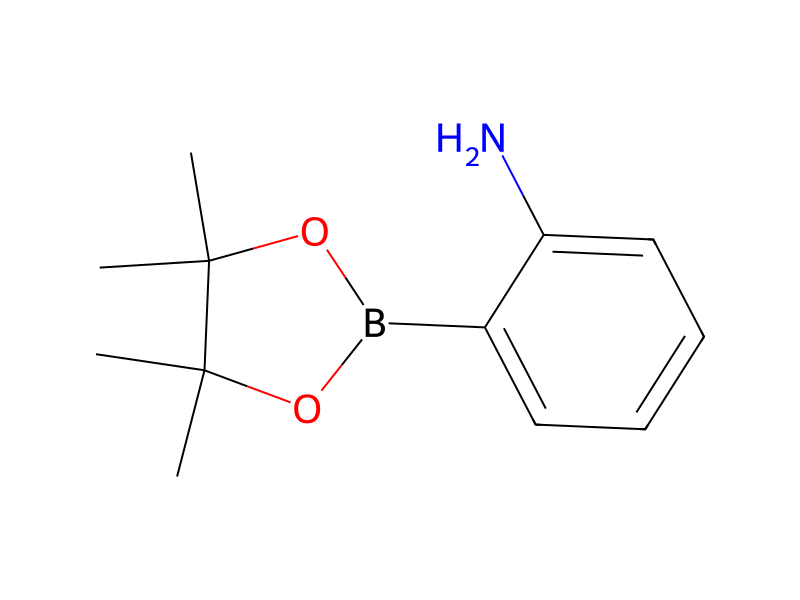
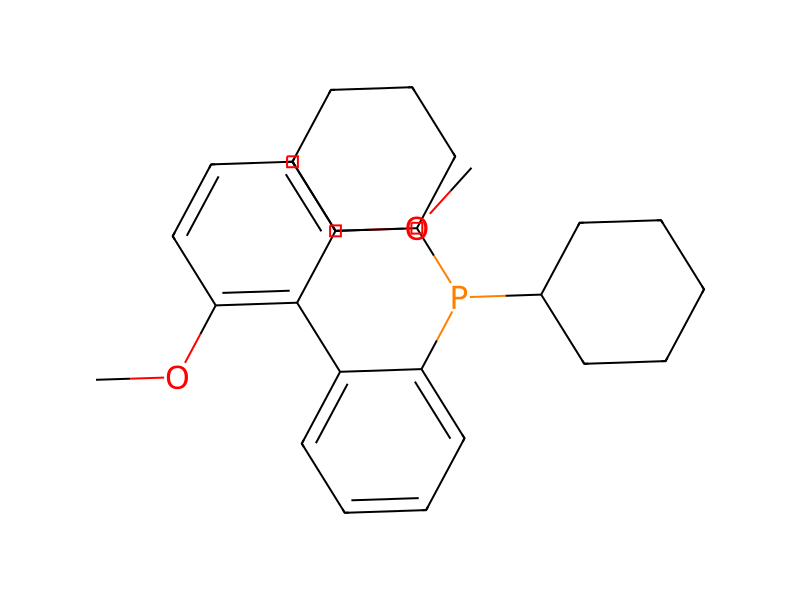
HCID 313Hydrochloric AcidHCID 3939Lithium HydroxideHCID 62657Potassium Phosphate, TribasicHCID 27346522-(4,4,5,5-Tetramethyl-1,3,2-dioxaborolan-2-yl)anilineHCID 112698722-Dicyclohexylphosphino-2',6'-dimethoxybiphenyl
HCID 68697398
methyl 2-bromo-1-{2-[(tert-butoxycarbonyl)amino]-3-methoxy-3-oxopropyl}-3-cyclohexyl1H-indole-6-carboxylate

Product 1

HCID 68698780HCID 68698780, compound

Reagents, catalysts & solvents 2

HCID 167845palladium(II) acetateCatalystHCID 22253497Water butanolSolvent

Conditions

Temperature
90 °C

Procedure

To a solution of methyl 2-bromo-1-{2-[(tert-butoxycarbonyl)amino]-3-methoxy-3-oxopropyl}-3-cyclohexyl1H-indole-6-carboxylate in nBuOH:H2O (9:1, 0.08 M) were added 1.5 eq of 2-(4,4,5,5-tetramethyl-1,3,2-dioxaborolan-2-yl)aniline, 6 eq of K3PO4, 5 mol % of dicyclohexyl(2′,6′-dimethoxybiphenyl-2-yl)phosphine and 2.5 mol % of palladium acetate. The mixture was heated at 90° C. for 4 h. After cooling to RT, the mixture was acidified with HCl (IN) and extracted (twice) with EtOAc. The combined organics were washed with brine and dried over Na2SO4 before being filtered and concentrated in vacuo. The crude product mixture was redissolved in THF:H2O (1:1, 0.08 M) and 2 eq LiOH added. After stirring for 1 h, ester deprotection was complete as evidenced by RP-HPLC analysis. The volatiles were removed in vacuo and the residue partitioned between EtOAc and H2O. The organics were washed with brine and dried over Na2SO4 before being filtered and concentrated in vacuo. The crude residue was used directly in the next step; MS (ES+) m/z 536 (M+H)+, 558 (M+Na)+.

Workup

  1. temperatureAfter cooling to RT
  2. extractionextracted (twice) with EtOAc
  3. washThe combined organics were washed with brine
  4. dry with materialdried over Na2SO4
  5. filtrationbefore being filtered
  6. concentrationconcentrated in vacuo
  7. dissolutionThe crude product mixture was redissolved in THF:H2O (1:1, 0.08 M)
  8. customThe volatiles were removed in vacuo
  9. customthe residue partitioned between EtOAc and H2O
  10. washThe organics were washed with brine
  11. dry with materialdried over Na2SO4
  12. filtrationbefore being filtered
  13. concentrationconcentrated in vacuo

Sources & evidence

ORD record
ord-d1ecb2b02d1a4781a8e6e5b7e2654123
Source dataset
uspto-grants-2010_02
DOI
10.6084/m9.figshare.5104873.v1
Patent number
US07662809B2

Reaction notes

On this pageParticipantsConditionsProcedureWorkupSources & evidenceReaction notes