HomeMCPWorkbenchSkills
HomeWorkbenchNotificationsMe
llms.txt · MCP GuidePrivacy Policy · Terms of Service · Supportv1.8.3
  1. Home
  2. /Reaction

Hydrochloric Acid → 4-(4-Isopropylphenoxy)-1-cyclohexanone

HRID 1934759
Print

Reaction equation

HRID 1934759 reaction equation
[CH:1]([C:4]1[CH:9]=[CH:8][C:7]([OH:10])=[CH:6][CH:5]=1)([CH3:3])[CH3:2].[O:11]1[C:15]2([CH2:20][CH2:19][CH:18](O)[CH2:17][CH2:16]2)OCC1.C1(P(C2C=CC=CC=2)C2C=CC=CC=2)C=CC=CC=1.N(C(OCC)=O)=NC(OCC)=O.Cl>O1CCCC1.C1(C)C=CC=CC=1.O.C(OCC)(=O)C>[CH:1]([C:4]1[CH:9]=[CH:8][C:7]([O:10][CH:18]2[CH2:19][CH2:20][C:15](=[O:11])[CH2:16][CH2:17]2)=[CH:6][CH:5]=1)([CH3:3])[CH3:2]
ParticipantsProcedureWorkupSources & evidenceReaction notes

Participants

10

Reactant 5

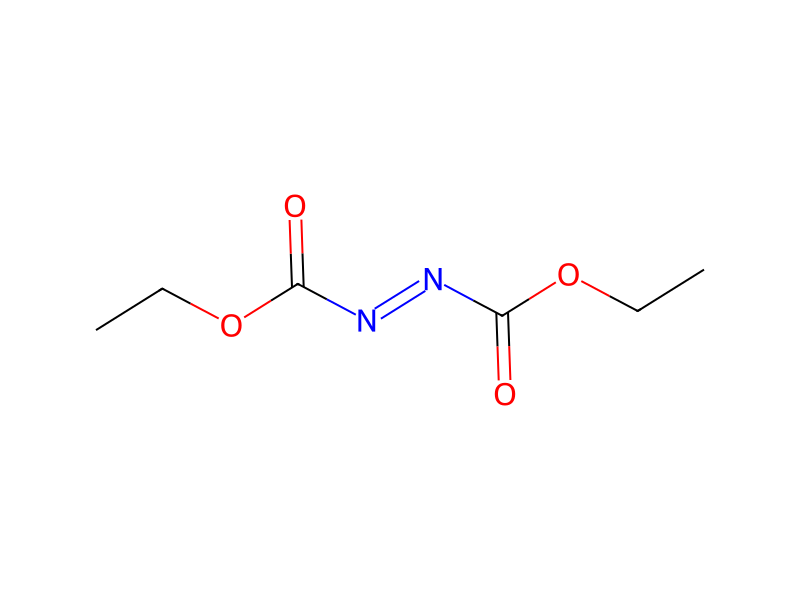
HCID 313Hydrochloric AcidHCID 74654-IsopropylphenolHCID 11776TriphenylphosphineHCID 220568ethyl N-ethoxycarbonyliminocarbamateHCID 5673521,4-Dioxaspiro(4.5)decan-8-ol

Product 1

HCID 224671444-(4-Isopropylphenoxy)-1-cyclohexanone
Yield 35.2%

Reagents, catalysts & solvents 4

HCID 962WaterSolventHCID 1140TolueneSolventHCID 8028TetrahydrofuranSolvent2×HCID 8857Ethyl AcetateSolvent

Procedure

In 40 ml of anhydrous tetrahydrofuran were dissolved 4.00 g of 4-isopropylphenol, 5.10 g of 1,4-dioxaspiro[4.5]decan-8-ol and 8.47 g of triphenylphosphine. Then, 14.1 g of 40% solution of diethyl azodicarboxylate in toluene was dropwise added at 0-5° C., and the resulting mixture was stirred at ambient temperature for 24 hours. The reaction mixture was poured into ice water and extracted with ethyl acetate. The organic layer was washed successively with water and saturated aqueous solution of sodium chloride and dried over anhydrous magnesium sulfate, and the solvent was distilled off under reduce pressure. Ethyl ether was added to the residue, the deposited insoluble matter was filtered off, and the filtrate was concentrated under reduced pressure. The residue thus obtained was mixed with 60 ml of anhydrous tetrahydrofuran and 40 ml of 6 mol/L hydrochloric acid and stirred at ambient temperature for 24 hours. The reaction mixture was poured in a mixture of water and ethyl acetate, and the organic layer was separated. The organic layer was washed successively with water and saturated aqueous solution of sodium chloride and dried over anhydrous magnesium sulfate, and the solvent was distilled off under reduced pressure. Purification of the residue by column chromatography [eluents: toluene:ethyl acetate=20:1, followed by hexane:ethyl acetate=20:1] gave 2.40 g of 4-(4-isopropylphenoxy)-1-cyclohexanone as a colorless oily product.


Workup

  1. extractionextracted with ethyl acetate
  2. washThe organic layer was washed successively with water and saturated aqueous solution of sodium chloride
  3. dry with materialdried over anhydrous magnesium sulfate
  4. distillationthe solvent was distilled off
  5. additionEthyl ether was added to the residue
  6. filtrationthe deposited insoluble matter was filtered off
  7. concentrationthe filtrate was concentrated under reduced pressure
  8. customThe residue thus obtained
  9. stirringstirred at ambient temperature for 24 hours
  10. customthe organic layer was separated
  11. washThe organic layer was washed successively with water and saturated aqueous solution of sodium chloride
  12. dry with materialdried over anhydrous magnesium sulfate
  13. distillationthe solvent was distilled off under reduced pressure
  14. customPurification of the residue by column chromatography [eluents: toluene:ethyl acetate=20:1, followed by hexane:ethyl acetate=20:1]

Sources & evidence

ORD record
ord-f14ea619cefe4278a8c184c19abcb8c5
Source dataset
uspto-grants-2002_05
DOI
10.6084/m9.figshare.5104873.v1
Patent number
US06384065B1

Reaction notes

On this pageParticipantsProcedureWorkupSources & evidenceReaction notes