HomeMCPWorkbenchSkills
HomeWorkbenchNotificationsMe
llms.txt · MCP GuidePrivacy Policy · Terms of Service · Supportv1.8.3
  1. Home
  2. /Reaction

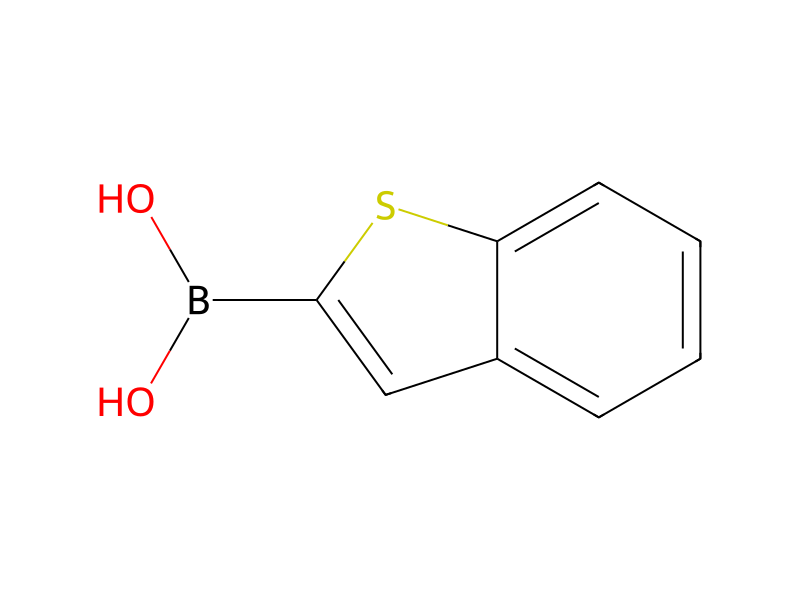
Benzo(B)Thiophene-2-Boronic Acid → 1-(4-benzo[b]thiophen-2-yl-benzyl)-6,7-dimethoxy-8-methyl-3,4-dihydro-1-H-isoquinoline-2-carboxylic acid tert-butyl ester

HRID 2238355
Print

Reaction equation

HRID 2238355 reaction equation
[C:1]([O:5][C:6]([N:8]1[CH2:17][CH2:16][C:15]2[C:10](=[CH:11][C:12]([O:20][CH3:21])=[C:13]([O:18][CH3:19])[CH:14]=2)[CH:9]1[CH2:22][C:23]1[CH:28]=[CH:27][C:26](Br)=[CH:25][CH:24]=1)=[O:7])([CH3:4])([CH3:3])[CH3:2].B(O)(O)[C:31]1[S:39][C:38]2[C:33](=[CH:34][CH:35]=[CH:36][CH:37]=2)[CH:32]=1.[C:42]1(P(C2C=CC=CC=2)C2C=CC=CC=2)C=CC=CC=1.C(=O)(O)[O-].[Na+]>C(O)(C)C.C([O-])(=O)C.[Pd+2].C([O-])(=O)C>[C:1]([O:5][C:6]([N:8]1[CH2:17][CH2:16][C:15]2[C:10](=[C:11]([CH3:42])[C:12]([O:20][CH3:21])=[C:13]([O:18][CH3:19])[CH:14]=2)[CH:9]1[CH2:22][C:23]1[CH:28]=[CH:27][C:26]([C:31]2[S:39][C:38]3[CH:37]=[CH:36][CH:35]=[CH:34][C:33]=3[CH:32]=2)=[CH:25][CH:24]=1)=[O:7])([CH3:4])([CH3:3])[CH3:2]
ParticipantsProcedureWorkupSources & evidenceReaction notes

Participants

7

Reactant 4

HCID 2359Benzo(B)Thiophene-2-Boronic AcidHCID 11776TriphenylphosphineHCID 516892Sodium BicarbonateHCID 589064711-(4-Bromo-benzyl)-6,7-dimethoxy-3,4-dihydro-1H-isoquinoline-2-carboxylic acid tert-butyl ester

Product 1

HCID 865909591-(4-benzo[b]thiophen-2-yl-benzyl)-6,7-dimethoxy-8-methyl-3,4-dihydro-1-H-isoquinoline-2-carboxylic acid tert-butyl ester

Reagents, catalysts & solvents 2

HCID 167845palladium(II) acetateCatalystHCID 3776IsopropanolSolvent

Procedure

The intermediate 1-(4-Benzo[b]thiophen-2-yl-benzyl)-6,7-dimethoxy-8-methyl-3,4-dihydro-1-H-isoquinoline-2-carboxylic acid tert-butyl ester (21) was prepared as follows: A mixture of 0.462 g (1 mmol) of 1-(4-Bromo-benzyl)-6,7-dimethoxy-3,4-dihydro-1H-isoquinoline-2-carboxylic acid tert-butyl ester and 0.270 g (1.5 mol. equiv.) of thianaphthene-2-boronic acid in 4 ml of isopropanol was stirred under argon at room temperature for 30 min. 1 mg (0.45 mol %) of palladium(II)acetate, 4 mg (1.3 mol %) of triphenylphosphine, and 0.6 ml (1.2 mol. equiv.) of 2M sodium bicarbonate aqueous solution were added successively and the mixture was refluxed with stirring for 6 hours. The solvent was evaporated under reduced pressure and the residue was partitioned between 50 ml of ethyl acetate and 25 ml of 5% sodium hydroxide aqueous solution. After shaking, the organic layer was washed with water (25 ml) and brine (25 ml), and then dried with sodium sulfate. The solvent was evaporated under reduced pressure and the remaining oil was crystallized by trituration with n-hexanes. The solid was recrystallized using ethyl acetate n-hexanes mixture to give 0.41 g (78%) of white solid, mp 137-139° C.

Workup

  1. temperaturethe mixture was refluxed
  2. stirringwith stirring for 6 hours
  3. customThe solvent was evaporated under reduced pressure
  4. customthe residue was partitioned between 50 ml of ethyl acetate and 25 ml of 5% sodium hydroxide aqueous solution
  5. stirringAfter shaking
  6. washthe organic layer was washed with water (25 ml) and brine (25 ml)
  7. dry with materialdried with sodium sulfate
  8. customThe solvent was evaporated under reduced pressure
  9. customthe remaining oil was crystallized by trituration with n-hexanes
  10. customThe solid was recrystallized

Sources & evidence

ORD record
ord-b766cd559d844f3b8764253eaadc5980
Source dataset
uspto-grants-2010_05
DOI
10.6084/m9.figshare.5104873.v1
Patent number
US07718672B2

Reaction notes

On this pageParticipantsProcedureWorkupSources & evidenceReaction notes