HomeMCPWorkbenchSkills
HomeWorkbenchNotificationsMe
llms.txt · MCP GuidePrivacy Policy · Terms of Service · Supportv1.8.3
  1. Home
  2. /Reaction

Water → tert-butyl N-(2-chloro-5-iodopyridin-4-yl)carbamate

HRID 2284805
Print

Reaction equation

HRID 2284805 reaction equation
[Cl:1][C:2]1[CH:7]=[C:6]([NH2:8])[C:5]([I:9])=[CH:4][N:3]=1.C(O[C:13]([C:15]1[C:16](NCCC)=NC(SC)=N[CH:20]=1)=O)C.[C:27](OCC)(=[O:29])C.[OH2:33]>CN(C)C1C=CN=CC=1.O1CCCC1.C(N(CC)CC)C.C(OC(OC(C)(C)C)=O)(OC(C)(C)C)=O>[Cl:1][C:2]1[CH:7]=[C:6]([NH:8][C:27](=[O:29])[O:33][C:15]([CH3:16])([CH3:20])[CH3:13])[C:5]([I:9])=[CH:4][N:3]=1
ParticipantsProcedureWorkupSources & evidenceReaction notes

Participants

9

Reactant 4

HCID 962WaterHCID 8857Ethyl AcetateHCID 105629752-Methylthio-4-propylamino-5-pyrimidine carboxylic acid ethyl esterHCID 454803662-Chloro-5-iodopyridin-4-amine

Product 1

HCID 72206934tert-butyl N-(2-chloro-5-iodopyridin-4-yl)carbamate

Reagents, catalysts & solvents 4

HCID 14284
4-(Dimethylamino)pyridine
Catalyst
HCID 8028TetrahydrofuranSolvent
HCID 8471TriethylamineSolvent
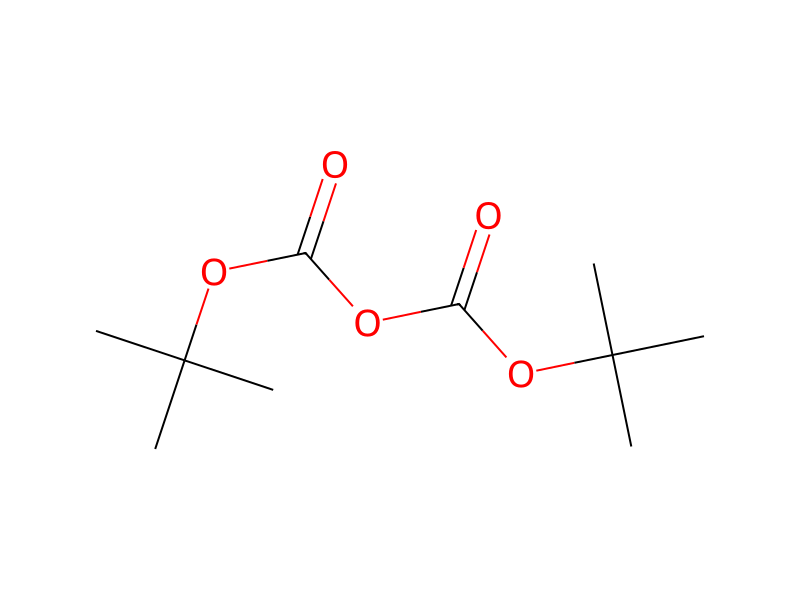
HCID 90495Di-tert-butyl dicarbonateSolvent

Procedure

To a solution of 2-chloro-4-amino-5-iodopyridine (252 mg) synthesized according to the method described in EP2108641 A1 and 4-dimethylaminopyridine (241 mg) in tetrahydrofuran (5 mL), triethylamine (208 μL) and di-tert-butyl dicarbonate (273 μL) were added at room temperature, and the mixture was stirred at the same temperature for 1 hour and 20 minutes, and then stirred for 2 hours under reflux by heating. The reaction mixture was cooled to room temperature, and then ethyl acetate and water were added to the reaction mixture. The organic layer was separated, washed with saturated aqueous sodium chloride, and then dried over anhydrous sodium sulfate, and the solvent was evaporated under reduced pressure. The obtained residue was purified by silica gel chromatography (eluent, 100 to 60% hexane in ethyl acetate) to obtain tert-butyl (2-chloro-5-iodopyridin-4-yl)carbamate (S8, 239 mg).


Workup

  1. additionwere added at room temperature
  2. stirringstirred for 2 hours
  3. temperatureunder reflux
  4. temperatureby heating
  5. customThe organic layer was separated
  6. washwashed with saturated aqueous sodium chloride
  7. dry with materialdried over anhydrous sodium sulfate
  8. customthe solvent was evaporated under reduced pressure
  9. customThe obtained residue was purified by silica gel chromatography (eluent, 100 to 60% hexane in ethyl acetate)

Sources & evidence

ORD record
ord-8f97ababf7be46269a898bef0554bcfd
Source dataset
uspto-grants-2015_09
DOI
10.6084/m9.figshare.5104873.v1
Patent number
US09145415B2

Reaction notes

On this pageParticipantsProcedureWorkupSources & evidenceReaction notes