HomeMCPSkillsWorkbenchOpenChem
HomeWorkbenchNotificationsMe
llms.txt · skill.md · MCP GuidePrivacy Policy · Terms of Service · Supportv1.8.5
  1. Home
  2. /Reaction

Formic Acid → 3-(4-Fluoro-phenyl)-3,4,9-triaza-tricyclo[5.3.1.02,6]undeca-2(6),4-diene

HRID 272620
Print

Reaction equation

Cl.N1CCCCC1.C(O)=O.C([N:18]1[CH2:27][CH:26]2[CH2:28][CH:20]([C:21]3[CH:22]=[N:23][N:24]([C:29]4[CH:34]=[CH:33][C:32]([F:35])=[CH:31][CH:30]=4)[C:25]=32)[CH2:19]1)C1C=CC=CC=1.C(=O)(O)[O-].[Na+]>CO.C(OCC)C.[OH-].[OH-].[Pd+2].C(OCC)(=O)C>[F:35][C:32]1[CH:31]=[CH:30][C:29]([N:24]2[N:23]=[CH:22][C:21]3[CH:20]4[CH2:28][CH:26]([CH2:27][NH:18][CH2:19]4)[C:25]2=3)=[CH:34][CH:33]=1
ParticipantsProcedureWorkupSources & evidenceReaction notes

Participants

10

Reactant 5

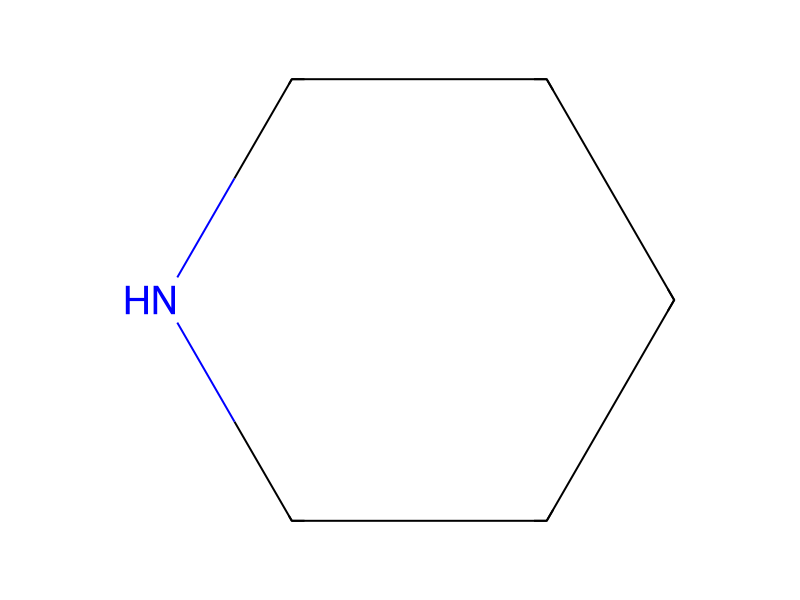
HCID 284Formic AcidHCID 313Hydrochloric Acid3×HCID 8082PiperidineHCID 516892Sodium BicarbonateHCID 598378509-Benzyl-3-(4-fluoro-phenyl)-3,4,9-triaza-tricyclo[5.3.1.02,6]undeca-2(6),4-diene

Product 1

HCID 59837828
3-(4-Fluoro-phenyl)-3,4,9-triaza-tricyclo[5.3.1.02,6]undeca-2(6),4-diene

Reagents, catalysts & solvents 4

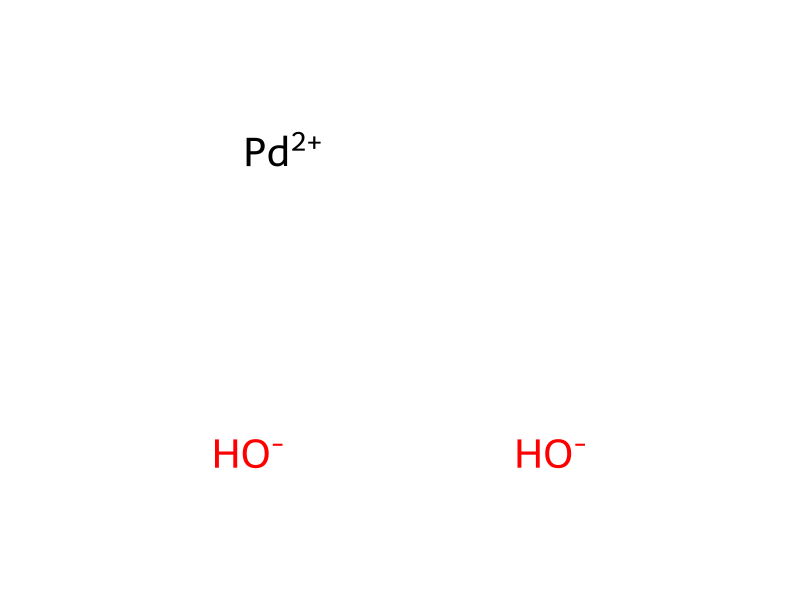
HCID 9942167Palladium hydroxideCatalystHCID 887MethanolSolvent3×HCID 3283Diethyl EtherSolvent2×HCID 8857Ethyl AcetateSolvent

Procedure

To a solution of 9-benzyl-3-(4-fluoro-phenyl)-3,4,9-triaza-tricyclo[5.3.1.020.6]undeca-2(6),4-diene (0.23 mmol) in methanol (2 ml) was added a solution of 1N HCl in diethyl ether (2 mL). The mixture was stirred for 45 min. and the solvent was removed to yield a solid. In a separate flask piperdine (1.5 mmol) and formic acid (0.69 mmol) were combined in methanol (2 ml). To this solution is added a solution of the HCl salt of 9-benzyl-3-(4-fluoro-phenyl)-3,4,9-triaza-tricyclo[5.3.1.02,6]undeca-2(6),4-diene in methanol (3 ml). To this resulting solution was added Pearlman's catalyst (8 mg, 10% wt. on carbon). The reaction mixture was heated under reflux under a nitrogen atmosphere for 18 h then it was cooled and filtered through a plug of Celite™ to remove solids and the pad was washed with methanol. The resulting filtrate was condensed to a gum, which is taken up in ethyl acetate and saturated aqueous sodium bicarbonate solution (20 ml). The mixture was extracted with ethyl acetate (3×20 mL) and the resulting organic layer was dried over MgSO4. The solids were removed by vacuum filtration and the solvent was removed to provide an oil which was purified by chromatography on silica gel eluting with 0.1% ammonium hydroxide solution in 10% methanol/dichloromethane to produce an oil that was treated with 1N HCl in ethyl ether. Trituration of the solids produced a gummy solid (0.082 mmol). 1H NMR (CD3OD, 400 MHz) δ 7.60 (m, 2H), 7.40 (s, 1H), 7.20 (br, 2H), 3.25 (m, 1H), 2.90–2.60 (m, 5H), 2.20 (m, 1H), 0.80 (br s, 1H); APCl MS m/z 244.2 (M+H)+.

Workup

  1. customthe solvent was removed
  2. customto yield a solid
  3. temperatureThe reaction mixture was heated
  4. temperatureunder reflux under a nitrogen atmosphere for 18 h
  5. temperatureit was cooled
  6. filtrationfiltered through a plug of Celite™
  7. customto remove solids
  8. washthe pad was washed with methanol
  9. customcondensed to a gum, which
  10. extractionThe mixture was extracted with ethyl acetate (3×20 mL)
  11. dry with materialthe resulting organic layer was dried over MgSO4
  12. customThe solids were removed by vacuum filtration
  13. customthe solvent was removed
  14. customto provide an oil which
  15. customwas purified by chromatography on silica gel eluting with 0.1% ammonium hydroxide solution in 10% methanol/dichloromethane
  16. customto produce an oil that

Sources & evidence

ORD record
ord-a5abd9af65b949ac829f4b7546008ebe
Source dataset
uspto-grants-2008_11
DOI
10.6084/m9.figshare.5104873.v1
Patent number
US07456177B2

Reaction notes

On this pageParticipantsProcedureWorkupSources & evidenceReaction notes