Reaction equation

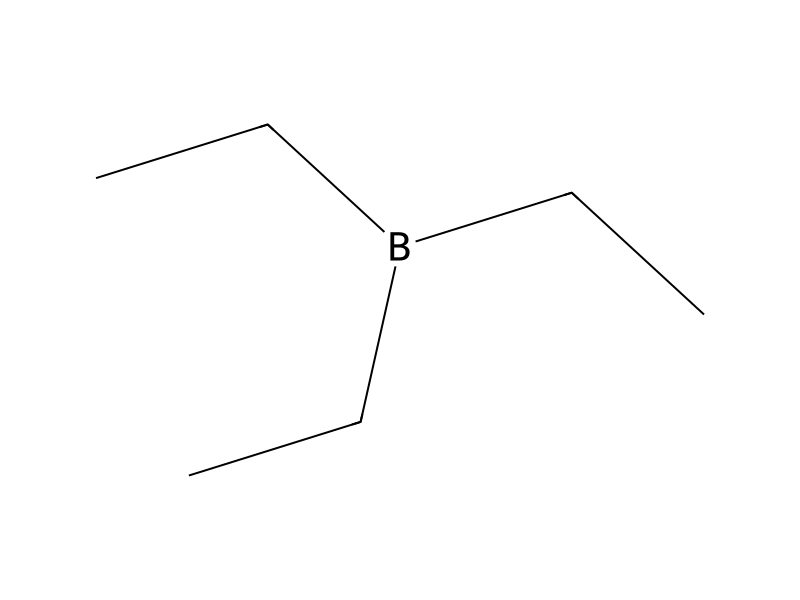
[C:1]1(P(C2C=CC=CC=2)C2C=CC=CC=2)C=CC=C[CH:2]=1.[Cl-].[Li+].[F:22][C:23]1[CH:28]=[CH:27][C:26]([N+:29]([O-:31])=[O:30])=[CH:25][C:24]=1[CH:32]([CH3:35])[CH:33]=[O:34].[CH2:36](O)C=C.C(N(CC)CC)C.C(B(CC)CC)C>C1COCC1.C(=O)(O)[O-].[Na+].C([O-])(=O)C.[Pd+2].C([O-])(=O)C>[F:22][C:23]1[CH:28]=[CH:27][C:26]([N+:29]([O-:31])=[O:30])=[CH:25][C:24]=1[C:32]([CH3:36])([CH2:35][CH:1]=[CH2:2])[CH:33]=[O:34]Participants
10
Reactant 6





Product 1

Reagents, catalysts & solvents 3



Procedure
To a solution of palladium acetate (0.1 eq), triphenylphosphine (0.2 eq), lithium chloride (1.0 eq) in THF were sequentially added 2-(2-fluoro-5-nitrophenyl) propanal (1.1 eq) in THF, allyl alcohol (1.0 eq), triethylamine (1.2 eq) and triethylborane (2.4 eq) under nitrogen at room temperature. Solution was allowed to stir for 2 h. Mixture was diluted with saturated solution of sodium bicarbonate, extracted with ethyl acetate. Organics were washed with brine, dried with sodium sulfate and concentrated. Crude product was purified using flash chromatography (85% Hex: 15% EtoAc) on silica to afford 2-(2-fluoro-5-nitrophenyl)-2-methylpent-4-enal.
Workup
- customat room temperature
- extractionextracted with ethyl acetate
- washOrganics were washed with brine
- dry with materialdried with sodium sulfate
- concentrationconcentrated
- customCrude product was purified
Sources & evidence
- ORD record
- ord-c0ef632ba96748608141c61764770d25
- Source dataset
- uspto-grants-2008_09
- Patent number
- US07423150B2
Linked notes
Loading…