HomeMCPWorkbenchSkills
HomeWorkbenchNotificationsMe
llms.txt · MCP GuidePrivacy Policy · Terms of Service · Supportv1.8.3
  1. Home
  2. /Reaction

Lithium Hydroxide → (S)-3-[4-({[2-(Benzo[1,3]dioxol-5-yloxy)-pyridine-3-carbonyl]-amino}-methyl)-3-fluoro-phenoxy]-2-methyl-propionic acid

HRID 351014
Print

Reaction equation

HRID 351014 reaction equation
[O:1]1[C:5]2[CH:6]=[CH:7][C:8]([O:10][C:11]3[N:19]=[CH:18][CH:17]=[CH:16][C:12]=3[C:13]([OH:15])=O)=[CH:9][C:4]=2[O:3][CH2:2]1.Cl.C[O:22][C:23](=[O:37])[C@@H:24]([CH3:36])[CH2:25][O:26][C:27]1[CH:32]=[CH:31][C:30]([CH2:33][NH2:34])=[C:29]([F:35])[CH:28]=1.O.ON1C2C=CC=CC=2N=N1.Cl.CN(C)CCCN=C=NCC.[OH-].[Li+]>CN(C)C=O.C(OCC)(=O)C.CO.C(N(CC)CC)C>[O:1]1[C:5]2[CH:6]=[CH:7][C:8]([O:10][C:11]3[C:12]([C:13]([NH:34][CH2:33][C:30]4[CH:31]=[CH:32][C:27]([O:26][CH2:25][C@H:24]([CH3:36])[C:23]([OH:37])=[O:22])=[CH:28][C:29]=4[F:35])=[O:15])=[CH:16][CH:17]=[CH:18][N:19]=3)=[CH:9][C:4]=2[O:3][CH2:2]1
ParticipantsProcedureWorkupSources & evidenceReaction notes

Participants

10

Reactant 5

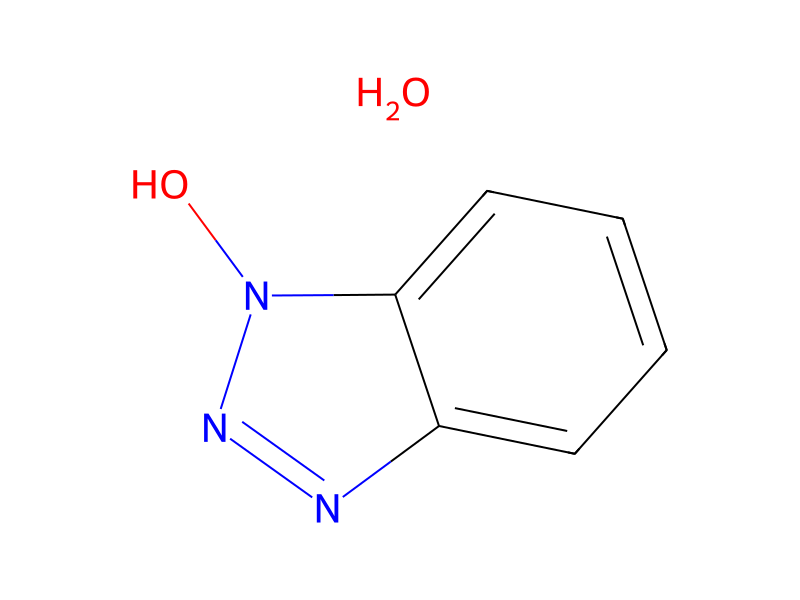
HCID 3939Lithium HydroxideHCID 27239391,3-Propanediamine, N'-(ethylcarbonimidoyl)-N,N-dimethyl-, monohydrochlorideHCID 27368792-(1,3-Benzodioxol-5-yloxy)pyridine-3-carboxylic acidHCID 27960291-Hydroxybenzotriazole hydrateHCID 69422731(S)-3-(4-Aminomethyl-3-fluoro-phenoxy)-2-methyl-propionic acid methyl ester hydrochloride


Product 1

HCID 60128035(S)-3-[4-({[2-(Benzo[1,3]dioxol-5-yloxy)-pyridine-3-carbonyl]-amino}-methyl)-3-fluoro-phenoxy]-2-methyl-propionic acid

Reagents, catalysts & solvents 4

HCID 887MethanolSolventHCID 6228DimethylformamideSolventHCID 8471TriethylamineSolventHCID 8857Ethyl AcetateSolvent

Procedure

2-(Benzo-[1,3]-dioxol-5-yloxy)-nicotinic acid (0.168 g, 0.65 mmol), (S)-3-(4-aminomethyl-3-fluoro-phenoxy)-2-methyl-propionic acid methyl ester hydrochloride (0.18 g, 0.65 mmol), 1-hydroxybenzotriazole hydrate (0.097 g, 0.72 mmol), 1-[3-(dimethylamino)propyl]-3-ethylcarbodiimide hydrochloride (0.138 g, 0.72 mmol) and triethylamine were dissolved in N, N-dimethylformamide (6 mL) and stirred at room temperature over night. The reaction was diluted in ethyl acetate and washed successively with dilute aqueous hydrochloric acid, dilute aqueous sodium hydroxide, and brine, and dried (Na2SO4). The product was purified by flash column chromatography (20% ethyl acetate/hexane). The residue was taken up in tetrahydrofuran (10 mL) and methanol (2 mL) and aqueous lithium hydroxide (2 mL, 1 M, 2 mmol). The reaction was stirred at room temperature 1 h. The solvents were stripped in vacuo and the residue partitioned between dilute aqueous hydrochloric acid and ethyl acetate. The aqueous was extracted with 2 aliquots ethyl acetate and the pooled organics were washed with brine, dried over sodium sulfate and concentrated in vacuo to afford a white solid (0.12 g, 39% yeild).

Workup

  1. washwashed successively with dilute aqueous hydrochloric acid, dilute aqueous sodium hydroxide, and brine
  2. dry with materialdried (Na2SO4)
  3. customThe product was purified by flash column chromatography (20% ethyl acetate/hexane)
  4. stirringThe reaction was stirred at room temperature 1 h
  5. customthe residue partitioned between dilute aqueous hydrochloric acid and ethyl acetate
  6. extractionThe aqueous was extracted with 2 aliquots ethyl acetate
  7. washthe pooled organics were washed with brine
  8. dry with materialdried over sodium sulfate
  9. concentrationconcentrated in vacuo
  10. customto afford a white solid (0.12 g, 39% yeild)

Sources & evidence

ORD record
ord-474e627f1fbb422480677c0555f00f00
Source dataset
uspto-grants-2007_02
DOI
10.6084/m9.figshare.5104873.v1
Patent number
US07183293B2

Reaction notes

On this pageParticipantsProcedureWorkupSources & evidenceReaction notes