HomeMCPSkillsWorkbenchOpenChem
HomeWorkbenchNotificationsMe
llms.txt · skill.md · MCP GuidePrivacy Policy · Terms of Service · Supportv1.8.5
  1. Home
  2. /Reaction

Hydrochloric Acid → [2,4'-Bipyridine]-5-carboxylic acid hydrochloride

HRID 352720
Print

Reaction equation

[Cl:1][C:2]1[CH:10]=[CH:9][C:5]([C:6]([OH:8])=[O:7])=[CH:4][N:3]=1.C(B(CC)[C:14]1[CH:19]=[CH:18][N:17]=[CH:16][CH:15]=1)C.Cl.[K].Cl>O1CCCC1.[Br-].C([N+](CCCC)(CCCC)CCCC)CCC.C1C=CC(P(C2C=CC=CC=2)C2C=CC=CC=2)=CC=1.C1C=CC(P(C2C=CC=CC=2)C2C=CC=CC=2)=CC=1.C1C=CC(P(C2C=CC=CC=2)C2C=CC=CC=2)=CC=1.C1C=CC(P(C2C=CC=CC=2)C2C=CC=CC=2)=CC=1.[Pd].C(OCC)(=O)C.O>[ClH:1].[N:17]1[CH:18]=[CH:19][C:14]([C:2]2[CH:10]=[CH:9][C:5]([C:6]([OH:8])=[O:7])=[CH:4][N:3]=2)=[CH:15][CH:16]=1
ParticipantsProcedureWorkupSources & evidenceReaction notes

Participants

10

Reactant 4

HCID 313Hydrochloric AcidHCID 792226-Chloronicotinic acidHCID 133188714-(Diethylboranyl)pyridineHCID 86590535Potassium hydrochloride

Product 1

HCID 69483715[2,4'-Bipyridine]-5-carboxylic acid hydrochloride

Reagents, catalysts & solvents 5

HCID 74236
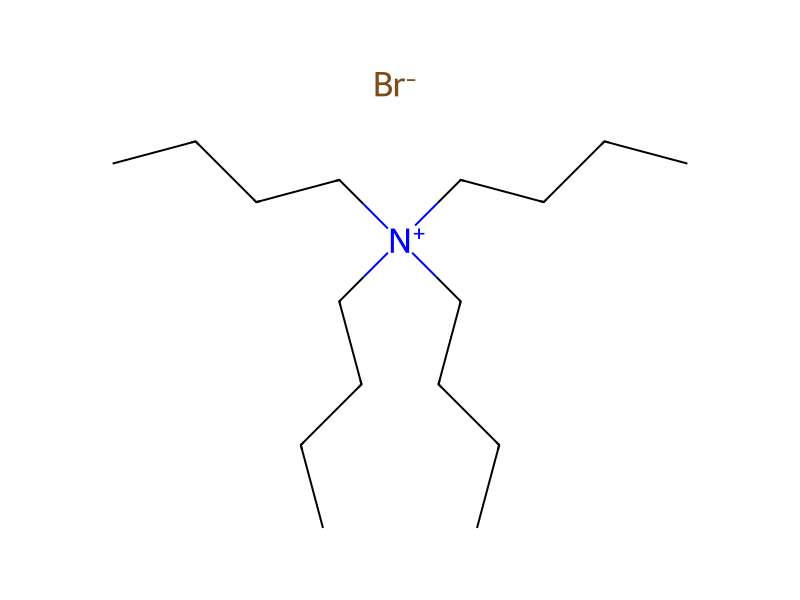
Tetrabutylammonium Bromide
Catalyst
HCID 11979704Tetrakis(triphenylphosphine)palladiumCatalyst
HCID 962WaterSolvent2×
HCID 8028TetrahydrofuranSolvent
HCID 8857Ethyl AcetateSolvent

Procedure

In tetrahydrofuran (20 ml), 6-chloronicotinic acid (535 mg) and diethyl (4-pyridyl)borane (Chem. Pharm. Bull., 33, 4755, 1985) (500 mg) were dissolved. To the resulting solution, tetrabutylammonium bromide (546 mg), potassium hydrochloride (570 mg), tetrakis(triphenylphosphine) palladium (O) (392 mg) and water (0.5 ml) were added under an argon atmosphere, followed by heating under reflux for 6 hours. Dilute hydrochloric acid was added to the reaction mixture to make it acidic. Water and ethyl acetate were poured into the resulting mixture for extraction. The water layer so extracted was distilled off under reduced pressure. The residue was purified by chromatography through a synthetic adsorbent (“Diaion® HP-20”, water˜50% acetonitrile—water). To the resulting fraction, dilute hydrochloric acid was added to make it acidic. The solvent was then distilled off. Tetrahydrofuran was added to the residue and the precipitate was collected by filtration, whereby the title compound (269 mg, 32%) was obtained.

Workup

  1. temperatureby heating
  2. temperatureunder reflux for 6 hours
  3. extractionThe water layer so extracted
  4. distillationwas distilled off under reduced pressure
  5. customThe residue was purified by chromatography through a synthetic adsorbent (“Diaion® HP-20”, water˜50% acetonitrile—water)
  6. additionTo the resulting fraction, dilute hydrochloric acid was added
  7. distillationThe solvent was then distilled off
  8. additionTetrahydrofuran was added to the residue
  9. filtrationthe precipitate was collected by filtration, whereby the title compound (269 mg, 32%)
  10. customwas obtained

Sources & evidence

ORD record
ord-8bae588d0913494f915dc5c67aa68d21
Source dataset
uspto-grants-2004_06
DOI
10.6084/m9.figshare.5104873.v1
Patent number
US06747023B1

Reaction notes

On this pageParticipantsProcedureWorkupSources & evidenceReaction notes