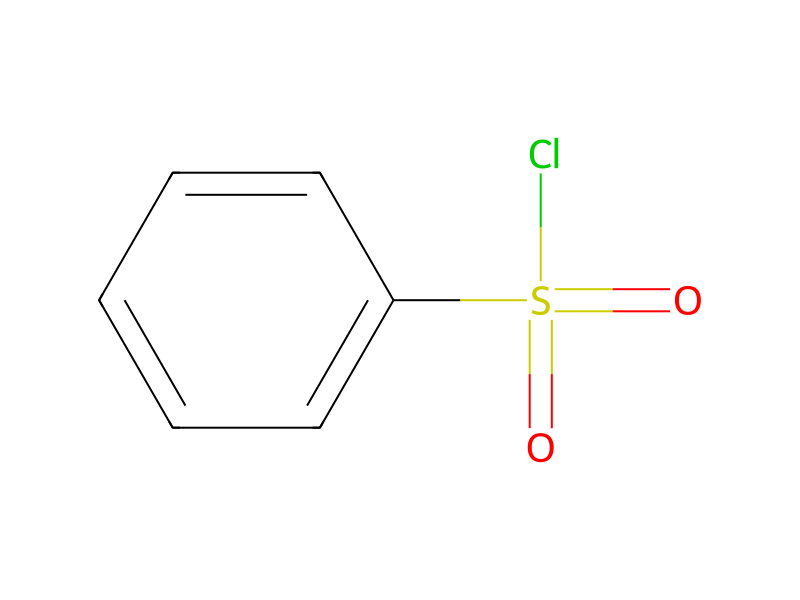
[C:1]1([C:11]2[CH:16]=[CH:15][CH:14]=[CH:13][CH:12]=2)[CH:6]=[CH:5][C:4]([C:7]([NH:9][NH2:10])=[O:8])=[CH:3][CH:2]=1.C(N(CC)C(C)C)(C)C.[C:26]1([S:32](Cl)(=[O:34])=[O:33])[CH:31]=[CH:30][CH:29]=[CH:28][CH:27]=1.CN(C=O)C>C1COCC1.CN(C1C=CN=CC=1)C.CCOC(C)=O>[C:26]1([S:32]([NH:10][NH:9][C:7]([C:4]2[CH:5]=[CH:6][C:1]([C:11]3[CH:12]=[CH:13][CH:14]=[CH:15][CH:16]=3)=[CH:2][CH:3]=2)=[O:8])(=[O:34])=[O:33])[CH:31]=[CH:30][CH:29]=[CH:28][CH:27]=1Biphenyl-4-carboxylic acid hydrazide (0.5 g, 2.36 mmol) was suspended in THF (26 mL). N,N-diisopropylethylamine (1.64 mL, 9.44 mmol) was added, and the reaction was cooled to 0° C. Phenylsulfonyl chloride (0.33 mL, 2.59 mmol) was added followed by DMAP (5 mg, 0.04 mmol). The reaction was allowed to warm to room temperature. The solution was orange after it stirred for 1 hour; DMF (5 mL) was added, and the solution became clear. After 3 hours of stirring, the solution was diluted with EtOAc (150 mL). It was then washed with saturated sodium bicarbonate and brine and dried over Na2SO4. The reaction was then concentrated down and triturated with CH2Cl2. The desired product was isolated (0.19 g, 22.7%). MS: 351.1 (M)−1 for C19H16N2O3S); mp 216-219° C. TLC: SiO2, Rf=0.55 (1:1 hexane/EtOAc). Analysis C19H16N2O3S.0.25 H2O: (calc) C, 63.94; H, 4.66; N, 7.85. (found) C, 63.76; H, 4.64; N, 7.76. HPLC: (30% H2O/70% CH3CN/0.1% TFA), RT=3.731 min. Purity: 94.16%. IR (KBr, cm−1) 3337, 3035, 2811, 1655, 1340, 1156. 1H NMR (400 MHz, DMSO) δ 7.26-8.00 (m, 14H), 10.01 (s, 1H, 10.71 (s, 1H).
Loading…