Reaction equation
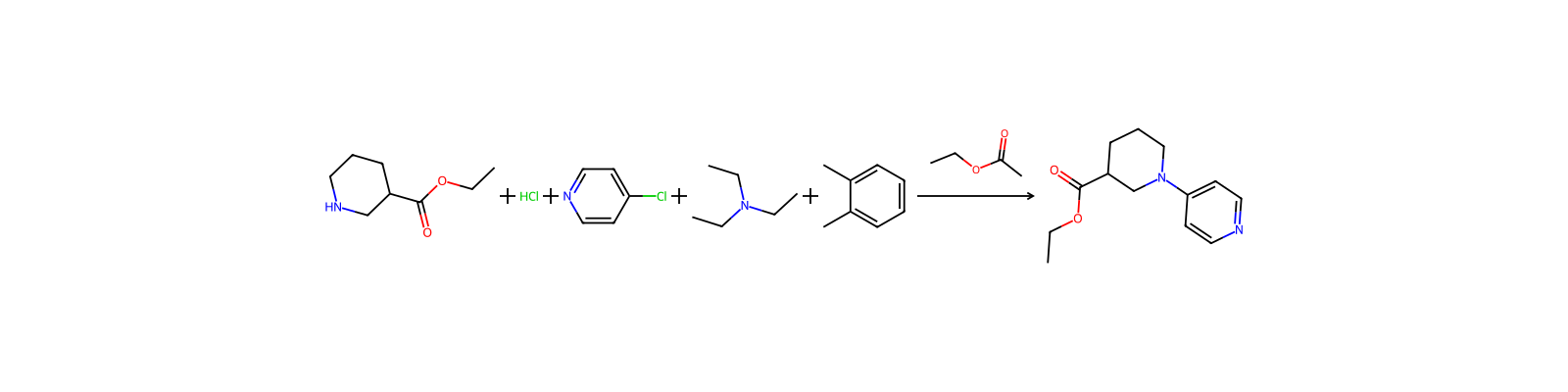
[NH:1]1[CH2:11][CH2:10][CH2:9][CH:3]([C:4]([O:6][CH2:7][CH3:8])=[O:5])[CH2:2]1.Cl.Cl[C:14]1[CH:19]=[CH:18][N:17]=[CH:16][CH:15]=1.C(N(CC)CC)C.C1(C)C(C)=CC=CC=1>C(OCC)(=O)C>[N:17]1[CH:18]=[CH:19][C:14]([N:1]2[CH2:11][CH2:10][CH2:9][CH:3]([C:4]([O:6][CH2:7][CH3:8])=[O:5])[CH2:2]2)=[CH:15][CH:16]=1Participants
6
Reactant 4



Product 1

Reagents, catalysts & solvents 1

Conditions
- Temperature
- 100 °C
Procedure
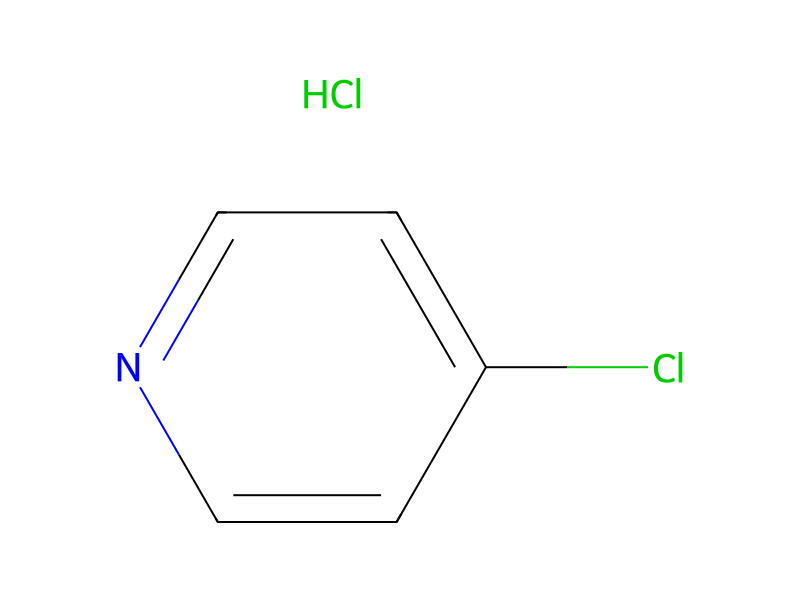
A mixture of 5 g of ethyl nipecotate, 4.8 g of 4-chloropyridine hydrochloride, 6.6 g of triethylamine and 100 ml of xylene was stirred at 100° C. overnight. The reaction mixture was treated with ethyl acetate as the extracting solvent in an ordinary manner, and the obtained residue was purified by the silica gel chromatography (ethyl acetate/ethanol) to obtain the title compound.
Workup
- customthe obtained residue was purified by the silica gel chromatography (ethyl acetate/ethanol)
Sources & evidence
- ORD record
- ord-356d7085368948fbb2c4bcb1f59c9719
- Source dataset
- uspto-grants-2004_03
- Patent number
- US06710056B2
Linked notes
Loading…