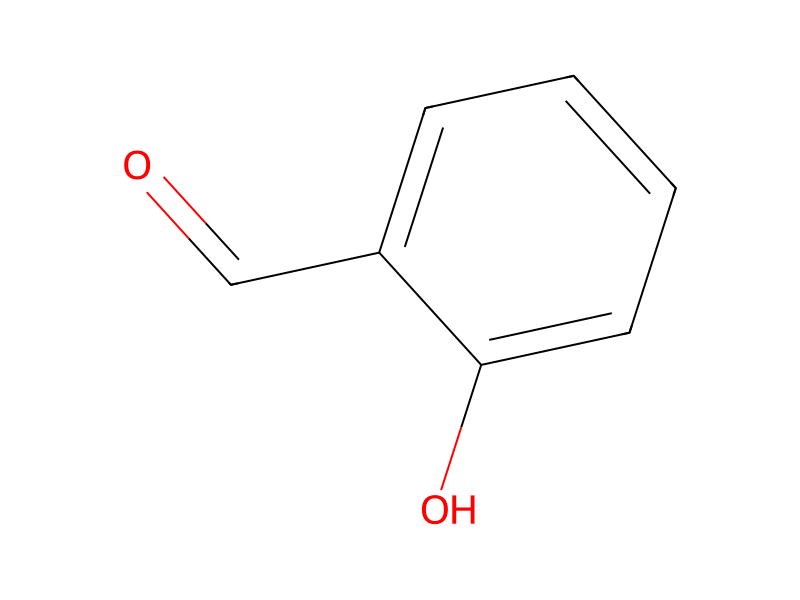
70.0 g of salicylaldehyde and 158.5 g of potassium carbonate were suspended in 700 mL of N,N-dimethylformamide, to which 68 mL of 3-chloro-2-methyl-1-propene was added dropwise over 30 minutes at 70° C., and this mixture was stirred for 30 minutes at the same temperature. Then, the reaction mixture was added to a mixture of ethyl acetate and water, and adjusted to pH 3 with 6M hydrochloric acid, and then the organic phase was separated therefrom. After the resultant organic phase was washed with water and a saturated sodium chloride solution successively, the washed phase was dried over anhydrous magnesium sulfate, and the solvent was distilled out under reduced pressure. The resultant residue was dissolved in 350 mL of ethanol, to which 7.0 g of 5% palladium-carbon was added, and this mixture was stirred for 4 hours at 35° C. in a stream of hydrogen. After the reaction mixture was filtered through Celite, the solvent was distilled out under reduced pressure. The resultant residue was purified by silica gel column chromatography [eluent; hexane:toluene=2:1] to yield 92.4 g of 2-isobutoxybenzaldehyde as light yellow oil.