HomeMCPWorkbenchSkills
HomeWorkbenchNotificationsMe
llms.txt · MCP GuidePrivacy Policy · Terms of Service · Supportv1.8.0
  1. Home
  2. /Reaction

Acetic Acid → N-[4-(2-Chloro-phenyl)-pyridin-3-yl]-3-hydroxy-N-methyl-5-trifluoromethyl-benzamide

HRID 878063
Notes
Print preview

Reaction equation

HRID 878063 reaction equation
Br[C:2]1[CH:3]=[C:4]([CH:22]=[C:23]([C:25]([F:28])([F:27])[F:26])[CH:24]=1)[C:5]([N:7]([C:9]1[CH:10]=[N:11][CH:12]=[CH:13][C:14]=1[C:15]1[CH:20]=[CH:19][CH:18]=[CH:17][C:16]=1[Cl:21])[CH3:8])=[O:6].B(OC(C)C)(OC(C)C)[O:30]C(C)C.[Li]CCCC.CC(O)=O.OO.C([O-])(O)=O.[Na+]>C1COCC1.O.CCOC(C)=O>[Cl:21][C:16]1[CH:17]=[CH:18][CH:19]=[CH:20][C:15]=1[C:14]1[CH:13]=[CH:12][N:11]=[CH:10][C:9]=1[N:7]([CH3:8])[C:5](=[O:6])[C:4]1[CH:22]=[C:23]([C:25]([F:28])([F:27])[F:26])[CH:24]=[C:2]([OH:30])[CH:3]=1
ParticipantsConditionsProcedureWorkupSources & evidenceReaction notes

Participants

10

Reactant 6

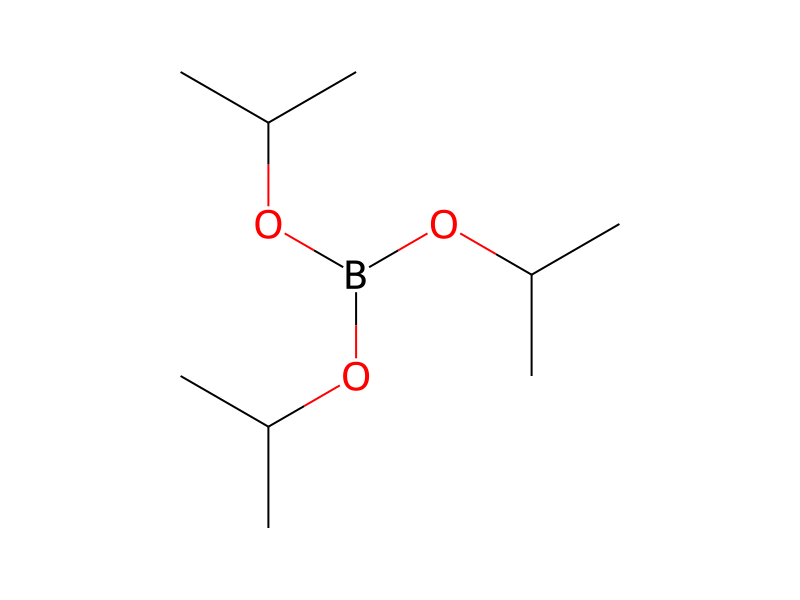
HCID 176Acetic AcidHCID 784Hydrogen PeroxideHCID 21531Triisopropyl borateHCID 516892Sodium BicarbonateHCID 601975943-Bromo-N-[4-(2-chloro-phenyl)-pyridin-3-yl]-N-methyl-5-trifluoromethyl-benzamideHCID 178418339Butyllithium

Product 1

HCID 70663537
N-[4-(2-Chloro-phenyl)-pyridin-3-yl]-3-hydroxy-N-methyl-5-trifluoromethyl-benzamide

Reagents, catalysts & solvents 3

HCID 962WaterSolventHCID 8028TetrahydrofuranSolventHCID 8857Ethyl AcetateSolvent

Conditions

Temperature
-78 °C

Procedure

To a solution of 3-bromo-N-[4-(2-chloro-phenyl)-pyridin-3-yl]-N-methyl-5-trifluoromethyl-benzamide (332 mg, 707 μmol, example 74) in dry THF (5 ml) was added triisopropyl borate (257 mg, 317 μl, 1.36 mmol, CAS RN 5419-55-6). n-BuLi (552 μl, 884 μmol, 1.6 M solution in n-hexane) was added dropwise at −78° C. The reaction mixture was stirred at −78° C. for 1.5 hours. A solution of AcOH (180 mg, 172 μl, 3.0 mmol) in water (0.2 ml) and hydrogen peroxide (103 mg, 92.8 μl, 1.06 mmol) was added at 0° C. The reaction mixture was stirred at room temperature for 18 hours and then poured on 30 ml 10% aqueous NaHCO3 solution and 30 ml EtOAc. The layers were separated and the aqueous layer was extracted a second time with 30 ml EtOAc. The combined organic layers were washed with 30 ml brine, dried over MgSO4, filtered and concentrated under vacuum. The compound was purified by silica gel chromatography using a MPLC system (CombiFlash Companion, Isco Inc.) eluting with a gradient of n-heptane:EtOAc (100:0 to 0:100). Light yellow solid (77 mg, 27%). MS (ESI): m/z=407.077 [M+H]+.


Workup

  1. stirringThe reaction mixture was stirred at room temperature for 18 hours
  2. customThe layers were separated
  3. extractionthe aqueous layer was extracted a second time with 30 ml EtOAc
  4. washThe combined organic layers were washed with 30 ml brine
  5. dry with materialdried over MgSO4
  6. filtrationfiltered
  7. concentrationconcentrated under vacuum
  8. customThe compound was purified by silica gel chromatography
  9. washeluting with a gradient of n-heptane:EtOAc (100:0 to 0:100)

Sources & evidence

ORD record
ord-2a2ec223fee54cf68e51098805cd6d50
Source dataset
uspto-grants-2015_03
DOI
10.6084/m9.figshare.5104873.v1
Patent number
US08987307B2

Reaction notes

Loading…

On this pageParticipantsConditionsProcedureWorkupSources & evidenceReaction notes