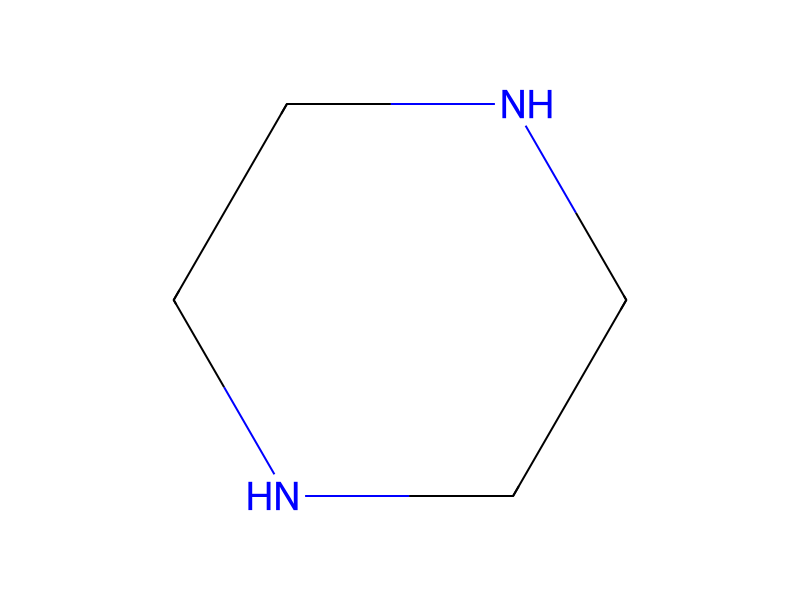
At room temperature, a three-neck flask equipped with a reflux condenser, internal thermometer, dropping funnel and stirrer under protective nitrogen gas was initially charged with 4.6 g of zinc powder (71 mmol) in 40 ml of tetrahydrofuran. After 1.13 ml of trimethylchlorosilane had been added, the mixture was heated to 50° C. for 15 min and 10 g of 1-phenylhexan-3-one (57 mmol, prepared by base-catalyzed aldol condensation of benzaldehyde and pentan-2-one and subsequent hydrogenation of the 1-phenylhex-1-en-3-one obtained) were added undiluted. Subsequently, 10.4 g of methyl bromoacetate (68 mmol) were added dropwise within 5 min and the temperature was maintained at 50° C. by external cooling. The mixture was then stirred at 50° C. for 10 min (formation of the zinc alkoxide). After cooling to 10° C., 7.4 g of trimethylchlorosilane (68 mmol) were added and the mixture was heated to 40° C. for 30 min. At 20° C., 7.4 g of piperazine (85 mmol), dissolved in 90 ml of tetrahydrofuran, were subsequently added, and a precipitate formed immediately. 90 ml of tetrahydrofuran were then distilled off (recovery of the anhydrous solvent) and the precipitate formed (complex of zinc bromide chloride and piperazine) was filtered off. The precipitate was washed twice with 30 ml of tetrahydrofuran each time, and tetrahydrofuran was subsequently distilled off completely under reduced pressure (recovery of the anhydrous solvent). The residue was admixed with 40 ml of pentane, cooled to −20° C., stirred for 60 min, and residues of solid were filtered off. Pentane was distilled off under reduced pressure (recovery of pentane) and the desired product methyl 3-trimethylsiloxy-3-(2″-phenylethyl)caproate was obtained in a yield of 16.7 g (91% of theory) and a purity of >97% (HPLC). The zinc content of the product was 5 ppm (ICP).