기본 정보
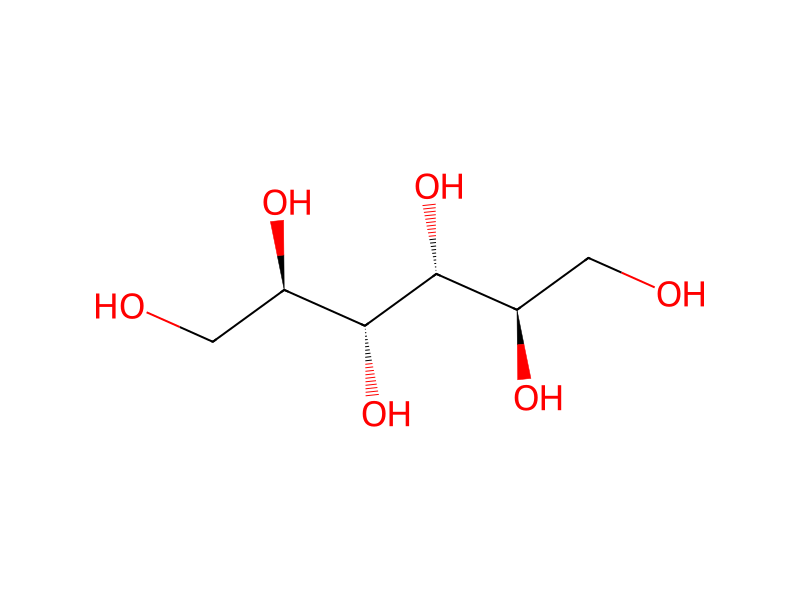
- 표준 SMILES
OC[C@@H](O)[C@@H](O)[C@H](O)[C@H](O)CO- InChIKey
FBPFZTCFMRRESA-KVTDHHQDSA-N- 분자식
- C6H14O6
- 평균 분자량
- 182.17 g/mol
개요
D-mannitol appears as odorless white crystalline powder or free-flowing granules. Sweet taste. (NTP, 1992)
이름 및 식별자
- 우선 이름
- Mannitol
- IUPAC
- (2R,3R,4R,5R)-hexane-1,2,3,4,5,6-hexol
- 현지명
- D-만니트
- 영어명
- D-Mannitol
- 분자식
- C6H14O6
- 분자량
- 182.17
이름 및 동의어
D-mannitolmannitol69-65-8ManniteOsmitrolManna sugarCordycepic acidDiosmolResectisolMannidexMannigenOsmosal
이름 더 보기
D-만니톨D-만니트만니톨만니톨DHexitold-mannitomannopyranoseMannitol CRSMANNITOL GRANULARBronchitol
MannitD-(-)-MannitolMannazuckerMannistolInvenexIsotolMannitol, D-Marine Crystal
데이터베이스 식별자
- CAS
69-65-8、87-78-5- PubChem CID
- 6251
- DTXSID
DTXSID1023235- ChEMBL
CHEMBL689- ChEBI
CHEBI:16899- UNII
- 3OWL53L36A
- EC Number
- 200-711-8、201-770-2
- Nikkaji
- J2.369H
물성
구조 계산 물성
- XLogP
- -3.1
- 극성 표면적
- 121 Ų
- 수소 결합 공여자 수
- 6
- 수소 결합 수용자 수
- 6
- 회전 가능 결합 수
- 5
- 무거운 원자 수
- 12
- 형식 전하
- 0
- 복잡도
- 105
실험 및 물리화학적 성질
Chemical ClassesBiological Agents -> Monosaccharides and Derivatives
DrugsPharmaceuticals -> Diuretics
Cosmetics
Cosmetic ingredients (Mannitol) -> CIR (Cosmetic Ingredient Review)
Masking; Binding; Moisturising; Humectant; Skin conditioning
SpringerMaterials PropertiesCrystal structure
FragrancesFragrance Ingredient (D-Mannitol) -> IFRA transparency List
LogP
log Kow = -3.10
-3.10
OdorOdorless
TasteSweetish taste
Food AdditivesANTICAKING AGENT OR FREE-FLOW AGENT, FLAVOR ENHANCER, FLAVORING AGENT OR ADJUVANT, FORMULATION AID, LUBRICANT OR RELEASE AGENT, NON-NUTRITIVE SWEETENER, SOLVENT OR VEHICLE -> FDA Substance added to food
Density
1.489 at 68 °F (NTP, 1992) - Denser than water; will sink
1.52 @ 20 °C
Color/Form
Orthorhombic needles from alc
WHITE, CRYSTALLINE POWDER OR FREE FLOWING GRANULES
Solubility
greater than or equal to 100 mg/mL at 68 °F (NTP, 1992)
1 g in about 5.5 ml water; more sol in hot water; insol in ether; sol in pyridine, aniline; sol in aq soln of alkalies; 1 g dissolves in 18 ml glycerol (density 1.24); 1 g dissolves in about 83 ml alc
In water, 2.16X10+5 mg/l @ 25 °C
216 mg/mL at 25 °C
물리화학적 성질
- 녹는점
- 167 · 167-170 °C(lit.)
- 끓는 점
- 295 °C · 295°C
- 밀도
- 1.52 · 1.52
- 굴절률
- 1.333 · 1.3330 (estimate)
- 인화점
- 290 · 290-295°C/3.5mm
- 저장 조건
- 2 · 2-8°C
- 용해도
- 2 O: · H2O: 1 M at 20 °C, 투명, 무색
- 물리적 상태
- 결정성 분말
- 산도 계수 (pKa)
- 13.5 · 13.5(at 18℃)
- 색상
- 하얀색
- 수소이온지수(pH)
- 5 · 5.0-6.5 (25℃, 1M in H2O)
- 냄새
- 100 %에서 · 100.00%에서. 냄새 없는
- 냄새 유형
- 냄새 없는
- 생물학적 소스
- plant
- 수용성
- 녹는
- Merck
- 14 · 14,5745
- BRN
- 1721898 · 1721898
- Henry's Law Constant
- 3.1 · 3.1×109 mol/(m3Pa) at 25℃, Qin et al. (2021)
- 안정성
- 안정적인. 타기 쉬운. 강한 산화제와 호환되지 않습니다.
- 화장품 원료 기능
- 보습향기피부 컨디셔닝결합제보습제
- InChI
- 1S/C6H14O6/c7-1-3(9)5(11)6(12)4(10)2-8/h3-12H,1-2H2/t3-,4-,5-,6-/m1/s1
- InChIKey
- FBPFZTCFMRRESA-KVTDHHQDSA-N
- SMILES
- OC[C@@H](O)[C@@H](O)[C@H](O)[C@H](O)CO
- LogP
- -3.262 · -3.262 (est)
- NIST
- D-Mannitol(69-65-8)
- EPA
- D-Mannitol (69-65-8)
안전 및 규제
GHS 분류
GHS Classification
This chemical does not meet GHS hazard criteria for > 99.9% (1450 of 1451) of all reports.
Not Classified
Aggregated GHS information provided per 1451 reports by companies from 2 notifications to the ECHA C&L Inventory.
This chemical does not meet GHS hazard criteria for 100% (31 of 31) of all reports.
Not Classified
Aggregated GHS information provided per 31 reports by companies from 1 notifications to the ECHA C&L Inventory.
유해성 정보
Regulatory Information
Chemical: D-Mannitol
Chemical: Mannitol
D-Mannitol is listed on the EPA's Chemical Data Reporting (CDR) system. Manufacturers and importers of D-Mannitol are required to report information about their production and use of this chemical to the EPA under the Toxic Substances Control Act (TSCA). (40 eCFR Part 711)
D-Mannitol: Does not have an individual approval but may be used under an appropriate group standard
Mannitol: Does not have an individual approval but may be used as a component in a product covered by a group standard. It is not approved for use as a chemical in its own right.
Other Safety Information
IMAP assessments - Mannitol: Human health tier I assessment
IMAP assessments - D-Mannitol: Environment tier I assessment
Fire HazardsThis chemical is probably combustible. (NTP, 1992)
Health Hazards
SYMPTOMS: Symptoms of exposure to this compound include nausea, vomiting, headache, chills, chest pain and pulmonary edema. It may cause irritation of the skin, eyes and respiratory tract. Other symptoms may include lethargy, confusion, heart failure and death. Exposure has caused an electrolyte and fluid imbalance, hypersensitivity reactions, diarrhea, thirst, fever, tachycardia, hyponatremia, urinary retention, dehydration, blurred vision, convulsions, urticaria, hypotension and hypertension. It has also caused hyperglycemia and glycosuria. Coughing may result from inhalation. Ingestion may cause gastric irritation. Skin contact may cause discoloration of sensitive skin. Eye contact may cause redness and pain. Intravenous use has led to blood pressure elevation and bladder tubule changes.
Hazards SummaryNo evidence of teratogenicity in experimental animals; [REPROTOX] No evidence of carcinogenicity in mice or rats; [NTP] May cause irritation; [Sigma-Aldrich MSDS]
FDA RequirementsMannitol used as a nutrient and/or dietary supplement in animal drugs, feeds, and related products is generally recognized as safe when used in accordance with good manufacturing or feeding practice.
Reactive GroupAlcohols and Polyols
Reactivity Profile
A sugar alcohol. More closely related to carbohydrates than to other polyhydric alcohols [Noller]. Flammable and/or toxic gases are generated by the combination with alkali metals, nitrides, strong reducing agents and strong oxidizing agents.
Air and Water ReactionsWater soluble.
Hazard Classes and Categories
Not Classified
Not Classified
Hazardous Reactivities and IncompatibilitiesIt has been stated that mannitol is incompatible in strongly acidic and alkaline solutions.
안전 및 보호
Fire FightingFires involving this material can be controlled with a dry chemical, carbon dioxide or Halon extinguisher. A water spray may also be used. (NTP, 1992)
First Aid
EYES: First check the victim for contact lenses and remove if present. Flush victim's eyes with water or normal saline solution for 20 to 30 minutes while simultaneously calling a hospital or poison control center. Do not put any ointments, oils, or medication in the victim's eyes without specific instructions from a physician. IMMEDIATELY transport the victim after flushing eyes to a hospital even if no symptoms (such as redness or irritation) develop.
Storage ConditionsMannitol solutions should be stored at room temperature and protected from freezing.
Nonfire Spill Response
SMALL SPILLS AND LEAKAGE: If you spill this chemical, you should dampen the solid spill material with water, then transfer the dampened material to a suitable container. Use absorbent paper dampened with water to pick up any remaining material. Seal your contaminated clothing and the absorbent paper in a vapor-tight plastic bag for eventual disposal. Wash all contaminated surfaces with a soap and water solution. Do not reenter the contaminated area until the Safety Officer (or other responsible person) has verified that the area has been properly cleaned.
Disposal Methods
SRP: At the time of review, criteria for land treatment or burial (sanitary landfill) disposal practices are subject to significant revision. Prior to implementing land disposal of waste residue (including waste sludge), consult with environmental regulatory agencies for guidance on acceptable disposal practices.
Personal Protective Equipment (PPE)
RECOMMENDED RESPIRATOR: Where the neat test chemical is weighed and diluted, wear a NIOSH-approved half face respirator equipped with an organic vapor/acid gas cartridge (specific for organic vapors, HCl, acid gas and SO2) with a dust/mist filter. (NTP, 1992)
독성 정보
Interactions
Hydroxyurea (HU) is a potent mammalian teratogen. Within 2-4 hours after maternal injection, HU causes 1) a rapid episode of embryonic cell death and 2) profound inhibition of embryonic DNA synthesis. A variety of antioxidants delays the onset of embryonic cell death and reduces the incidence of birth defects. Antioxidants do not block the inhibition of DNA synthesis, indicating that early embryonic cell death is not caused by inhibited DNA synthesis. We have suggested that some HU molecules may react within the embryo to produce H2O2 and subsequent free radicals, including the very reactive hydroxyl free radical. The free radicals could cause the early cell death; antioxidants are believed to terminate the aberrant free radical reactions resulting in lessened developmental toxicity. To investigate whether hydroxyl free radicals cause the early episode of cell death, pregnant New Zealand white rabbits were injected subcutaneously on gestational day 12 with a teratogenic dose of HU (650 mg/kg) in the presence or absence of 550 mg/kg of D-mannitol (Man), a specific scavenger of hydroxyl free radicals. Osmotic control rabbits received HU plus 550 mg/kg of xylose (Xyl, a nonactive aldose). At term, the teratologic effects of HU were ameliorated by Man as evidenced by decreased incidences of the expected limb malformations. Xyl exerted no demonstrable effect on HU teratogenesis. Histological examination of limb buds at 3-8 hours after maternal injection, showed that Man delayed the onset of HU-induced cell death by as much as 4 hours. Xyl had no effect. That Man acts within the embryo was shown by performing intracoelomic injections on alternate implantation sites with Man, Xyl, or saline followed by subcutaneous injection of the pregnant doe with HU. Embryos were harvested 3-8 hours later. Limb buds from saline- and Xyl-injected embryos exhibited the typical pattern of widespread HU-induced cell death at 3-4 hours, whereas Man-injected embryos did not exhibit cell death until 5-8 hours. These results are consistent with those reported for antioxidant-mediated amelioration of HU-induced developmental toxicity and with the hypothesis that hydroxyl free radicals are the proximate reactive species in HU-induced early embryonic cell death.
... Pentobarbital attenuated the blood-brain barrier disruption induced by hyperosmolar mannitol. This may be attributed, at least in part, to the blood pressure effect of pentobarbital. Implications: When the blood-brain barrier (BBB) was disrupted by a hyperosmolar solution, pentobarbital attenuated the degree of leakage of the blood-brain barrier. Systemic hypotension caused by pentobarbital played a significant role in decreasing the leakage. Our study suggests that when the blood-brain barrier is disrupted, pentobarbital may be effective in protecting the blood-brain barrier. Furthermore, systemic blood pressure plays an important role in determining the degree of disruption.
Environmental Fate
TERRESTRIAL FATE: Based on a classification scheme(1), an estimated Koc value of 5(SRC), determined from a water solubility of 2.16X10+5 mg/l(2) and a regression-derived equation(3), indicates that D-mannitol is expected to have very high mobility in soil(SRC). Volatilization of D-mannitol from moist soil surfaces is not expected to be an important fate process(SRC) given an estimated Henry's Law constant of 7.3X10⁻¹³ atm-cu m/mole(SRC), using a fragment constant estimation method(4). D-Mannitol is not expected to volatilize from dry soil surfaces(SRC) based upon an estimated vapor pressure of 4.9X10⁻⁹ mm Hg(SRC), determined from a fragment constant method(5). D-Mannitol is a simple sugar alcohol and should be readily biodegraded in the environment(SRC).
AQUATIC FATE: Based on a classification scheme(1), an estimated Koc value of 5(SRC), determined from a water solubility of 2.16X10+5 mg/l(2) and a regression-derived equation(3), indicates that D-mannitol is not expected to adsorb to suspended solids and sediment in water(SRC). Volatilization from water surfaces is not expected(3) based upon an estimated Henry's Law constant of 7.3X10⁻¹³ atm-cu m/mole(SRC), developed using a fragment constant estimation method(4). According to a classification scheme(5), an estimated BCF of 1(3,SRC), from its water solubility(2) suggests the potential for bioconcentration in aquatic organisms is low(SRC). D-Mannitol is a simple sugar alcohol and should be readily biodegraded in the environment(SRC).
ATMOSPHERIC FATE: According to a model of gas/particle partitioning of semivolatile organic compounds in the atmosphere(1), D-mannitol, which has an estimated vapor pressure of 4.3X10⁻⁹ mm Hg at 25 °C(2), is expected to exist in the particulate phase in the ambient atmosphere. Particulate-phase D-mannitol may be removed from the air by wet and dry deposition(SRC).
Adverse EffectsAdverse drug reactions associated with the use of mannitol include:
Toxicity Summary
Safe in the present practices of use and concentration. Ingredient, concentration, and use information are available in documents discoverable at https://cir-reports.cir-safety.org
Signs and Symptoms of Overdose
Plant Concentrations
D-mannitol is widespread in nature(SRC). It is found to a significant extent in the exudates of trees and shrubs such as the plane tree, manna ash and olive tree(1). D-Mannitol occurs in pumpkin, hedge parsley, onions, celery, strawberries, the genus Euonymus, the genus Hebe, cocoa bean, grasses, lilac, Digitalis purpurea, mistletoe and lichens(1).
Ongoing Test Status
The following link will take the user to the National Toxicology Program (NTP) Test Agent Search Results page, which tabulates all of the "Standard Toxicology & Carcinogenesis Studies", "Developmental Studies", and "Genetic Toxicity Studies" performed with this chemical. Clicking on the "Testing Status" link will take the user to the status (i.e., in review, in progress, in preparation, on test, completed, etc.) and results of all the studies that the NTP has done on this chemical. [http://ntp-apps.niehs.nih.gov/ntp_tox/index.cfm?fuseaction=ntpsearch.searchresults&searchterm=69-65-8]
Soil Adsorption/Mobility
The Koc of D-mannitol is estimated as approximately 5(SRC), using a water solubility of 2.16X10+5 mg/l(1) and a regression-derived equation(2). According to a classification scheme(3), this estimated Koc value suggests that D-mannitol is expected to have very high mobility in soil(SRC).
Natural Pollution Sources
D-Mannitol is widespread in nature(SRC). It is found to a significant extent in the exudates of trees and shrubs such as the plane tree, manna ash and olive tree(1). D-Mannitol occurs in pumpkin, hedge parsley, onions, celery, strawberries, the genus Euonymus, the genus Hebe, cocoa bean, grasses, lilac, Digitalis purpurea, mistletoe and lichens(1).
Human Toxicity Excerpts
...DEHYDRATION, & MASSIVE DIURESIS ARE COMMON UNTOWARD EFFECTS OF MANNITOL. ... OCCASIONALLY CAUSED AGITATION, DISORIENTATION, & CONVULSIONS. LARGE DOSES MAY CAUSE ACUTE INCR IN INTRAVASCULAR VOL, RESULTING IN CONGESTIVE HEART FAILURE OR INTRACRANIAL HEMORRHAGE.
HEADACHE, NAUSEA, VOMITING, CHILLS, DIZZINESS, POLYDIPSIA, LETHARGY, CONFUSION, & SENSATION OF CONSTRICTION OR PAIN IN CHEST HAVE BEEN OBSERVED FOLLOWING INFUSION OF MANNITOL. FATALITIES HAVE OCCURRED AFTER LARGE DOSES.
TOO RAPID ADMIN OF LARGE AMT WILL DRAW INTRACELLULAR WATER INTO EXTRACELLULAR SPACE, CAUSING CELLULAR DEHYDRATION & OVEREXPANSION OF INTRAVASCULAR SPACE WITH CONGESTIVE HEART FAILURE & PULMONARY EDEMA. HYPONATREMIA IS A COMMON PROBLEM. ...MAY INCR CEREBRAL BLOOD FLOW & THUS THE RISK OF POSTOPERATIVE BLEEDING IN NEUROSURGICAL PATIENTS.
A VARIETY OF SIGNS & SYMPTOMS SUGGESTIVE OF HYPERSENSITIVITY REACTIONS HAS OCCURRED IN OCCASIONAL PATIENTS.
For more Human Toxicity Excerpts (Complete) data for D-MANNITOL (7 total), please visit the HSDB record page.
Artificial Pollution SourcesD-Mannitol's production and use as a flavorant and non-nutritive sweetener(1) may result in its release to the environment through various waste streams(SRC).
Environmental BiodegradationD-Mannitol is a simple sugar alcohol and should be readily biodegraded in the environment. (SRC)
Carcinogen Classification
D-mannitol
TR-236: Carcinogenesis Bioassay of D-Mannitol (CASRN 69-65-8) in F344/N Rats and B6C3F1 Mice (Feed Study) (1982 )
12/16/81
No Evidence
No Evidence
No Evidence
규제 정보
FDA RequirementsMannitol used as a nutrient and/or dietary supplement in animal drugs, feeds, and related products is generally recognized as safe when used in accordance with good manufacturing or feeding practice.
안전 데이터
- wgk
- 2
- tsca
- TSCA listed
- rtecs
- OP2060000
- 독성
- LD50 orally in Rabbit: 13500 mg/kg
- HS 번호
- 29054300
- risk_code
- 36/37/38
- hazard_code
- Xi
- safety_code
- 24/25-36-26
- 기존화학 물질
- KE-23061
- F 고인화성물질
- 3
- 자연 발화 온도
- 410 °C
- 스토리지 클래스
- 11 - Combustible Solids
- 유해 물질 데이터
- 69-65-8(Hazardous Substances Data)
화학 및 산업
약리 정보
ATC Code
B05BC01
A - Alimentary tract and metabolism
B - Blood and blood forming organs
B - Blood and blood forming organs
R - Respiratory system
V - Various
Pharmacodynamics
Chemically, mannitol is an alcohol and a sugar, or a polyol; it is similar to xylitol or sorbitol. However, mannitol has a tendency to lose a hydrogen ion in aqueous solutions, which causes the solution to become acidic. For this reason, it is not uncommon to add a substance to adjust its pH, such as sodium bicarbonate. Mannitol is commonly used to increase urine production (diuretic). It is also used to treat or prevent medical conditions that are caused by an increase in body fluids/water (e.g., cerebral edema, glaucoma, kidney failure). Mannitol is frequently given along with other diuretics (e.g., furosemide, chlorothiazide) and/or IV fluid replacement. Inhaled mannitol has the possibility to cause bronchospasm and hemoptysis; the occurrence of either should lead to discontinuation of inhaled mannitol.
Mechanism of Action
Mannitol is an osmotic diuretic that is metabolically inert in humans and occurs naturally, as a sugar or sugar alcohol, in fruits and vegetables. Mannitol elevates blood plasma osmolality, resulting in enhanced flow of water from tissues, including the brain and cerebrospinal fluid, into interstitial fluid and plasma. As a result, cerebral edema, elevated intracranial pressure, and cerebrospinal fluid volume and pressure may be reduced. As a diurectic mannitol induces diuresis because it is not reabsorbed in the renal tubule, thereby increasing the osmolality of the glomerular filtrate, facilitating excretion of water, and inhibiting the renal tubular reabsorption of sodium, chloride, and other solutes. Mannitol promotes the urinary excretion of toxic materials and protects against nephrotoxicity by preventing the concentration of toxic substances in the tubular fluid. As an Antiglaucoma agent mannitol levates blood plasma osmolarity, resulting in enhanced flow of water from the eye into plasma and a consequent reduction in intraocular pressure. As a renal function diagnostic aid mannitol is freely filtered by the glomeruli with less than 10% tubular reabsorption. Therefore, its urinary excretion rate may serve as a measurement of glomerular filtration rate (GFR). The exact mechanism of action of inhaled mannitol in the symptomatic maintenance treatment of cystic fibrosis remains unclear. It is hypothesized that mannitol produces an osmotic gradient across the airway epithelium that draws fluid into the extracellular space and alters the properties of the airway surface mucus layer, allowing easier mucociliary clearance.
MANNITOL IS.../USED/ IN PROPHYLAXIS OF ACUTE RENAL FAILURE. IT IS USED FOR THIS PURPOSE IN CONDITIONS AS DIVERSE AS CARDIOVASCULAR OPERATIONS, SEVERE TRAUMATIC INJURY, OPERATIONS IN THE PRESENCE OF SEVERE JAUNDICE, AND MGMNT OF HEMOLYTIC TRANSFUSION REACTIONS. IN EACH OF THESE CONDITIONS, A PRECIPITOUS FALL IN THE FLOW OF URINE MAY BE ANTICIPATED EITHER AS THE RESULT OF AN ACUTELY REDUCED FILTRATION RATE OR FROM ACUTE CHANGES IN TUBULAR PERMEABILITY. THE LATTER MAY BE CONSEQUENCE OF THE PRESENCE OF NOXIOUS AGENT WITHIN THE TUBULAR FLUID IN EXCESSIVELY HIGH CONCN, IN SOME INSTANCES SUFFICIENT TO RESULT IN ACTUAL PRECIPITATION. IN THESE SITUATIONS, MANNITOL EXERTS OSMOTIC EFFECT WITHIN THE TUBULAR FLUID, INHIBITS WATER REABSORPTION, & MAINTAINS THE RATE OF URINE FLOW. ...CONCN OF TOXIC AGENT WITHIN TUBULAR FLUID DOES NOT REACH EXCESSIVELY HIGH LEVELS THAT OTHERWISE WOULD HAVE BEEN ACHIEVED BY MORE COMPLETE REABSORPTION OF WATER.
...EVEN THOUGH /GLOMERULAR/ FILTRATION RATE IS REDUCED, MANNITOL IS STILL FILTERED @ GLOMERULUS. THE TUBULAR IMPERMEABILITY TO MANNITOL IS NOT ALTERED BY ACUTE RENAL ISCHEMIA OF SHORT DURATION. HENCE, THE MANNITOL THAT IS FILTERED IS ALSO EXCRETED IN THE VOIDED URINE. UNREABSORBED SOLUTE LIMITS BACK DIFFUSION OF WATER. ...URINE VOL CAN BE MAINTAINED EVEN IN PRESENCE OF DECR GLOMERULAR FILTRATION.
Biological Half-LifeMannitol has an elimination half-life of 4.7 hours following oral administration; the mean terminal elimination half-life is similar regardless of administration route (oral, inhalation, and intravenous.
Metabolism/Metabolites
Mannitol is metabolized only slightly, if at all, to glycogen in the liver.
...POLYHYDRIC SUGAR ALC...MANNITOL (C6H14O6)...LARGELY EXCRETED UNCHANGED IN URINE.
MANNITOL OCCURS IN LARGE AMT IN SPORES OF ASPERGILLUS ORYZAE, WHERE IT IS RAPIDLY METABOLIZED IN EARLY STAGES OF GERMINATION. IT IS CONVERTED TO FRUCTOSE BY D-MANNITOL DEHYDROGENASE...
...FATE OF MANNITOL IN ANIMAL BODY (MONKEYS, RABBITS, RATS, DOGS, ETC) AFTER ABSORPTION FROM DIGESTIVE TRACT INCL LIMITED CONVERSION TO GLYCOGEN IN LIVER & ELIMINATION OF BALANCE UNCHANGED IN URINE.
FDA Pharmacological Classification
3OWL53L36A
MANNITOL
Physiologic Effects [PE] - Increased Diuresis
Mechanisms of Action [MoA] - Osmotic Activity
Established Pharmacologic Class [EPC] - Osmotic Diuretic
Mannitol is an Osmotic Diuretic. The mechanism of action of mannitol is as an Osmotic Activity. The physiologic effect of mannitol is by means of Increased Diuresis.
MeSH Pharmacological Classification
Compounds that increase urine volume by increasing the amount of osmotically active solute in the urine. Osmotic diuretics also increase the osmolarity of plasma.
Substances that sweeten food, beverages, medications, etc., such as sugar, saccharine or other low-calorie synthetic products. (From Random House Unabridged Dictionary, 2d ed)
Absorption, Distribution and Excretion
Approximately 7% of ingested mannitol is absorbed during gastrointestinal perfusion in uremic patients. Inhalation of 635 mg of mannitol powder yields a plasma Cmax of 13.71 μg/mL in 1.5 hours (Tmax) and a mean systemic AUC of 73.15 μg\*h/mL.
Mannitol is primarily excreted unchanged in the urine. Following oral inhalation of 635 mg of mannitol in healthy volunteers, 55% of the total dose was recovered unchanged in the urine; following oral or intravenous administration of 500 mg, the corresponding values were 54 and 87%, respectively.
Mannitol administered intravenously has a volume of distribution of 34.3 L.
Intravenous administration of mannitol yields a total clearance of 5.1 L/hr and renal clearance of 4.4 L/hr.
MANNITOL IS GENERALLY REGARDED AS BEING UNABSORBED FROM GI TRACT. HOWEVER, RECENT WORK CONTRADICTS THIS BELIEF, FOR 18% OF ORAL DOSE OF D-(14)C MANNITOL WAS RECOVERED UNCHANGED IN 48-HR URINE OF HUMAN SUBJECTS & UP TO 19% AS CO2 IN EXPIRED AIR IN 12 HR. 32% PRESENT IN FECES IN 48 HR...UNABSORBED MATERIAL.
SUBSTANCES /MANNITOL/ HAVING APPARENT VOL OF DISTRIBUTION CORRESPONDING TO TOTAL EXTRACELLUR WATER, WHICH IS ABOUT 20% BODY WT...PENETRATE CAPILLARY MEMBRANES BUT DO NOT PENETRATE CELLULAR MEMBRANES.
Tissue LocationsBrain
Cellular LocationsExtracellular
용도 및 제조
Uses
CIR ingredient: Mannitol
Occurs in many plants; Used in electronics (with boric acid to make dry electrolytic condensers for radio applications), plastics (for making artificial resins and plasticizers), in the food industry (anticaking, free-flow agent, flavoring agent, release agent, stabilizer, thickener, and nutritive sweetener), and in medicine (diuretic and in the determination of renal function); [Merck Index] Used as flavoring agent, anticaking agent, formulation aid, lubricant or release agent, non-nutritive sweetener, and solvent for foods; [FDA] Permitted for use as an inert ingredient in non-food pesticide products; [EPA]
Used in the food industry as anti-caking and free flowing agent, stabilizer, thickener, and non-nutritive sweetener.
...MANNITOL...USED IN VARIOUS WAYS: (1) AS FLAVOR CARRIER OR FLAVOR-ENCAPSULATING AGENT; (2) AS FLAVOR ENHANCER IN WIDE VARIETY OF PRODUCTS, SUCH AS COFFEE CONCENTRATES, MEAT-CURING COMPOSITION, FLAVOR ADDITIVES FOR NUTS, & PURE JUICE CONCENTRATES, & (3) IN NUMBER OF FLAVOR-ENHANCING COMPOSITIONS.
MEDICATION (VET)
MEDICATION
U.S. Imports
(1975) 1.42X10+9 GRAMS
(1975) 1.42X10+9 GRAMS
(1984) 2.13X10+9 g
U.S. Production
2023: 1,460,000 lb
(1972) GREATER THAN 4.54X10+5 GRAMS
(1975) GREATER THAN 4.54X10+5 GRAMS
Methods of Manufacturing
...By electrolytic reduction of glucose. Prepn from seaweed; by hydrogenation of invert sugar, monosaccharides, & sucrose.
May be extracted from manna and other natural sources with hot alcohol or other selective solvents. Commercially it is produced by catalytic or electrolytic reduction of certain monosaccharides such as mannose and glucose. Manufacture is somewhat complicated by the need for separation of stereoisomers
Formulations/Preparations
MANNITOL, USP (OSMITROL), IS AVAIL FOR IV ADMIN AS MANNITOL INJECTION, USP, & MANNITOL & SODIUM CHLORIDE INJECTION, USP, IN CONCN OF 5, 10, 15, 20, OR 25% MANNITOL IN VOL RANGING FROM 50 TO 1000 ML OF WATER OR 0.3 TO 0.45% SODIUM CHLORIDE SOLN.
Grades: Reagent; Commercial; NF; FCC
Resectisol (Amer. McGaw)
Household Products
Information on 5 consumer products that contain Mannitol in the following categories is provided:
Information on 3 consumer products that contain Mannitol in the following categories is provided:
Use Classification
Fragrance Ingredients
Food Additives -> BULKING_AGENT; HUMECTANT; STABILIZER; SWEETENER; TEXTURIZER; THICKENER -> JECFA Functional Classes
Cosmetics -> Masking; Binding; Moisturising; Humectant; Skin conditioning
General Manufacturing Information
D-Mannitol: ACTIVE
Mannitol: ACTIVE
LEVEL OF USE RECOMMENDED: UP TO 1.0% IN CHEWING GUM, UP TO 5.0% IN CANDY.
응용 분야
개요Mannitol is a white, crystalline solid consisting of D-mannitol and a small quantity of sorbitol. It is odorless and has a sweet taste. It is soluble in water, very slightly soluble in alcohol, and practically insoluble in most other common organic solvents. It is prepared commercially by catalytic reduction of glucose. Mannitol occurs in small amounts in a variety of foods such as olives, beets, and celery, and in the exudate of certain trees.
일반 설명Odorless white crystalline powder or free-flowing granules. Sweet taste.
제조 방법
생산 방법Mannitol may be extracted from the dried sap of manna and other natural sources by means of hot alcohol or other selective solvents. It is commercially produced by the catalytic or electrolytic reduction of monosaccharides such as mannose and glucose.
상·하류 제품 정보
상류 원료
하류 제품
공급사50 곳
国药集团化学试剂有限公司86-21-63210123 · [email protected]
北京华美互利生物化工010-56205725 · [email protected]
梯希爱(上海)化成工业发展有限公司021-67121386 · [email protected]
上海阿拉丁生化科技股份有限公司400-6206333 13167063860 · [email protected]
西安清言生物科技有限责任公司15339027915
上海如吉生物科技发展有限公司+86-21-65211385-8001 36031160 · [email protected]
韶远科技(上海)有限公司021-50795510 4000665055 · [email protected]
科瑞迪化学400-821-5857 021-64326257 · [email protected]
LGM Pharma1-(800)-881-8210 · [email protected]
上海迈瑞尔生化科技有限公司4006356688 18621169109 · [email protected]
武汉易泰科技有限公司上海分公司18930552037 · [email protected]
大连美仑生物技术有限公司0411-62910999 13889544652 · [email protected]
阿法埃莎(中国)化学有限公司400-6106006 · [email protected]
安耐吉化学&3A(安徽泽升科技股份有限公司)400-0056266 · [email protected]
上海瀚鸿科技股份有限公司021-54306202 13764082696 · [email protected]
上海柯维化学技术有限公司021-64609169 18901607656 · [email protected]
上海维亦特生物科技有限公司15317051735 · [email protected]
上海景颜化工科技有限公司13817811078 · [email protected]
上海尚饮思生化医药有限公司021-021-57872719 13761402923 · [email protected]
嘉兴市艾森化工有限公司0573-85285100 18627885956 · [email protected]
上海泰坦科技股份有限公司400-6009262 15618770481 · [email protected]
MedChemexpress LLC021-58955995 · [email protected]
合肥天健化工有限公司551-65418679 15856988503;15837135945 · [email protected]
武汉丰泰威远科技有限公司027-87465837 19945049750 · [email protected]
孝感深远化工有限公司15527621225; 15527621225 · [email protected]
西安拉维亚生物科技有限公司13022827400 18629620162 · [email protected]
云南西力生物技术股份有限公司0871-65217109 · [email protected]
山东西亚化学有限公司13355009207 13355009207 · [email protected]
玛雅试剂+86 (573) 82222445 (0)18006601000 452520369 · [email protected]
四川库利南科技有限公司400-1166-196 18981987031 · [email protected]
天津希恩思生化科技有限公司400 638 7771 · [email protected]
湖南汇百侍生物科技有限公司0731-85526065 13308475853 · [email protected]
衡水昊业科技有限公司0318-2012300 +86-18632882519 · [email protected]
斯百全化学(上海)有限公司021-021-021-67601398-809-809-809 15221380277 · [email protected]
上海源叶生物科技有限公司13636370518 · [email protected]
成都锦然生物科技有限公司028-83311324 1278112614 · [email protected]
青岛保税区鲁联国际贸易有限公司0532-83893697 18561902820 · [email protected]
上海思域化工科技有限公司86-21-34053660 · [email protected]
赛默飞世尔科技(中国)有限公司800-810-5118 · [email protected]
北京伊诺凯科技有限公司400-810-7969 010-59572699 · [email protected]
AdooQ BioScience, LLC+1 (866) 930-6790 · [email protected]
上海遐瑞医药科技有限公司+86 21 61551611
TCI AMERICA800-4238616 · [email protected]
TOKYO CHEMICAL INDUSTRY CO., LTD.03-36680489 · [email protected]
TCI Europe320-37350700 · [email protected]
上海贤鼎生物科技有限公司4009209199 · [email protected]
深圳振强药物研发有限公司0755-66853366 13670046396 · [email protected]
南京杜莱生物技术有限公司025-84699383-8003;025-846993838003-8003 18013301590 · [email protected]
上海汇凯化学科技有限公司021-61995394 18916691159 · [email protected]
上海倍卓生物科技有限公司021-61119791,13386096464 · [email protected]
추가 설명
순도시험(1) 비선광도 : 이 품목 약 2.0g 및 붕산나트륨 약 2.6g을 정밀히 달아 30℃로 미리 가온한 물 20mL에 녹이고 열을 가하지 않으면서 15~30분간 지속적으로 교반하여 액이 맑아지면 물을 가하여 25mL로 하고 이 액의 선광도를 측정하고 다시 이를 건조물로 환산할 때, =+23~+25°이어야 한다. (2) 액성 : 이 품목의 수용액(1→10) 10mL에 포화염화칼륨용액 0.5mL를 가한 액의 pH는 5.0~8.0이어야 한다. (3) 염화물 : 이 품목 10g을 취하여 염화물시험법에 따라 시험할 때, 그 양은 0.01N 염산 2.0mL에 대응하는 양 이하이어야 한다. (4) 비소 : 이 품목을 비소시험법에 따라 시험할 때, 그 양은 4.0ppm 이하이어야 한다. (5) 황산염 : 이 품목 10g을 취하여 황산염시험법에 따라 시험할 때, 그 양은 0.01N 황산 2mL에 대응하는 양 이하이어야 한다. (6) 납 : 이 품목 5.0g을 취하여 원자흡광광도법 또는 유도결합플라즈마발광광도법에 따라 시험할 때, 그 양은 1.0ppm 이하이어야 한다. (7) 니켈 : 이 품목 5.0g을 취하여 원자흡광광도법 또는 유도결합플라즈마발광광도법에 따라 시험할 때, 그 양은 2.0ppm 이하이어야 한다. (8) 환원당류 : 이 품목 약 7g을 정밀히 달아 「D-말티톨」의 순도시험 (1)에 따라 시험할 때, 산화동의 무게는 50mg 이하이어야 한다. (9) 총당 : 이 품목 2.1g을 정밀히 달아 환저플라스크에 넣고 이에 0.1N 염산 40mL를 가한다음 환류냉각기를 연결하여 수욕 중에서 4시간 가열하고 식힌다. 이 액을 400mL 비이커에 옮겨주고 물 10mL로 환저플라스크를 씻고 이를 비이커에 옮긴 다음 이에 6N 수산화나트륨용액으로 중화시킨 다음 펠링시액 50mL를 가해주고 생성된 산화동을 미리 무게를 달아둔 유리여과기로 여과한다. 여과기내의 침전은 뜨거운 물, 에탄올, 에테르순으로 씻어준 다음 100℃에서 30분간 건조한다. 이어서 여과기내에 침전된 산화동을 다시 뜨거운 물 10mL, 에탄올 10mL 및 에테르 10mL의 순으로 씻어주고 100℃에서 1시간 건조할 때, 산화동의 무게는 50mg 이하이어야 한다.
확인시험(1) 이 품목은 물에 용해되며 에탄올에는 약간 녹으며, 클로로포름 및 에테르에는 녹지 않는다. (2) 이 품목의 융점은 165~169℃이어야 한다. (3) 이 품목을 정량법에 따라 시험할 때, 만니톨표준품과 동일한 위치에 피크가 나타난다. (4) 염화제이철시액 1mL를 네슬러관에 넣고 이에 이 품목의 포화용액 5방울을 가해준 액을 시험용액으로 한다. 따로, 대조액은 이 품목의 포화용액 대신에 물 5방울을 사용한다. 양 액에 5N 수산화나트륨용액 5방울을 가해주면 시험용액은 황색의 침전이 생기나 대조액은 갈색의 침전이 생기며, 양 액을 심하게 흔들어주면 시험용액은 맑아지나 대조액은 갈색침전이 지속된다. 다시 양 액에 5N 수산화나트륨용액을 가해주면 시험용액은 침전이 일어나지 않으나 대조액은 침전이 심해진다.
정량법이 품목 약 1.5g을 정밀히 달은 다음 물을 가하여 100mL로 하고 0.45μm 필터로 여과한 액을 시험용액으로 한다. 따로, 만니톨표준품 0.5, 1.0, 1.5 및 2.0g을 정밀히 달아 물을 가하여 100mL씩으로 하고 0.45μm필터로 여과한 액을 각각 표준용액으로 한다. 시험조작 : 시험용액과 각 표준용액 20μL씩을 다음의 조작조건으로 액체크로마토그래피에 주입하여 각각의 피크면적을 구한다. 4개의 표준용액농도(g/100mL)에 대한 각 표준용액의 피크면적으로 검량선을 작성하고 검량선으로부터 시험용액 중의 만니톨농도(g/100mL)를 구한 다음 계산식에 따라 만니톨의 함량을 구한다.A : 검량선에서 구한 시험용액 중의 만니톨농도(g/100mL) 조작조건 칼 럼 : Aminex HPX 87C(칼슘 형태) 또는 이와 동등한 것 검 출 기 : 시차굴절계(RI Detector) 칼럼온도 : 85℃ 이 동 상 : 물 유 속 : 0.5mL/min
정의ChEBI: D-mannitol is the D-enantiomer of mannitol. It has a role as an osmotic diuretic, a sweetening agent, an antiglaucoma drug, a metabolite, an allergen, a hapten, a food bulking agent, a food anticaking agent, a food humectant, a food stabiliser, a food thickening agent, an Escherichia coli metabolite and a member of compatible osmolytes.
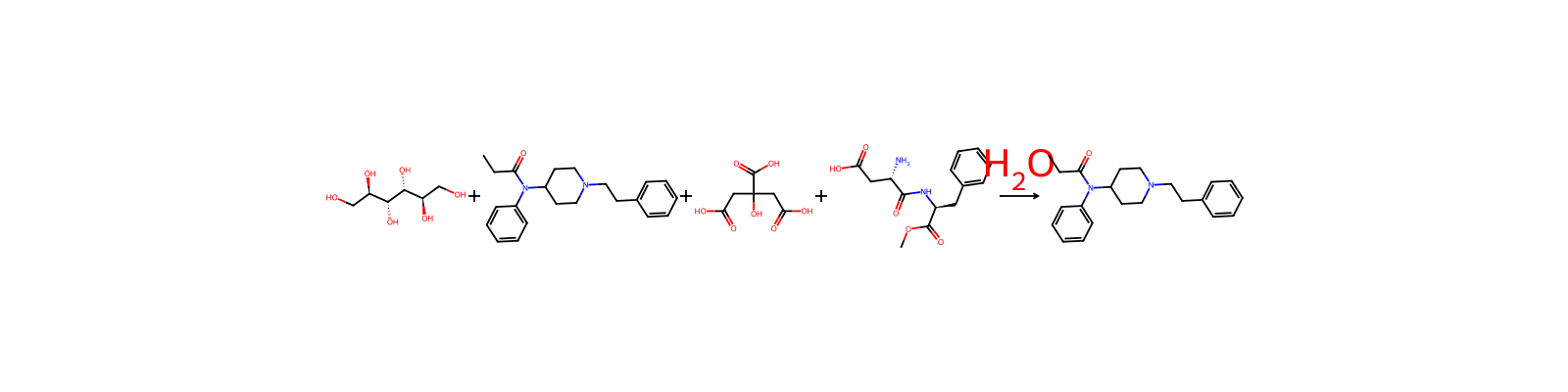
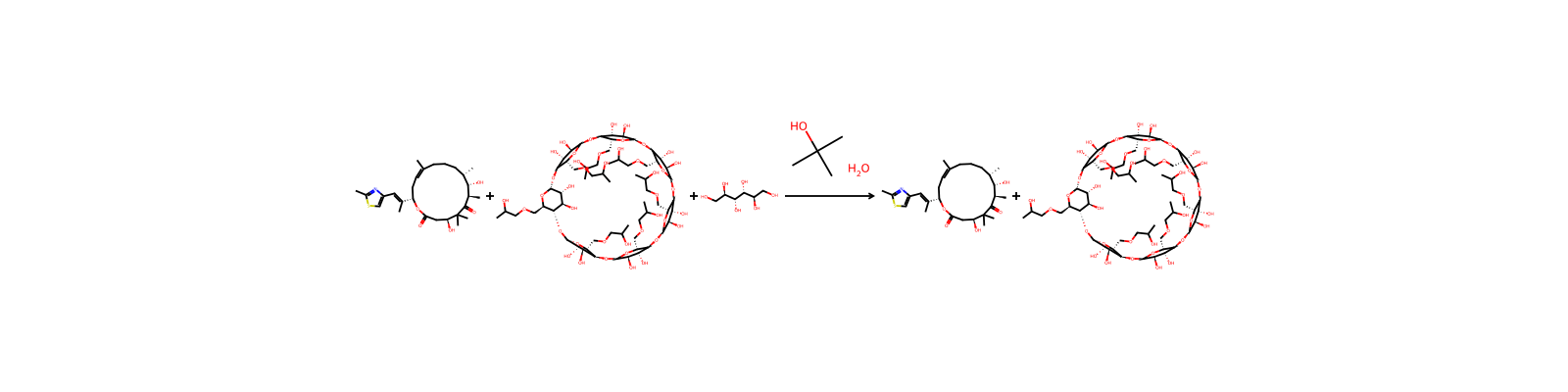
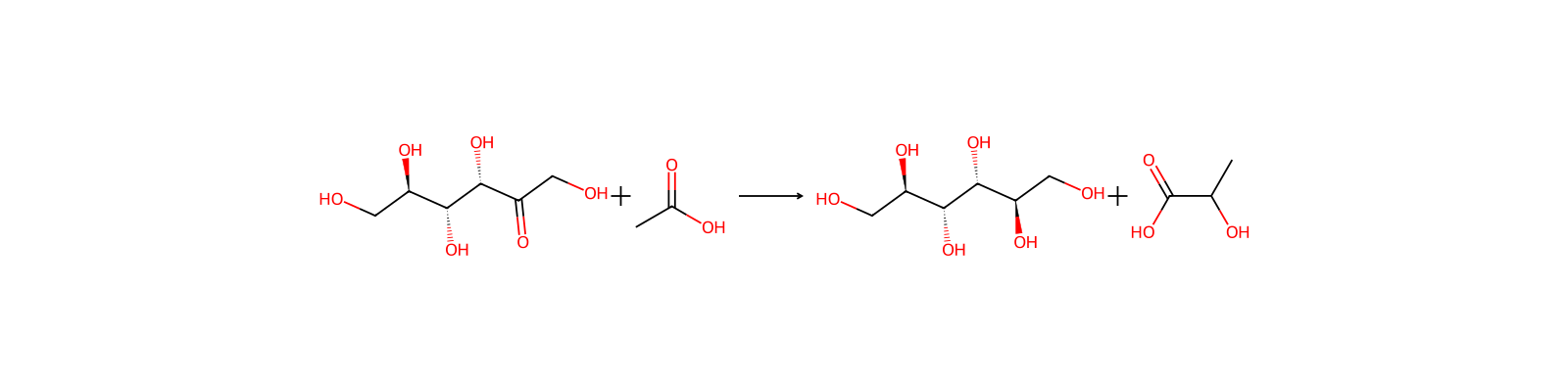
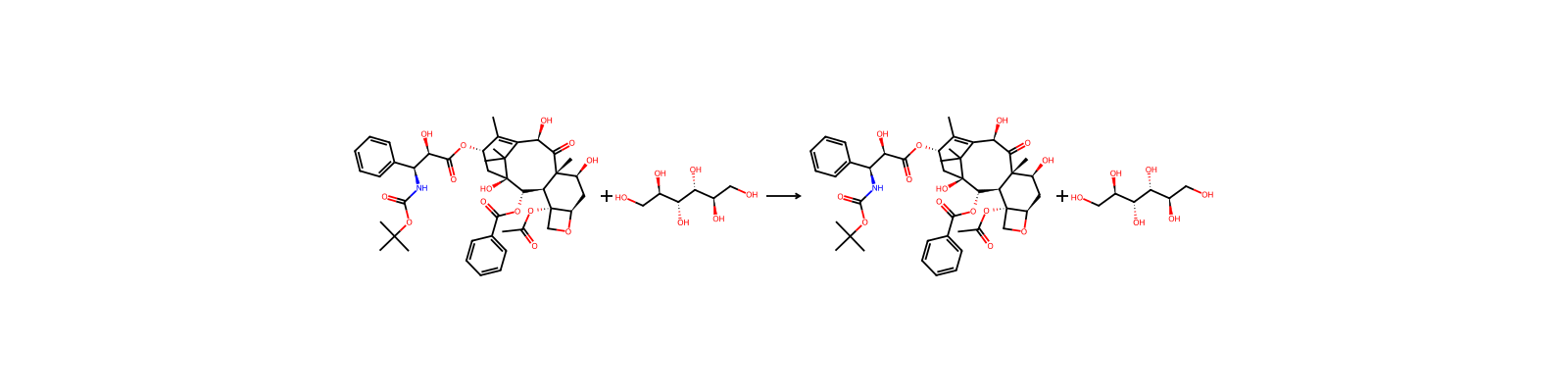
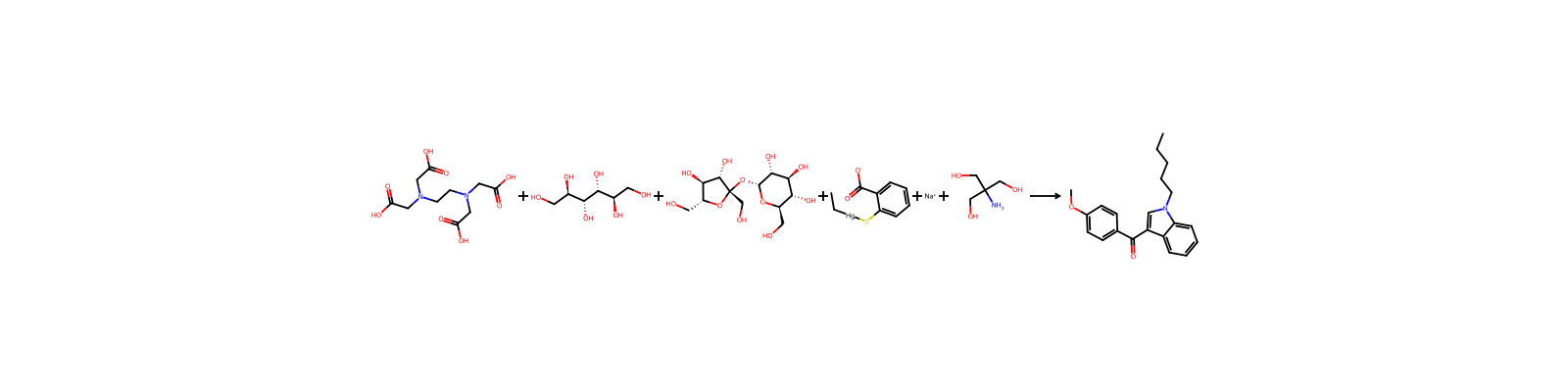
관련 반응
117건



연결된 노트
불러오는 중…