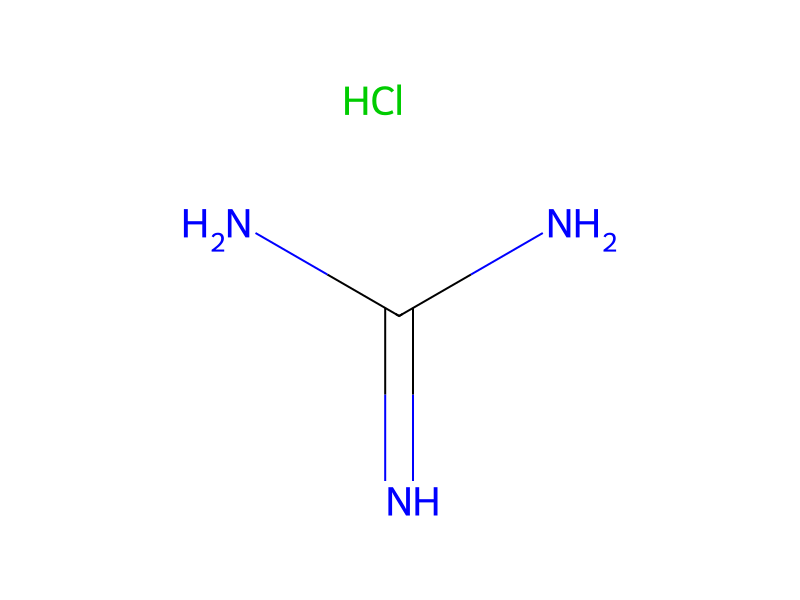
Guanidine Hydrochloride → HCID 21194780, compound
Reaction equation

[Cl:1][C:2]1[CH:3]=[C:4]2[C:8](=[CH:9][CH:10]=1)[NH:7][C:6]([C:11]([OH:13])=O)=[CH:5]2.C(N1C=CN=C1)(N1C=CN=C1)=O.Cl.[NH2:27][C:28]([NH2:30])=[NH:29].C(N(CC)CC)C>CN(C)C=O.O1CCCC1>[ClH:1].[Cl:1][C:2]1[CH:3]=[C:4]2[C:8](=[CH:9][CH:10]=1)[NH:7][C:6]([C:11]([N:27]=[C:28]([NH2:30])[NH2:29])=[O:13])=[CH:5]2Participants
7





Procedure
The reaction was carried out in a manner similar to Example 84 except for using 2.00 g (10.2 mmol) of 5-chloro-2-indolecarboxylic acid, 1.82 g (11.3 mmol) of carbonyldiimidazole, 5.86 g (61.3 mmol) of guanidine hydrochloride, 6.20 g (61.3 mmol) of triethylamine, 50 ml of tetrahydrofuran and 50 ml of dimethylformamide. Thus 1.85 g (66.2%) of 5-chloro-2-indoloylguanidine hydrochloride was obtained.
Sources & evidence
- ORD record
- ord-b1b4f47fde9d4a35aa4c660b58bf0844
- Source dataset
- uspto-grants-2001_06
- Patent number
- US06248772B1
Reaction notes
Loading…