Hydrochloric Acid → 1-(3-aminopropyl)-2-({4-[(methylamino)carbonyl]phenyl}amino)-N,N-bis(3-methylbutyl)-1H-benzimidazole-6-carboxamide dihydrochloride
Reaction equation

[ClH:1].[CH3:2][N:3](C)CCCN=C=NCC.ON1C2C=CC=CC=2N=N1.[CH3:23][CH:24]([CH3:65])[CH2:25][CH2:26][N:27]([CH2:60][CH2:61][CH:62]([CH3:64])[CH3:63])[C:28]([C:30]1[CH:31]=[CH:32][C:33]2[N:37]=[C:36]([NH:38][C:39]3[CH:47]=[CH:46][C:42]([C:43](O)=[O:44])=[CH:41][CH:40]=3)[N:35]([CH2:48][CH2:49][CH2:50][NH:51]C(OC(C)(C)C)=O)[C:34]=2[CH:59]=1)=[O:29].CN.Cl>C(Cl)(Cl)Cl.O1CCCC1.ClCCl.C(OCC)(=O)C>[ClH:1].[ClH:1].[NH2:51][CH2:50][CH2:49][CH2:48][N:35]1[C:34]2[CH:59]=[C:30]([C:28]([N:27]([CH2:26][CH2:25][CH:24]([CH3:23])[CH3:65])[CH2:60][CH2:61][CH:62]([CH3:64])[CH3:63])=[O:29])[CH:31]=[CH:32][C:33]=2[N:37]=[C:36]1[NH:38][C:39]1[CH:40]=[CH:41][C:42]([C:43]([NH:3][CH3:2])=[O:44])=[CH:46][CH:47]=1Participants
Reactant 5




Product 1

Reagents, catalysts & solvents 4




Conditions
- Temperature
- 20 °C
Procedure
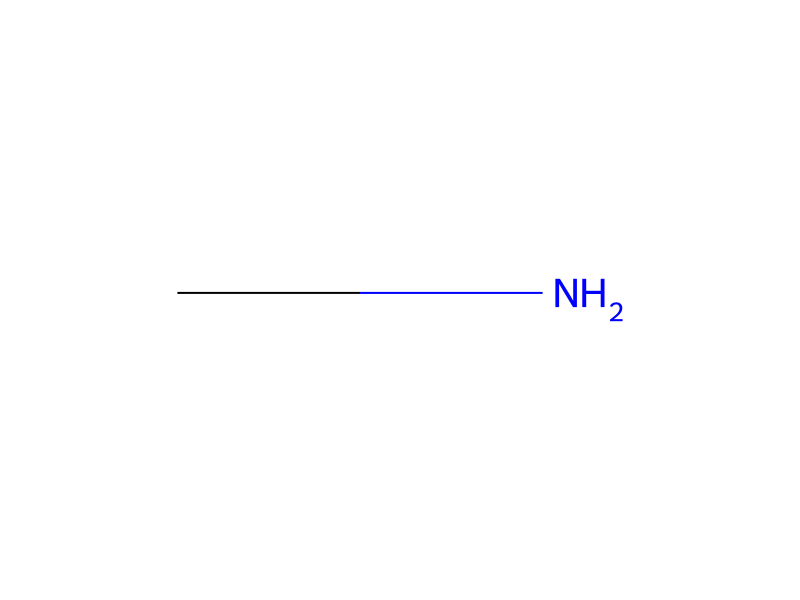
A solution of 1-(3-dimethylaminopropyl)-3-ethylcarbodiimide hydrochloride (EDC) (18 mg, 1.1 eq) in chloroform (1 ml) and a solution of 1-hydroxybenzotriazole (HOBt) (13 mg, 1.1 eq) in tetrahydrofuran (1 ml) are successively added to 4-[(6-{[bis(3-methylbutyl)amino]carbonyl}-1-{3-[(tert-butoxycarbonyl)amino]propyl}-1H-benzimidazol-2-yl)amino]benzoic acid (50 mg, 1 eq) in anhydrous tetrahydrofuran (1 ml). The mixture is stirred for 1 hour at a temperature of approximately 20° C. then the methylamine is added (2M in THF; 0.86 ml, 2 eq). After stirring for 17 hours at a temperature of approximately 20° C., the mixture is diluted with dichloromethane (3 ml) followed by the addition of aminomethylpolystyrene resin (2 eq), TBD-methyl polystyrene resin (2 eq) and methylisothiocyanate-polystyrene resin (4 eq). After stirring for 6 hours at approximately 20° C., the mixture is filtered and the filtrate is concentrated under reduced pressure at 40° C. The residue obtained is dissolved in dichloromethane (3 ml) and washed with a saturated aqueous solution of sodium hydrogen carbonate. The organic phase is dried over sodium sulphate and concentrated at a temperature of approximately 40° C. The residue obtained is dissolved in ethyl acetate (0.5 ml) and a solution of hydrochloric acid (4N in dioxane, 2 ml) is added. After stirring for 1 hour a temperature of approximately 20° C., the precipitate obtained is filtered and dried in order to produce the expected compound (29 mg; 60% yield).
Workup
- stirringAfter stirring for 17 hours at a temperature of approximately 20° C.
- stirringAfter stirring for 6 hours at approximately 20° C.
- filtrationthe mixture is filtered
- concentrationthe filtrate is concentrated under reduced pressure at 40° C
- customThe residue obtained
- washwashed with a saturated aqueous solution of sodium hydrogen carbonate
- dry with materialThe organic phase is dried over sodium sulphate
- concentrationconcentrated at a temperature of approximately 40° C
- customThe residue obtained
- stirringAfter stirring for 1 hour a temperature of approximately 20° C.
- customthe precipitate obtained
- filtrationis filtered
- customdried in order
Sources & evidence
- ORD record
- ord-9c14f4279d884fa6a6d79a6f373da304
- Source dataset
- uspto-grants-2010_10
- Patent number
- US07816539B2
Reaction notes
Loading…