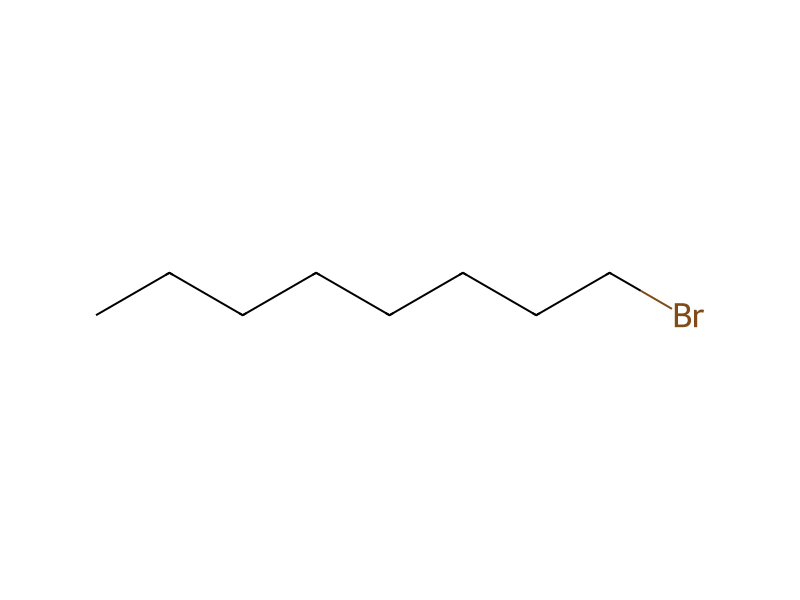
1-Bromooctane → HCID 86742843, compound
Reaction equation

OC(CC(O)CCCCCCCC)C(C1C=CC=CC=1)=O.C(Br)CCCCCCC.C(=O)([O-])[O-].[K+].[K+].Cl.NO.C([O-])(=O)C.[K+].[CH2:45]([O:55][CH:56]([CH2:69][CH2:70][CH2:71][CH2:72][CH2:73][CH2:74][CH2:75][CH3:76])[CH2:57][CH:58]([OH:68])[C:59](=[N:66][OH:67])[C:60]1[CH:65]=[CH:64][CH:63]=[CH:62][CH:61]=1)[CH2:46][CH2:47][CH2:48][CH2:49][CH2:50][CH2:51][CH2:52]CC>CC(C)=O.C(O)C.CCCCCCC>[CH2:45]([O:55][CH:56]([CH2:69][CH2:70][CH2:71][CH2:72][CH2:73][CH2:74][CH2:75][CH3:76])[CH2:57][CH:58]([OH:68])[C:59](=[N:66][OH:67])[C:60]1[CH:61]=[CH:62][CH:63]=[CH:64][CH:65]=1)[CH2:46][CH2:47][CH2:48][CH2:49][CH2:50][CH2:51][CH3:52]Participants
10
Reactant 6





Product 1

Reagents, catalysts & solvents 3



Procedure
29.2 g (0.1 Mol) of 2,4-dihydroxylaurophenone together with 28 g (0.145 Mol) of n-octylbromide and 14 g of anhydrous potassium carbonate in 150 ml of dried acetone, as in Example 11, are converted to ketone, 56° C. to 57° C. in flash point (ethanol), and, subsequently, with hydroxylamine hydrochloride in the presence of potassium acetate in ethanolic solution, converted to oxime, between 60° C. and 63° C. in flash point (ethanol, n-heptane). The following example was obtained in the same way: 4-decyloxy-2-hydroxy-laurophenone-oxime, between 64° C. and 69° C. in flash point (n-heptane, ethanol).
Sources & evidence
- ORD record
- ord-b184f015e43c4316b2ee024cdb45289d
- Source dataset
- uspto-grants-1989_03
- Patent number
- US04816487
Reaction notes
Loading…