Benzyl Alcohol → HCID 66962092, compound
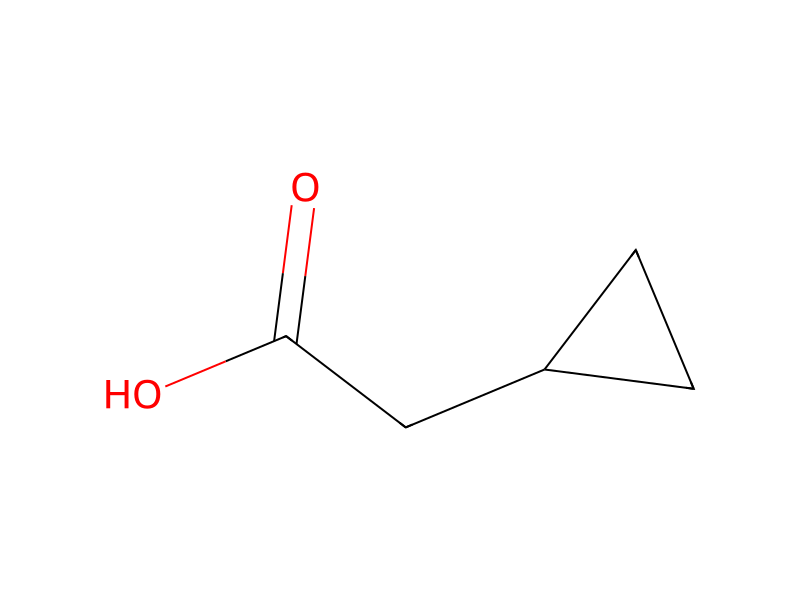
Reaction equation

C(N(CC)CC)C.[CH:8]1([CH2:11][C:12]([OH:14])=O)[CH2:10][CH2:9]1.S(Cl)(Cl)=O.C[C:20]1([CH3:28])[O:25][C:24](=O)[CH2:23][C:22](=O)[O:21]1.C(O)=O.[CH2:32](O)[C:33]1C=CC=[CH:35][CH:34]=1.C(=O)([O-])O.[Na+]>ClCCl.CN(C)C=O.N1C=CC=CC=1>[CH:8]1([CH2:11][C:12](=[O:14])[CH2:28][C:20]([O:21][CH2:22][C:23]2[CH:24]=[CH:35][CH:34]=[CH:33][CH:32]=2)=[O:25])[CH2:9][CH2:10]1Participants
Reactant 7






Product 1

Reagents, catalysts & solvents 3



Conditions
- Temperature
- -50 °C
Procedure
Triethylamine (13.7 ml, 98.28 mmol) was added to a solution of 4.92 g (49.14 mmol) of 2-cyclopropylacetic acid in dichloromethane (50.8 ml), and the mixture was then cooled to −50° C. Thionylchloride (5.35 ml, 73.71 mmol) was added dropwise thereto, and the temperature of the mixture was gradually raised to room temperature. The solution was gradually added to a mixed solution composed of 14.2 g (98.28 mmol) of 2,2-dimethyl-1,3-dioxane-4,6-dione and dichloromethane (101.5 ml): pyridine (50.8 ml), which had been cooled to 0° C. The temperature of the mixture was raised to room temperature, and the mixture was then stirred for 16 hr. The solvent was removed under the reduced pressure, and a saturated aqueous sodium hydrogencarbonate solution was added to the residue. The mixture was washed with ethyl acetate. The aqueous layer was adjusted to pH 4 by the addition of 1 N hydrochloric acid and was then extracted with ethyl acetate. The extract was dried over anhydrous sodium sulfate and was then filtered. The filtrate was concentrated under the reduced pressure, and the residue was then dried. N,N-Dimethylformamide (40 ml), 7.42 ml (196.6 mmol) of formic acid, and 6.62 ml (63.88 mmol) of benzylalcohol were added in that order, and the mixture was stirred at 120° C. for 1.5 hr. The mixture was cooled to room temperature. The cooled solution was then neutralized with a saturated aqueous sodium hydrogencarbonate solution. The neutralized solution was then extracted with ethyl acetate. The extract was then washed with an aqueous ammonium chloride solution, water, and brine in that order, was dried over anhydrous sodium sulfate, and was then filtered. The filtrate was concentrated under the reduced pressure, and the residue was purified by column chromatography on silica gel (hexane:ethyl acetate=20:1 to 14:1) to give 3.94 g (three steps, yield 35%) of the title compound.
Workup
- temperaturethe temperature of the mixture was gradually raised to room temperature
- additionThe solution was gradually added to a mixed solution
- temperatureThe temperature of the mixture was raised to room temperature
- customThe solvent was removed under the reduced pressure
- additiona saturated aqueous sodium hydrogencarbonate solution was added to the residue
- washThe mixture was washed with ethyl acetate
- additionThe aqueous layer was adjusted to pH 4 by the addition of 1 N hydrochloric acid
- extractionwas then extracted with ethyl acetate
- dry with materialThe extract was dried over anhydrous sodium sulfate
- filtrationwas then filtered
- concentrationThe filtrate was concentrated under the reduced pressure
- customthe residue was then dried
- stirringthe mixture was stirred at 120° C. for 1.5 hr
- temperatureThe mixture was cooled to room temperature
- extractionThe neutralized solution was then extracted with ethyl acetate
- washThe extract was then washed with an aqueous ammonium chloride solution, water, and brine in that order
- dry with materialwas dried over anhydrous sodium sulfate
- filtrationwas then filtered
- concentrationThe filtrate was concentrated under the reduced pressure
- customthe residue was purified by column chromatography on silica gel (hexane:ethyl acetate=20:1 to 14:1)
Sources & evidence
- ORD record
- ord-cc258ac093ca498585049977f7a91cdb
- Source dataset
- uspto-grants-2011_02
- Patent number
- US07879808B2
Reaction notes
Loading…