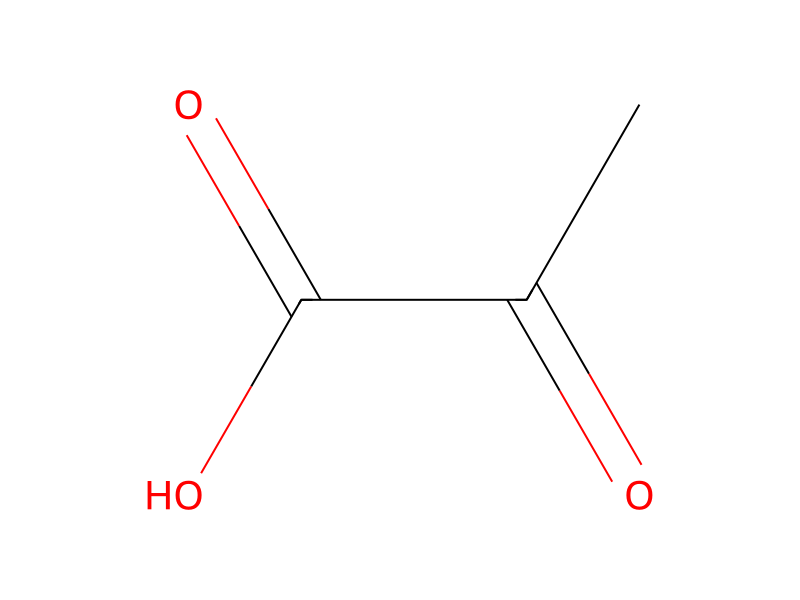
Pyruvic Acid → 6-Chloro-1H-indole-2-carboxylic acid
Reaction equation

[Cl:1][C:2]1[CH:3]=[CH:4][C:5](I)=[C:6]([CH:8]=1)[NH2:7].[C:10]([OH:15])(=[O:14])[C:11]([CH3:13])=O.C1N2CCN(CC2)C1>CN(C=O)C.C([O-])(=O)C.[Pd+2].C([O-])(=O)C>[Cl:1][C:2]1[CH:8]=[C:6]2[C:5]([CH:13]=[C:11]([C:10]([OH:15])=[O:14])[NH:7]2)=[CH:4][CH:3]=1Participants
6
Reactant 3


Product 1

Reagents, catalysts & solvents 2


Conditions
- Temperature
- 110 °C
Procedure
5-Chloro-2-iodoaniline (5.8 g, 23 mmol) and pyruvic acid (8 mL, 115 mmol) were dissolved in DMF (100 mL). DABCO (12.8 g, 115 mmol) was added and N2 (g) was bubbled through solution for 20 minutes, then palladium acetate (1.03 g, 4.6 mmol) was added. The reaction was heated to 110° C. for 1 hour then submitted to aqueous workup and purified by silica gel chromatography (0-100% EtOAc in hexanes) to yield the title compound.
Workup
- customN2 (g) was bubbled through solution for 20 minutes
- custompurified by silica gel chromatography (0-100% EtOAc in hexanes)
Sources & evidence
- ORD record
- ord-3c37bce5ab274f138cbbbc2e7c60824b
- Source dataset
- uspto-grants-2015_04
- Patent number
- US09000025B2
Reaction notes
Loading…