Hydrochloric Acid → HCID 22566204, compound
Reaction equation

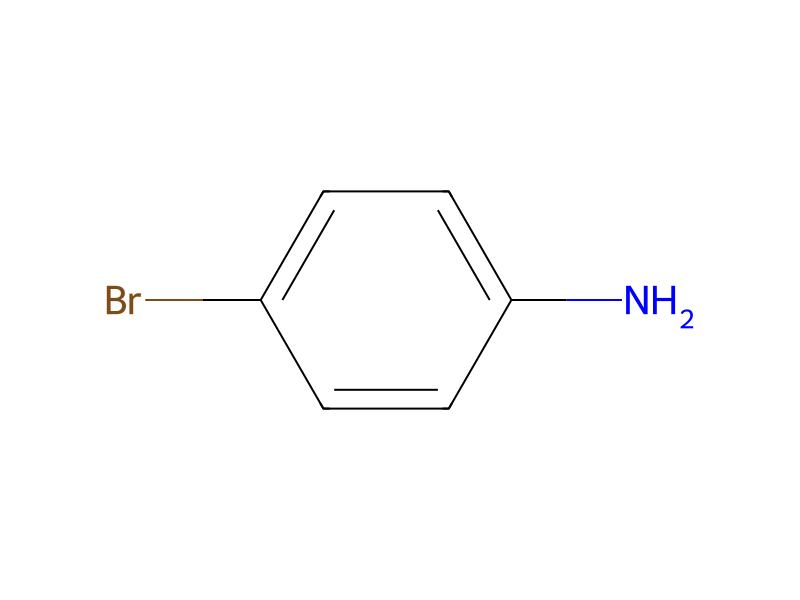
[Br:1][C:2]1[CH:8]=[CH:7][C:5]([NH2:6])=[CH:4][CH:3]=1.C1[O:18][C:12]([CH2:14][CH2:15][CH2:16]Cl)([CH3:13])OC1.C(=O)([O-])[O-].[K+].[K+].CC[C:27]([C:29](Cl)=[O:30])=[O:28].Cl.C[O-].[Na+]>CN(C)C=O.C1COCC1.CO.C(N(CC)CC)C>[Br:1][C:2]1[CH:8]=[CH:7][C:5]([N:6]2[CH2:16][CH2:15][CH:14]([C:12](=[O:18])[CH3:13])[C:27](=[O:28])[C:29]2=[O:30])=[CH:4][CH:3]=1Participants
Reactant 6





Product 1

Reagents, catalysts & solvents 4




Procedure
Part A: 1-[4-bromophenyl]-4-acetyl-2,3-dioxopiperidine was prepared in four steps in 10% overall yield by the following sequence of reactions. Commercially available 4-bromoaniline was treated with commercially available 5-chloro-2-pentanone ethylene ketal in dimethylformamide in the presence of potassium carbonate for three days. The crude alkylated aniline was treated with ethyloxalyl chloride in THF the presence of triethylamine. Hydrolysis of the ketal was accomplished by treating with aqueous HCl and the resulting material was subjected to Dieckmann cyclization conditions (NaOMe, methanol). The crude dioxopiperidine was purified by flash chromatography (elution with 4:1 hexanes/ethylacetate) to afford the title compound. 1H NMR (dmso d6): δ 7.56 (d, 2H, J =8 Hz), 7.26 (d, 2H, J =8 Hz), 3.60 (t, 2H), 3.28 (t, 2H), 2.30 (s, 3H). LRMS (ES+): 281.0 (M+H)+.
Workup
- customoverall yield by the following sequence of reactions
- customThe crude dioxopiperidine was purified by flash chromatography (elution with 4:1 hexanes/ethylacetate)
Sources & evidence
- ORD record
- ord-8af08bcdc464452e9c19f10a6a5fd9d2
- Source dataset
- uspto-grants-2003_01
- Patent number
- US06506771B2
Reaction notes
Loading…