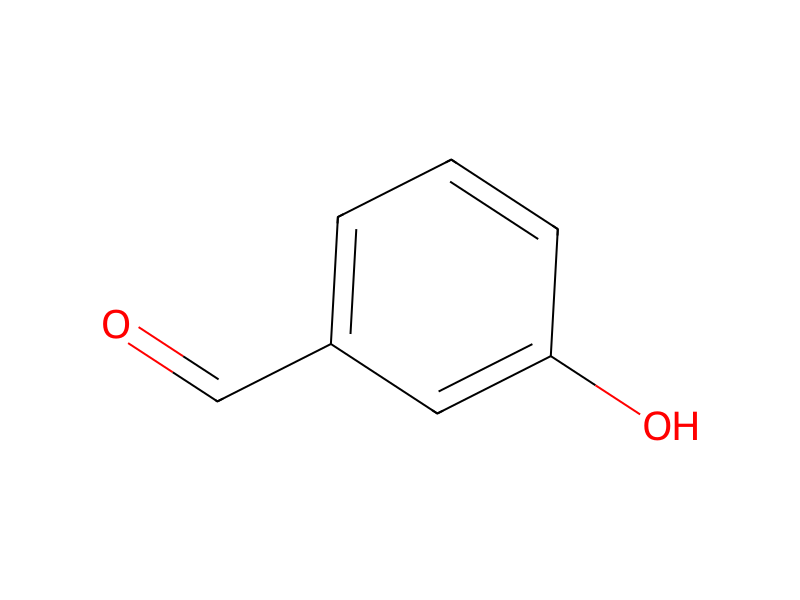
3-Hydroxybenzaldehyde → 3-Propoxybenzaldehyde
Reaction equation

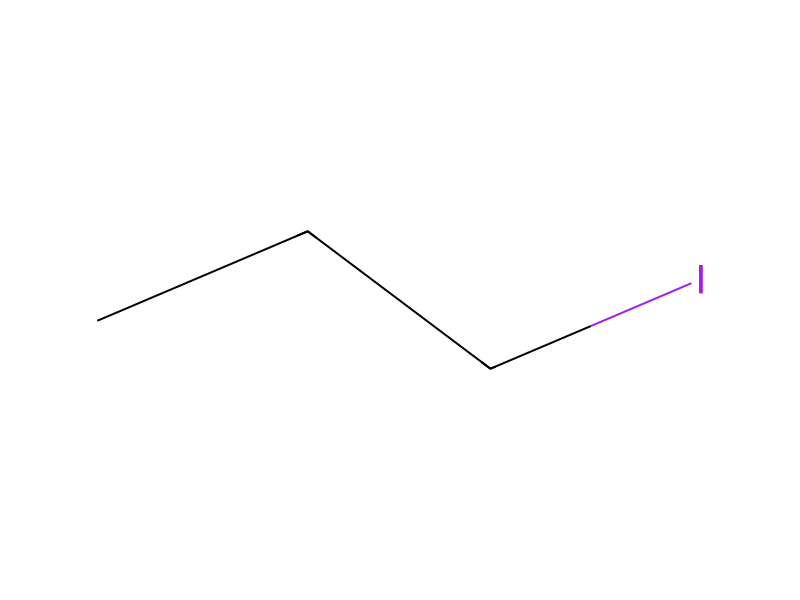
[OH:1][C:2]1[CH:3]=[C:4]([CH:7]=[CH:8][CH:9]=1)[CH:5]=[O:6].C([O-])([O-])=O.[K+].[K+].CN(C=O)C.I[CH2:22][CH2:23][CH3:24]>C1(C)C=CC=CC=1.O>[CH2:22]([O:1][C:2]1[CH:3]=[C:4]([CH:7]=[CH:8][CH:9]=1)[CH:5]=[O:6])[CH2:23][CH3:24]Participants
7
Reactant 4


Product 1

Reagents, catalysts & solvents 2


Conditions
- Temperature
- 50 °C
Procedure
Combine 3-hydroxybenzaldehyde (790 g), K2CO3, (1627 g) and DMF (8 L). Add 1-iodopropane (1000 g) and heat to 105° C. and stir for 4 h. Cool to about 50° C. and add water (15 L), continue cooling to about room temperature and add toluene (10 L). Separate the organic layer and extract the aqueous phase with toluene (2×10 L), combine organic phases and wash with NaOH 1N (2×5.8 L), concentrate the combined organic layers in vacuo to afford the title compound.
Workup
- temperaturecontinue cooling to about room temperature
- customSeparate the organic layer
- extractionextract the aqueous phase with toluene (2×10 L)
- washwash with NaOH 1N (2×5.8 L)
- concentrationconcentrate the combined organic layers in vacuo
Sources & evidence
- ORD record
- ord-2d24e54df193457bb3feb4908fa8a161
- Source dataset
- uspto-grants-2011_10
- Patent number
- US08044090B2
Reaction notes
Loading…