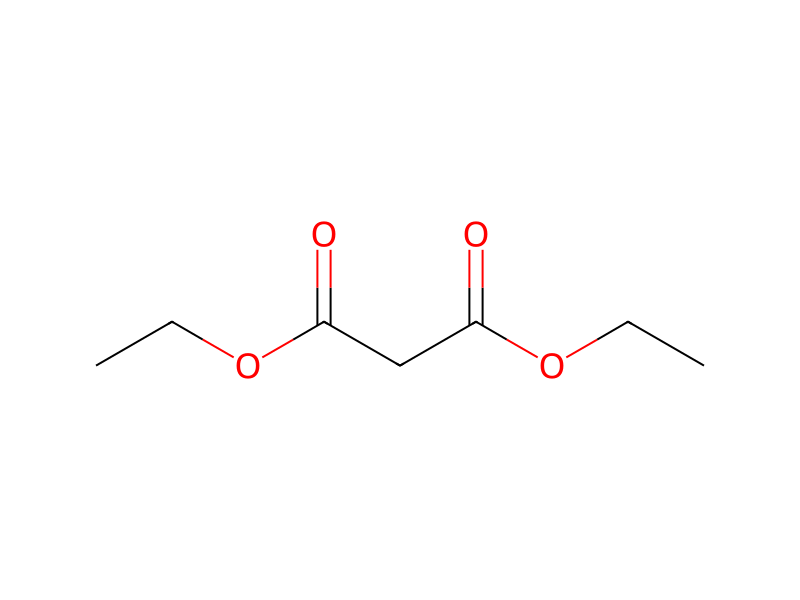
Diethyl Malonate → 1-(4-Chloro-2-nitrophenyl)ethan-1-one
Reaction equation

[Cl:1][C:2]1[CH:10]=[CH:9][C:5]([C:6]([OH:8])=O)=[C:4]([N+:11]([O-:13])=[O:12])[CH:3]=1.[C:14](Cl)(=O)C(Cl)=O.C(OCC)(=O)CC(OCC)=O.[H-].[Na+]>C1COCC1.CN(C=O)C>[Cl:1][C:2]1[CH:10]=[CH:9][C:5]([C:6](=[O:8])[CH3:14])=[C:4]([N+:11]([O-:13])=[O:12])[CH:3]=1Participants






Conditions
- Temperature
- 0 °C
Procedure
To a solution of 4-chloro-2-nitrobenzoic acid (30.0 g, 0.15 mol) in THF (400 mL) was added oxalyl chloride (26 mL, 0.3 mol) at 0° C., followed by DMF (2 drops). After stirring for 10 min at 0° C., the ice bath was removed and the reaction mixture was heated at reflux for 3 h. The resulting mixture was then cooled and evaporated under reduced pressure. A second 1 L round bottom flask was loaded with diethyl malonate (22.8 mL, 0.15 mol) and THF (150 mL): sodium hydride (60% dispersion in mineral oil, 7.2 g, 0.18 mol) was then added at 0° C., portionwise over a period of 30 minutes. The ice bath was then removed, and the mixture was heated at reflux for 3 h. The acyl chloride, dissolved in 2 portions of THF, was added and the resulting mixture was heated at reflux for 3 h and then stirred at room temperature overnight. The reaction mixture was partitioned between water and EtOAc; the organic layer was separated and the aqueous layer was extracted twice with EtOAc. The combined organic extracts were washed with brine, dried over anhydrous sodium sulfate, filtered and evaporated under reduced pressure. A mixture of glacial AcOH (50 mL) and sulfuric acid (20% in water, 50 mL) was added to the residue, and the resulting mixture was heated at reflux for 6 h and then stirred at 80° C. overnight. The reaction mixture was basified to pH 10 by adding NaOH (aq) and then was extracted 3 times with EtOAc. The combined organic extracts were washed with brine, dried over anhydrous sodium sulfate, filtered and evaporated under reduced pressure. The crude residue was purified by flash chromatography (EtOAc/hexane) to give 7.1 g of 1-(4-chloro-2-nitro-phenyl)-ethanone.
Workup
- customthe ice bath was removed
- temperaturethe reaction mixture was heated
- temperatureat reflux for 3 h
- temperatureThe resulting mixture was then cooled
- customevaporated under reduced pressure
- customThe ice bath was then removed
- temperaturethe mixture was heated
- temperatureat reflux for 3 h
- dissolutionThe acyl chloride, dissolved in 2 portions of THF
- additionwas added
- temperaturethe resulting mixture was heated
- temperatureat reflux for 3 h
- stirringstirred at room temperature overnight
- customThe reaction mixture was partitioned between water and EtOAc
- customthe organic layer was separated
- extractionthe aqueous layer was extracted twice with EtOAc
- washThe combined organic extracts were washed with brine
- dry with materialdried over anhydrous sodium sulfate
- filtrationfiltered
- customevaporated under reduced pressure
- additionA mixture of glacial AcOH (50 mL) and sulfuric acid (20% in water, 50 mL)
- additionwas added to the residue
- temperaturethe resulting mixture was heated
- temperatureat reflux for 6 h
- stirringstirred at 80° C. overnight
- additionby adding NaOH (aq)
- extractionwas extracted 3 times with EtOAc
- washThe combined organic extracts were washed with brine
- dry with materialdried over anhydrous sodium sulfate
- filtrationfiltered
- customevaporated under reduced pressure
- customThe crude residue was purified by flash chromatography (EtOAc/hexane)
Sources & evidence
- ORD record
- ord-9b3e87e04a1e4b8a824700f4f5a124a6
- Source dataset
- uspto-grants-2012_04
- Patent number
- US08163906B2
Reaction notes
Loading…