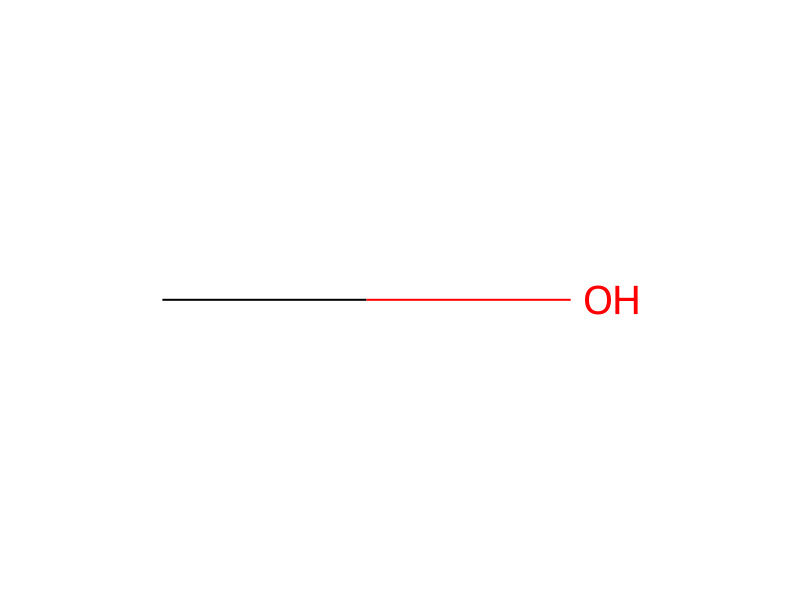
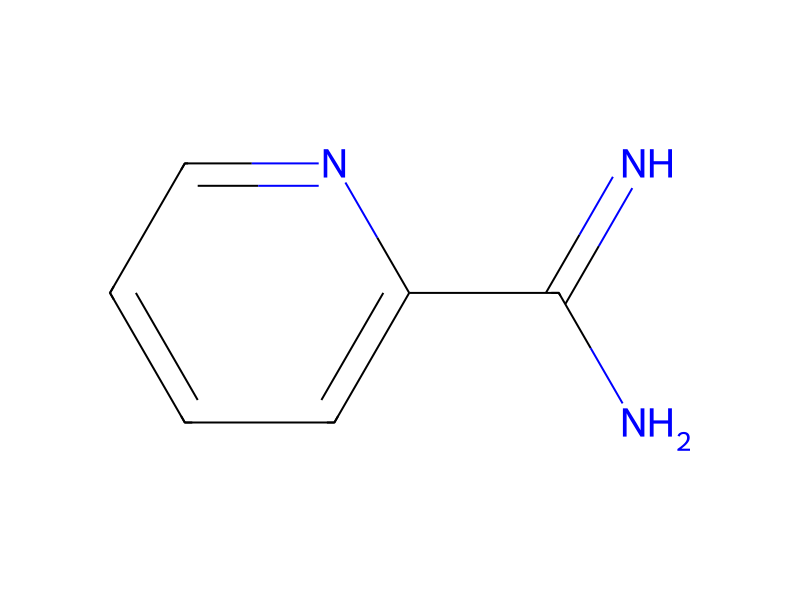
Methanol → Picolinimidamide
Reaction equation

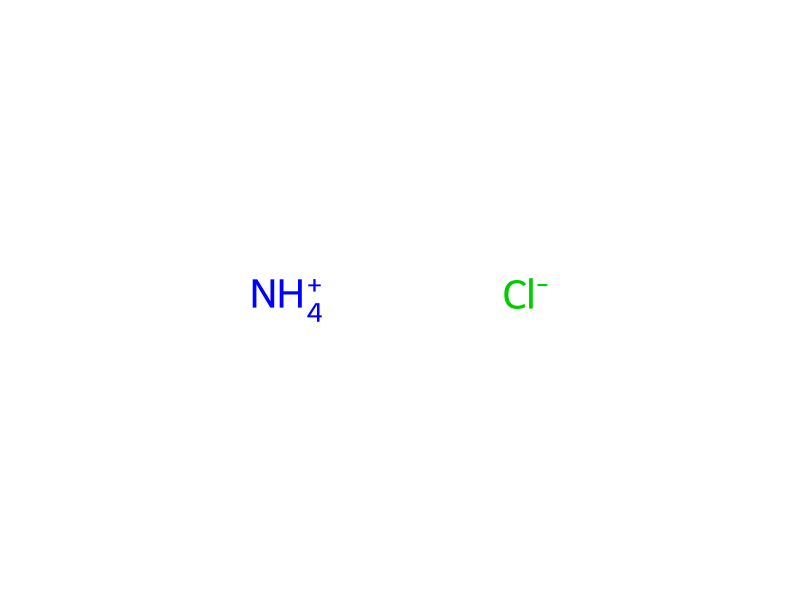
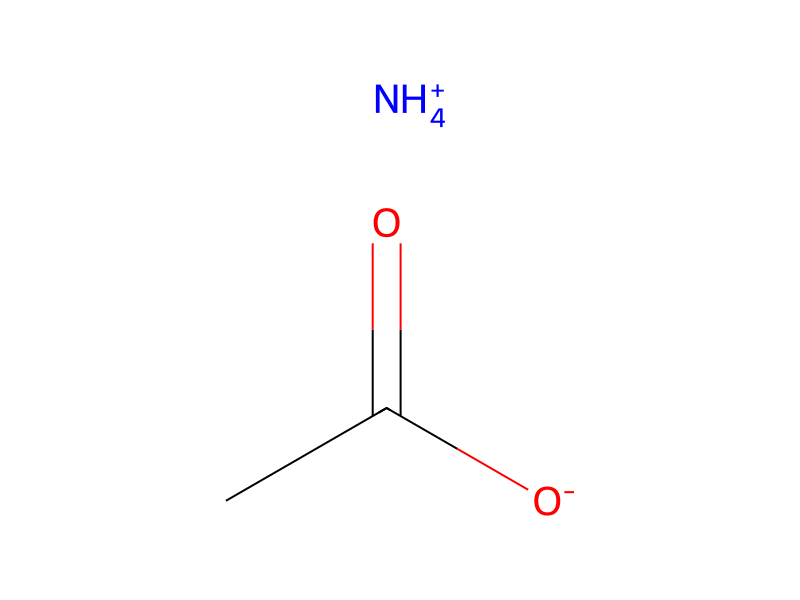
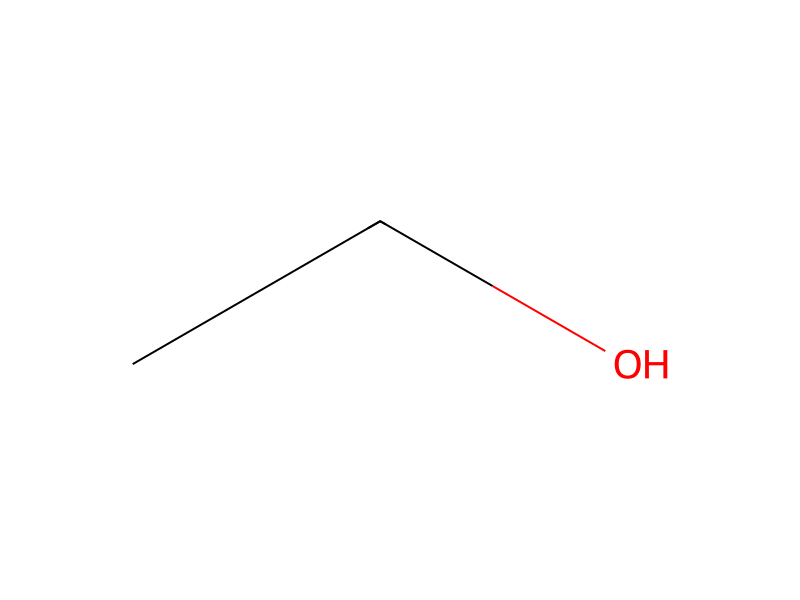
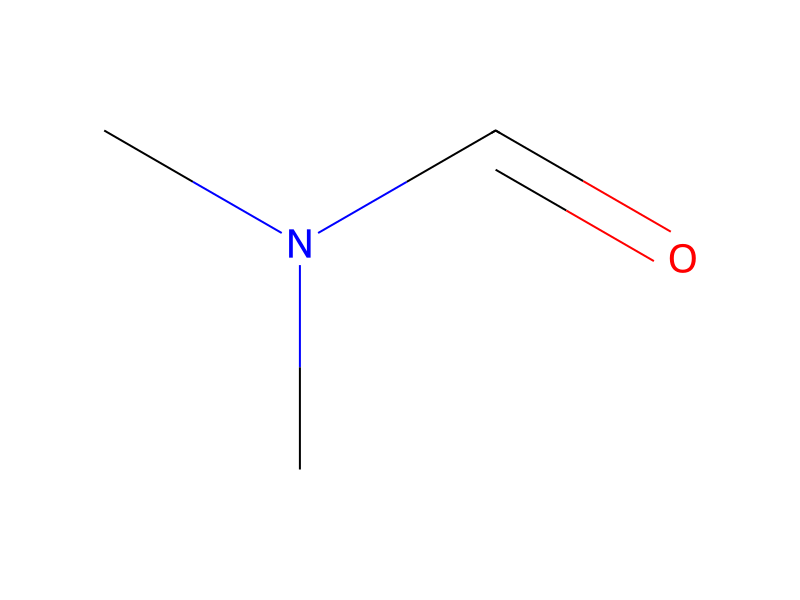
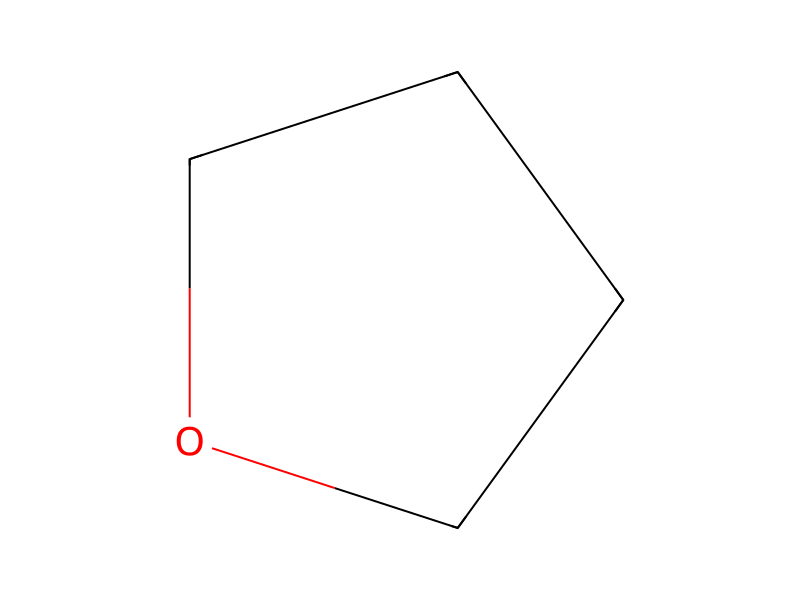
[C:1]([C:3]1[CH:8]=[CH:7][CH:6]=[CH:5][N:4]=1)#[N:2].CO.C([O-])(=O)C.[NH4+:15].[Cl-].[NH4+]>O1CCCC1.CN(C=O)C.C(O)(C)C.C(O)C>[C:1]([C:3]1[CH:8]=[CH:7][CH:6]=[CH:5][N:4]=1)(=[NH:15])[NH2:2]Participants


Procedure
The novel 4-amino-2-(2-pyridyl)pyrimidines are prepared by methods known per se (J. Org. Chem.; 1967, 32, 1591). For that purpose, 2-cyanopyridine is reacted, in a suitable solvent, for example methanol, ethanol, isopropanol, DMF, tetrahydrofuran etc., with ammonium acetate or ammonium chloride at a temperature of from −10° C. to 100° C. over a period of from 1 hour to 24 hours to form the corresponding 2-amidinopyridine. The 2-amidinopyridine is then condensed with an appropriate β-keto ester using an auxiliary base, for example sodium carbonate, potassium hydroxide, sodium ethanolate, sodium methanolate, potassium tert-butanolate etc., in a suitable solvent, for example methanol, ethanol, butanol, tert-butanol, THF, DMF, acetonitrile, toluene, xylene etc., over a period of from 1 to 24 hours at a temperature of from 40 to 120° C. The 4-hydroxy-2-(2-pyridyl)pyrimidine thereby obtained is then converted into the corresponding 4-chloro-2-(2-pyridyl)pyrimidine by conventional methods using phosphorus oxychloride. The substituted 4-amino-2-(2-pyridyl)pyrimidines are obtained by reacting the 4-chloro-2-(2-pyridyl)pyrimidine with primary or secondary amines in a suitable solvent, for example DMF, dioxane, toluene, xylene, ethanol, butanol, and an auxiliary base, for example triethylamine, DIEA, sodium carbonate, potassium hydroxide etc., or using an excess of amine at from 40 to 130° C. over a period of from 1 to 24 hours. Preparation of the compounds of formula (2), except for the reaction with polymer-bound diamines, is analogous to that of compound (1). The polymer-bound diamines are obtained by reacting an excess of from 2 to 10 equivalents of diamine in, for example, DMF, dichloromethane, THF or dioxane with trityl chloride polystyrene resin at a temperature of from 10 to 50° C. over a period of from 0.5 to 24 hours. From 2 to 10 equivalents of appropriately substituted 4-chloro-2-(2-pyridyl)pyrimidines are then reacted, in a suitable solvent, for example dichloromethane, DMF, THF or toluene, with the polymer-bound diamines at from 10 to 120° C. over a period of from 2 to 48 hours. After washing the resin to remove the excess, the target compounds are split off using from 1 to 30% trifluoroacetic acid in dichloromethane at 25° C. over a period of from 1 to 5 hours. For the purpose of further purification, the substances are freeze-dried from tBuOH/water 4:1 with from 1 to 10% HOAc and once from tBuOH/water 4:1.
Sources & evidence
- ORD record
- ord-20354bda5508445d8c4482faf3723e60
- Source dataset
- uspto-grants-2006_03
- Patent number
- US07015228B2
Reaction notes
Loading…