Trifluoromethanesulfonic anhydride → HCID 22031267, compound
Reaction equation

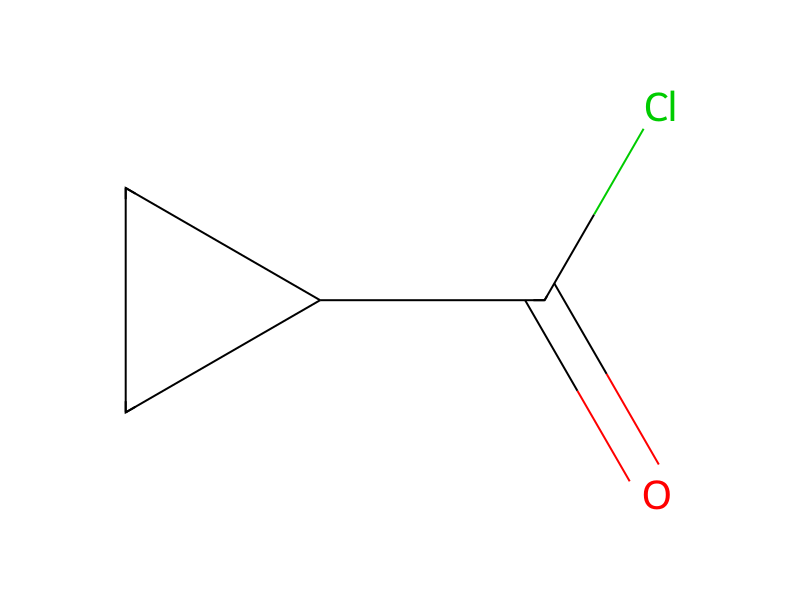
[CH:1]1([C:4](Cl)=[O:5])[CH2:3][CH2:2]1.[Br:7][C:8]1[CH:9]=[C:10]2[C:15](=[CH:16][CH:17]=1)[N:14]=[CH:13][N:12]=[C:11]2[C:18]([NH:20][NH2:21])=O.C(=O)(O)[O-].[Na+].FC(F)(F)S(OS(C(F)(F)F)(=O)=O)(=O)=O>O.C(OCC)(=O)C.ClCCl.N1C=CC=CC=1.O1CCCC1>[Br:7][C:8]1[CH:9]=[C:10]2[C:15](=[CH:16][CH:17]=1)[N:14]=[CH:13][N:12]=[C:11]2[C:18]1[O:5][C:4]([CH:1]2[CH2:3][CH2:2]2)=[N:21][N:20]=1Participants
Reactant 4



Product 1

Reagents, catalysts & solvents 5





Procedure
0.4 mL cyclopropane carbonyl chloride was added to a mixture of 796 mg of 6-bromoquinazoline-4-carboxylic acid hydrazide (compound in Production Example 414), 380 mg sodium bicarbonate, 15 mL tetrahydrofuran and 15 mL water, and the mixture was stirred at room temperature for 1 hour. 130 mg sodium bicarbonate and 0.13 mL cyclopropane carbonyl chloride were further added thereto, and the mixture was stirred overnight. An aqueous saturated sodium bicarbonate solution, common salt and tetrahydrofuran were added to the reaction solution, and the organic layer was separated, washed with brine and dried over anhydrous sodium sulfate. The drying agent was filtered off, and the filtrate was evaporated. Diisopropyl ether was added to the resulting residues, and the crystals were collected by filtration and dried under reduced pressure with a vacuum pump. 996 mg crude product of cyclopropane carboxylic acid N′-(6-bromoquinazoline-4-carbonyl) hydrazide was obtained as pale brown crystals. A mixture of 450 mg of this carboxylic acid hydrazide derivative, 0.24 mL pyridine and 20 mL anhydrous dichloromethane was cooled to −10° C. or less with ice/ethanol/dry ice in a stream of nitrogen, and 0.48 mL trifluoromethanesulfonic anhydride was added little by little to the reaction solution. The reaction solution was stirred at the same temperature for 30 minutes, then stirred at about 0° C. under ice-coolingd water for 40 minutes and then at room temperature for 1 hour. An aqueous saturated sodium bicarbonate solution, ethyl acetate and water were added to the reaction solution, and the organic layer was separated, washed with an aqueous saturated ammonium chloride solution and brine, and then dried over anhydrous sodium sulfate. The drying agent was filtered off, and the filtrate was evaporated. The resulting residue was purified by silica gel column chromatography (ethyl acetate/hexane) to give 282 mg of the title compound as a yellowish brown solid.
Workup
- stirringthe mixture was stirred overnight
- customthe organic layer was separated
- washwashed with brine
- dry with materialdried over anhydrous sodium sulfate
- filtrationThe drying agent was filtered off
- customthe filtrate was evaporated
- additionDiisopropyl ether was added to the resulting residues
- filtrationthe crystals were collected by filtration
- customdried under reduced pressure with a vacuum pump
- custom996 mg crude product of cyclopropane carboxylic acid N′-(6-bromoquinazoline-4-carbonyl) hydrazide was obtained as pale brown crystals
- additionwas added little by little to the reaction solution
- stirringThe reaction solution was stirred at the same temperature for 30 minutes
- stirringstirred at about 0° C. under ice-coolingd water for 40 minutes
- waitat room temperature for 1 hour
- customthe organic layer was separated
- washwashed with an aqueous saturated ammonium chloride solution and brine
- dry with materialdried over anhydrous sodium sulfate
- filtrationThe drying agent was filtered off
- customthe filtrate was evaporated
- customThe resulting residue was purified by silica gel column chromatography (ethyl acetate/hexane)
Sources & evidence
- ORD record
- ord-fc0e7eb3edef41c09384c426ffb901b6
- Source dataset
- uspto-grants-2006_07
- Patent number
- US07074801B1
Reaction notes
Loading…