Benzoic Acid → Diphenylamine
Reaction equation

C(O)(=O)[C:2]1[CH:7]=[CH:6][CH:5]=[CH:4][CH:3]=1.[NH2:10][C:11]1[CH:16]=[CH:15][CH:14]=[CH:13][CH:12]=1.C[Si](C)(C)N[Si](C)(C)C.[Li].O1CCCC1>CN(C)C=O.C(#N)C>[C:11]1([NH:10][C:2]2[CH:3]=[CH:4][CH:5]=[CH:6][CH:7]=2)[CH:16]=[CH:15][CH:14]=[CH:13][CH:12]=1Participants
Reactant 4
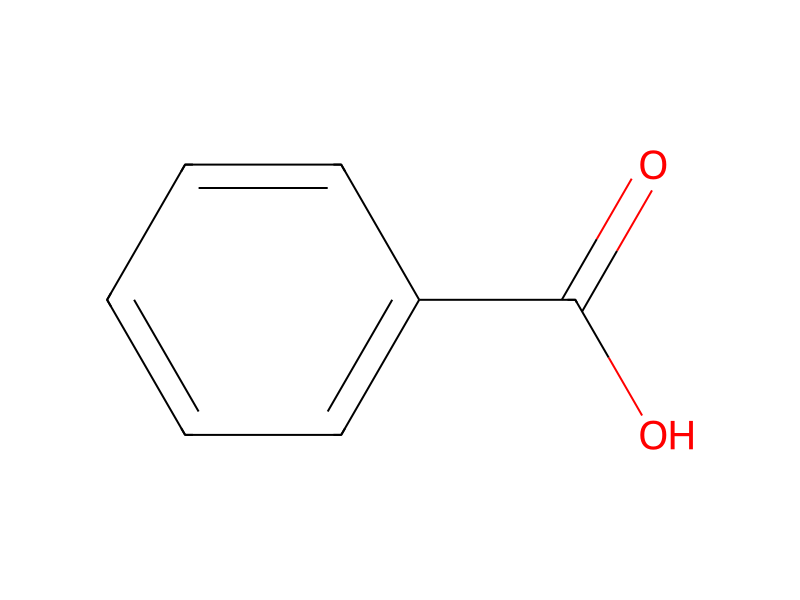



Product 1
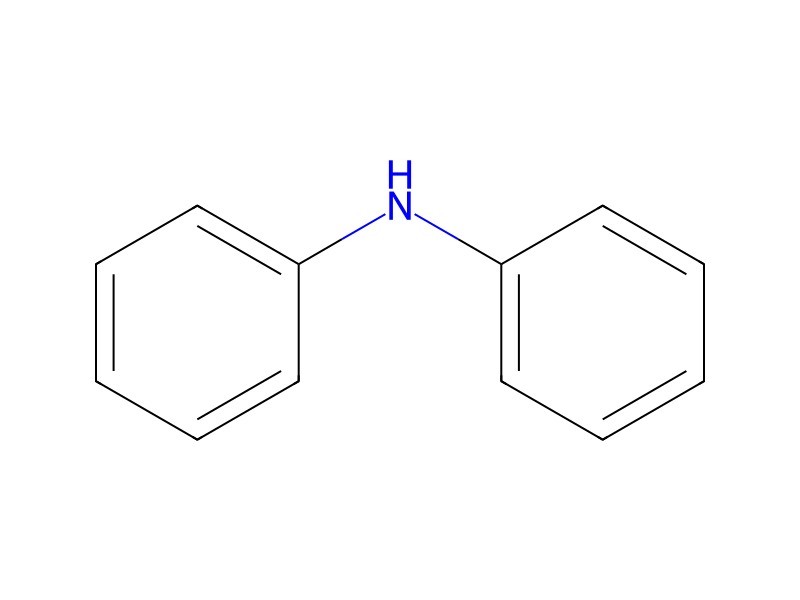
Reagents, catalysts & solvents 2


Conditions
- Temperature
- -78 °C
Procedure
In Scheme 1, Step A, a 2-(arylamino)-benzoic acid or diphenylamine (3) is prepared from the coupling of a suitable benzoic acid (1) and a suitable aniline (2) in the presence of a strong base, for example, lithium 1,1,1,3,3,3-hexamethyldisilazane (LiHMDS), in a polar aprotic solvent such as tetrahydrofuran, acetonitrile or dimethylformamide. For example, the aniline (2) and the benzoic acid (1) are dissolved in a suitable organic solvent and cooled to about −78° C. under nitrogen. The suspension is treated with an excess of a suitable base, such as LiHMDS, and allowed to warm to room temperature. The reaction is typically complete within about 2 hours to about 5 days. The resulting benzoic acid (3) can be isolated by removing the solvent, for example by evaporation under reduced pressure or by filtering the precipitated solid through Celite® and washing with a suitable solvent. The benzoic acid (3) can be further purified, if desired, by standard methods such as chromatography, crystallization, or distillation.
Workup
- additionThe suspension is treated with an excess of a suitable base
- temperatureto warm to room temperature
- waitThe reaction is typically complete within about 2 hours to about 5 days
Sources & evidence
- ORD record
- ord-161775a03c404af285c5d75016baefd4
- Source dataset
- uspto-grants-2004_08
- Patent number
- US06770778B2
Reaction notes
Loading…