Triethylamine → 4-Methylpyrimidine-2-carbonitrile
Reaction equation

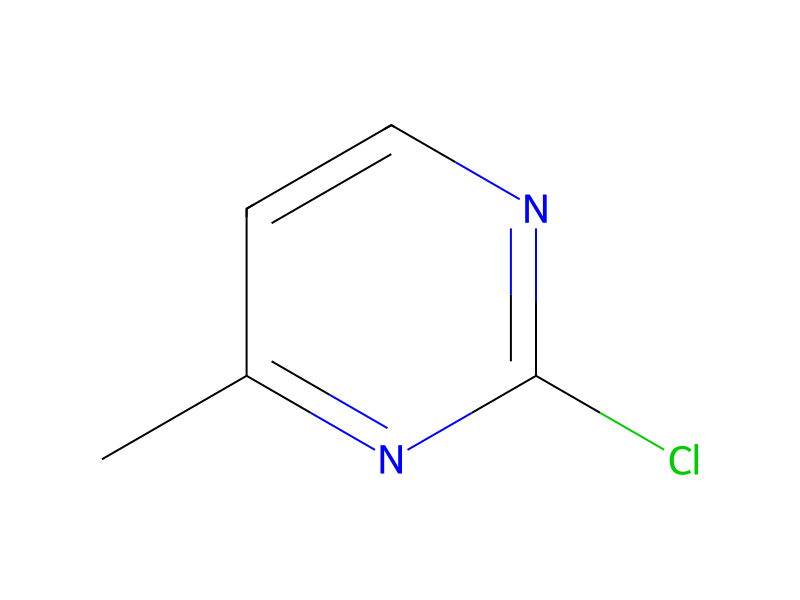
Cl[C:2]1[N:7]=[C:6]([CH3:8])[CH:5]=[CH:4][N:3]=1.[CH2:9]([N:11](CC)CC)C.[C-]#N.[K+]>CN(C)C=O.ClCCl.[Pd](Cl)Cl.C1(P(C2C=CC=CC=2)C2C=CC=CC=2)C=CC=CC=1.C1(P(C2C=CC=CC=2)C2C=CC=CC=2)C=CC=CC=1>[CH3:8][C:6]1[CH:5]=[CH:4][N:3]=[C:2]([C:9]#[N:11])[N:7]=1Participants
Reactant 3


Product 1

Reagents, catalysts & solvents 3



Conditions
- Temperature
- 80 °C
Procedure
2-Chloro-4-methylpyrimidine (0.5 g, 3.89 mmol) was dissolved in N,N-dimethyl formamide (DMF) (60.8 ml) and triethylamine (0.813 ml, 5.83 mmol) and potassium cyanide (0.507 g, 7.78 mmol) were added. The solution was sonicated till most of the potassium cyanide had gone into solution then bis(triphenylphosphine) palladium(II) chloride (0.273 g, 0.389 mmol) was added. The solution was heated to 80° C. and left to stir over the weekend. LCMS showed that the product had formed. The reaction mixture was diluted in dichloromethane and washed with saturated ammonium chloride, water and brine. The organic extracts were dried over magnesium sulfate and the solvent was removed under reduced pressure. This afforded a crude of 1.129 g, which was purified by flash chromatography (Biotage Isolera 4, 100 g cartridge) with a gradient of dichloromethane 0-100% in iso-hexane. The solvent was removed under reduced pressure to afford the desired product in 0.199 g.
Workup
- waitleft
- customhad formed
- washwashed with saturated ammonium chloride, water and brine
- dry with materialThe organic extracts were dried over magnesium sulfate
- customthe solvent was removed under reduced pressure
- customThis afforded a crude of 1.129 g, which
- customwas purified by flash chromatography (Biotage Isolera 4, 100 g cartridge) with a gradient of dichloromethane 0-100% in iso-hexane
- customThe solvent was removed under reduced pressure
Sources & evidence
- ORD record
- ord-bb65a59dea8e4902844f1c12164171f1
- Source dataset
- uspto-grants-2013_08
- Patent number
- US08501946B2
Reaction notes
Loading…