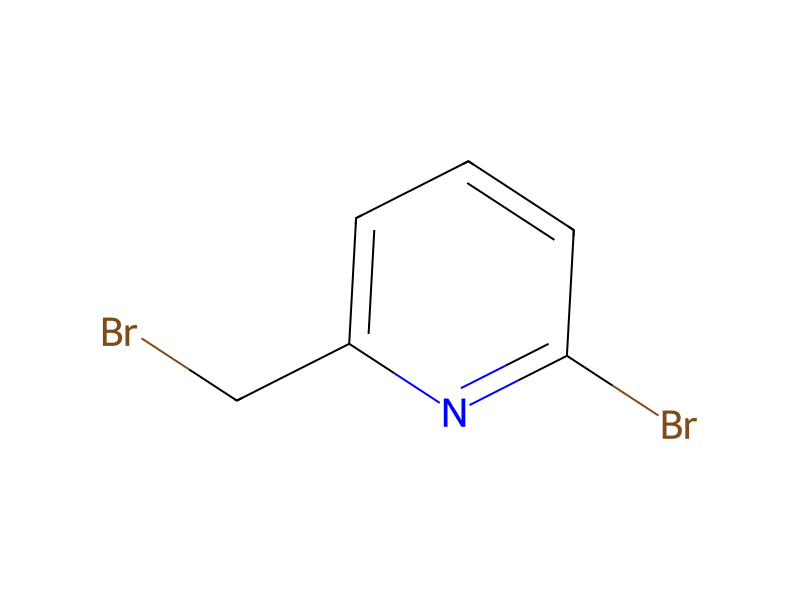
Diisopropylethylamine → 2-Bromo-6-(bromomethyl)pyridine
Reaction equation

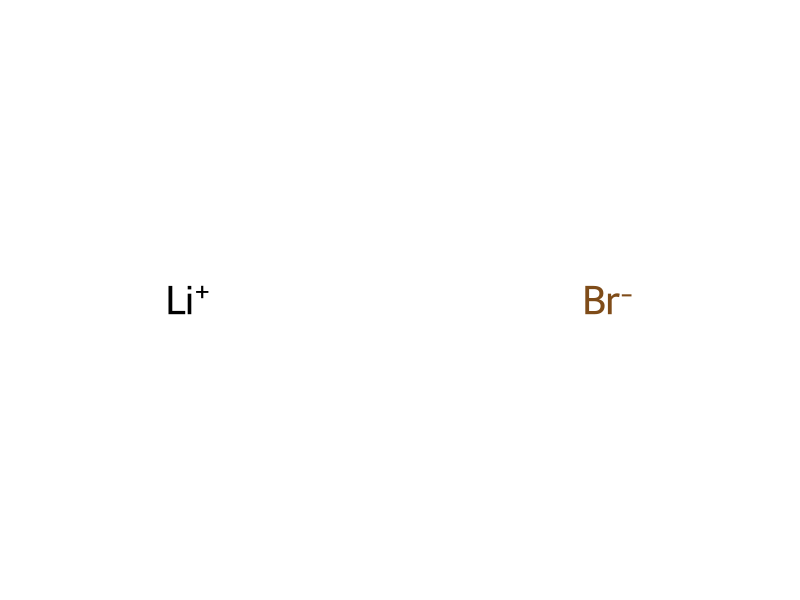
[Br:1][C:2]1[N:7]=[C:6]([CH2:8]O)[CH:5]=[CH:4][CH:3]=1.C(N(CC)C(C)C)(C)C.CS(OS(C)(=O)=O)(=O)=O.[Br-:28].[Li+].C(=O)(O)[O-].[Na+]>CN(C)C=O>[Br:1][C:2]1[CH:3]=[CH:4][CH:5]=[C:6]([CH2:8][Br:28])[N:7]=1Participants





Procedure
To a solution of 498 mg of (6-bromo-pyridin-2-yl)methanol in 6 ml of N,N-dimethylformamide were successively added 1.15 ml of N,N-diisopropylethylamine and a solution of 695 mg of methanesulfonic anhydride in 2 ml of N,N-dimethylformamide under cooling with ice, followed by stirring the reaction mixture at room temperature for 20 minutes. Then 693 mg of lithium bromide was added to the solution, followed by stirring the reaction mixture at room temperature for 1 hour. After adding saturated aqueous sodium bicarbonate solution to the reaction mixture, the mixture was extracted with ethyl acetate. The resulting ethyl acetate solution was dried over anhydrous magnesium sulfate and filtered. The filtrate was concentrated in vacuo. The resulting residue was purified by a silica gel column chromatography (eluent: hexane/ethyl acetate=20/1−3/2) to give the title compound as a pale yellow solid.
Workup
- stirringby stirring the reaction mixture at room temperature for 1 hour
- extractionthe mixture was extracted with ethyl acetate
- dry with materialThe resulting ethyl acetate solution was dried over anhydrous magnesium sulfate
- filtrationfiltered
- concentrationThe filtrate was concentrated in vacuo
- customThe resulting residue was purified by a silica gel column chromatography (eluent: hexane/ethyl acetate=20/1−3/2)
Sources & evidence
- ORD record
- ord-e89549f2fe7a410d8e734fe6966fa3f0
- Source dataset
- uspto-grants-2013_08
- Patent number
- US08519136B2
Reaction notes
Loading…