Ammonium Chloride → 2-Anilino-5-phenylthiophene-3-carboxamide
Reaction equation

[NH:1]([C:8]1[S:9][C:10]([C:16]2[CH:21]=[CH:20][CH:19]=[CH:18][CH:17]=2)=[CH:11][C:12]=1[C:13](O)=[O:14])[C:2]1[CH:7]=[CH:6][CH:5]=[CH:4][CH:3]=1.[Cl-].[NH4+].C([N:27](CC)C(C)C)(C)C.O.ON1C2C=CC=CC=2N=N1.Cl.C(N=C=NCCCN(C)C)C>CN(C)C=O.C(OCC)(=O)C.C(=O)(O)[O-].[Na+].O>[NH:1]([C:8]1[S:9][C:10]([C:16]2[CH:21]=[CH:20][CH:19]=[CH:18][CH:17]=2)=[CH:11][C:12]=1[C:13]([NH2:27])=[O:14])[C:2]1[CH:7]=[CH:6][CH:5]=[CH:4][CH:3]=1Participants
Reactant 5




Product 1

Reagents, catalysts & solvents 4




Procedure
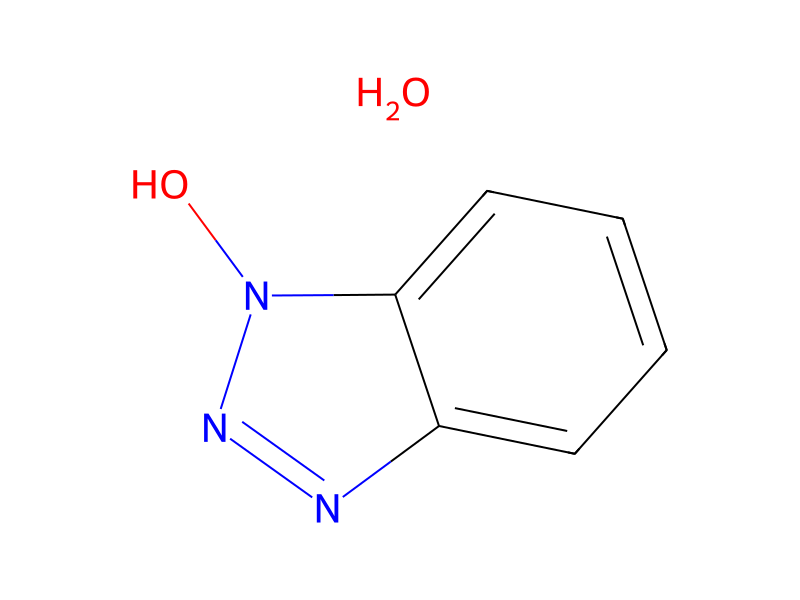
To a solution of 2-anilino-5-phenylthiophene-3-carboxylic acid (47.3 mg, 0.160 mmol), ammonium chloride (17.12 mg, 0.320 mmol), and N,N-diisopropylethylamine (0.084 ml, 0.480 mmol) in N,N-dimethylformamide (1 mL) was added 1-hydroxybenzotriazole hydrate (32.4 mg, 0.240 mmol) and then 1-ethyl-3-(3-dimethylaminopropyl)carbodiimide hydrochloride (46.0 mg, 0.240 mmol). After being stirred for 15 hours, the reaction mixture was diluted with ethyl acetate (20 mL), saturated aqueous sodium bicarbonate solution (10 mL), and water (2 mL). The layers were separated and the organic layer was washed with water (2×5 mL) and brine (10 mL), dried over sodium sulfate, filtered, and concentrated. The crude reaction mixture was purified by silica gel chromatography (50% ethyl acetate/hexanes) to afford 2-anilino-5-phenylthiophene-3-carboxamide.
Workup
- customThe layers were separated
- washthe organic layer was washed with water (2×5 mL) and brine (10 mL)
- dry with materialdried over sodium sulfate
- filtrationfiltered
- concentrationconcentrated
- customThe crude reaction mixture
- customwas purified by silica gel chromatography (50% ethyl acetate/hexanes)
Sources & evidence
- ORD record
- ord-89ad3c9d686d418d836f40f4c8209cbc
- Source dataset
- uspto-grants-2013_04
- Patent number
- US08420695B2
Reaction notes
Loading…